The relationship between the American executive branch and the free press has reached a point of unprecedented friction, underscored by President Donald Trump’s recent decision to bar three prominent media organizations from the White House. The move, predicated on what the administration characterizes as overwhelmingly negative coverage, has sent ripples through the journalistic community and ignited a fierce debate over the boundaries of the First Amendment. When challenged on the constitutional right to free speech, President Trump was unequivocal in his stance, suggesting a fundamental disconnect between the press’s role and the government’s obligations. He argued that there is something inherently wrong with a nation that permits the publication of "purposely negative stories," asserting that while news organizations are free to write such accounts, he is under no obligation to grant them access to the executive mansion—a space he referred to as "the People’s House."
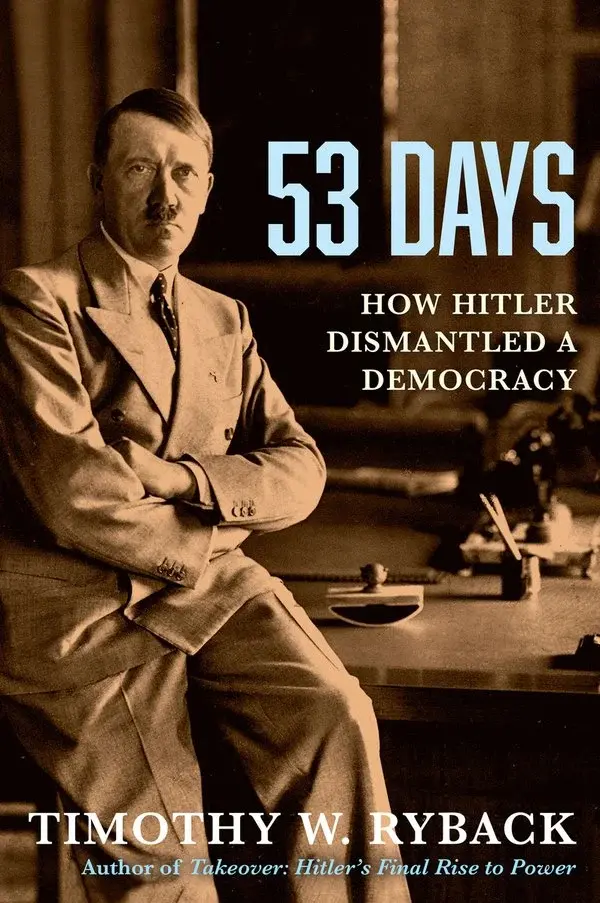
While this brazen attempt to stifle unfavorable press coverage comes in the high-stakes environment preceding the November midterm elections, historians and political analysts are noting striking resonances with a different era. The current political climate, characterized by a leader attempting to game the system in the face of an impending vote, finds a haunting precursor in the efforts of Adolf Hitler to manipulate the German legislative elections of March 5, 1933. The parallels are not merely thematic but are rooted in specific tactical and statistical similarities that offer a sobering perspective on the fragility of democratic institutions.
Like the current American president, Hitler was not personally on the ballot during the March 5 elections, yet he viewed the contest as a definitive referendum on his fledgling administration. The statistical landscape of the two eras also bears a curious resemblance; at the time of the 1933 vote, Hitler was polling at approximately 33 percent nationally. This figure is virtually identical to the most recent approval ratings for President Trump as reported by Reuters. Furthermore, the inclination to turn to the judicial system when election outcomes proved unfavorable is a trait shared by both leaders. Amidst the contemporary turmoil, there is a growing sense, much like there was in 1933, that the upcoming election represents a make-or-break moment—not just for an individual administration, but for the very concept of democracy itself.
To understand the depth of these parallels, one must look back to the months preceding Hitler’s rise to absolute power. Before his appointment as chancellor, Hitler had challenged the incumbent, Paul von Hindenburg, for the position of Reich president. When Hindenburg secured a decisive victory in the spring of 1932, Hitler did not accept the results with the traditional grace of a defeated candidate. Instead, he sought to have the election overturned through the courts, alleging widespread voter fraud involving mail-in ballots and claiming irregularities perpetrated by state officials. However, the judiciary of the Weimar Republic remained, at that moment, an obstacle to his ambitions. The presiding judge dismissed the case out of hand, noting that Hitler’s six-million-vote loss out of 36.8 million cast represented a margin far too great to be attributed to error or fraud.
Despite this electoral defeat, the political maneuvering of the era eventually saw Hitler appointed as chancellor by Hindenburg in January 1933. This appointment followed legislative elections in 1932 where the Nazi party secured a relative majority in the 600-seat Reichstag, Germany’s parliament. Once in a position of executive power, Hitler immediately began working to dismantle the constraints of the coalition government. At his urging, Hindenburg agreed to dissolve the Reichstag and schedule new elections for March 5, 1933. Hitler’s goal was clear: he intended the vote to be a populist referendum that would grant his party a clear 51 percent majority, allowing him to rule without the need for compromise. His local political operatives, known as Gauleiter, had assured him that such a victory was easily within reach.
In the lead-up to the March 5 vote, Hitler leveraged his executive powers to tilt the playing field. An emergency decree, co-signed by Hitler and Hindenburg, was used to restrict press freedoms and prohibit public demonstrations by political opponents. The response from the media was swift, with various newspapers taking the government to court in an attempt to have the bans overturned. Hitler also explored the possibility of rewriting election laws to suit his needs and even considered mobilizing the army to maintain "public order." However, he was met with resistance from his own defense minister, who informed him in no uncertain terms that ordering German soldiers to fire upon their own citizens in the streets was an unthinkable violation of military and civic ethics.
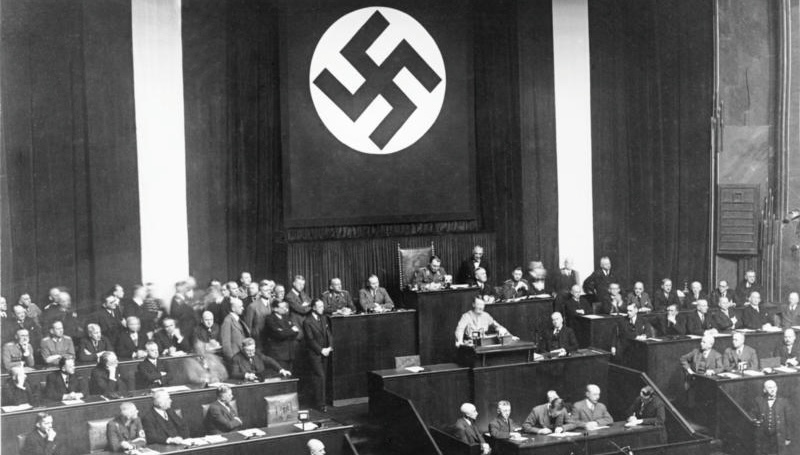
The tension reached a breaking point just one week before the election when the Reichstag building was engulfed in flames. The dramatic arson attack, which reduced the symbol of German representative democracy to a smoldering ruin, was widely suspected to be a pre-election surprise engineered by the Nazis themselves. In the immediate aftermath, Hitler capitalized on the chaos, convincing Hindenburg to issue a second executive order. This decree suspended constitutionally guaranteed civil liberties and due process, effectively giving the government the power to arrest and detain opponents without cause.
As the election neared, the gravity of the situation was lost on no one. The New York Times, reporting on the Sunday of the election, described the vote as a referendum on the very republican form of government that had existed since the end of the Great War. The Times noted that if Hitler failed to secure a majority, it would be because of an "immense popular disapproval" of his party and his platform. When the results finally came in, the March 5 election saw the highest voter turnout in German history since the 1870s, with nearly 89 percent of the electorate casting ballots.
The outcome was a landslide for Hitler, but it was not the one many had anticipated. Despite the massive suppression of left-wing parties and the imprisonment or hiding of their leaders, the social democrats lost only a single seat, and the communists retained 81 out of their 100 seats. The real shift occurred among the centrist conservative parties, which saw their support hemorrhage as as many as half of their voters defected to the National Socialists. Most significantly, a surge of two million new voters—predominantly young people—cast their ballots overwhelmingly for Hitler’s movement.
The aftermath of the election was marked by a profound sense of despair among those who had hoped to preserve the democratic order. German social democrats, much like some modern observers in the wake of the 2024 American election cycle, found themselves in a period of intense recrimination and lamentation. Emil Gumbel, a prominent statistician and associate of Albert Einstein, questioned how the youth could have fled "in hordes into the enemy camp." He wondered how Hitler had succeeded in transforming the "most animalistic nature" of man into what was being hailed as the "highest of human virtues."
Gumbel’s analysis led him to a crucial realization. While the defenders of the republic had focused their campaign on abstract threats to democracy, civil liberties, and the rule of law, Hitler had focused on what Gumbel called "Alltagssorgen"—the everyday concerns of the people. By addressing issues such as housing, inflation, unemployment, public safety, and national pride, Hitler spoke to the immediate anxieties of the electorate in a way that the intellectual defense of democratic institutions failed to do.
In retrospect, historians often view the March 5, 1933, election as a sham, a contest where the odds were irrevocably tipped by manipulation and intimidation. However, contemporary perceptions and the raw statistics suggest that the outcome was not a foregone conclusion. Fred Birchall, a Pulitzer Prize-winning reporter for The New York Times, had predicted just weeks before the vote that an adverse outcome for Hitler would consign him and his party to "the limbo of forgotten things." His assessment serves as a reminder that elections are driven by political contingency rather than historical inevitability.
Today, as Americans look toward a November election that is being framed as a watershed moment for the nation, the lessons of 1933 take on a renewed urgency. The republican form of government—written with a small "r"—that has served as the bedrock of the country for two and a half centuries appears to many to be in a state of peril. Pundits and analysts are busy offering predictions, with some suggesting a Democratic wave is imminent despite President Trump’s efforts to influence the outcome through various means, including proposed financial incentives. Ultimately, however, the decision rests exactly where it did in March 1933: in the hands of the voters. The historical record suggests that prescience is only ever evidenced in retrospect, and the choices made at the ballot box will determine whether the current era is remembered as a moment of democratic resilience or as a pivot toward a very different kind of future.