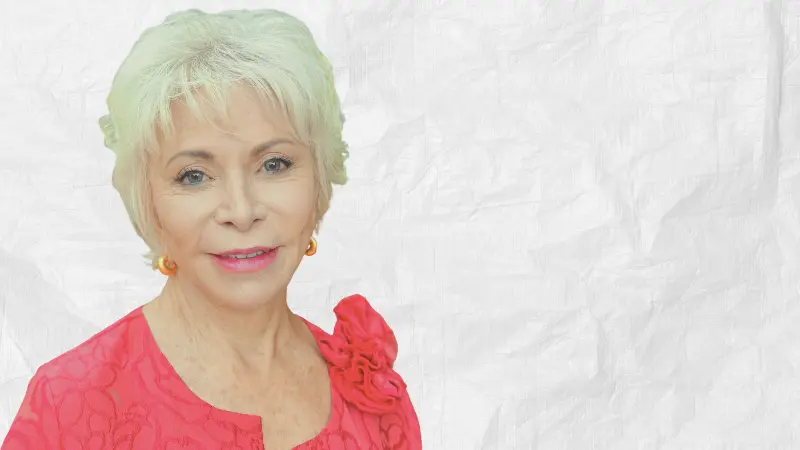
This protective instinct led to a near-disaster that has since become a piece of literary lore. Allende recalls leaving the bag at a hair salon and falling into a state of panic upon realizing its absence. By the time she returned to the salon, the bag—and the only copy of her life’s work—had been thrown into a large trash container on the street.
"I had to get into the large container in the street to retrieve it," she remembers. "There it was, intact, mocking me."
That rescued pile of paper would eventually find its way to a publisher, launching Allende into the international spotlight and establishing her as one of the most widely read Spanish-language authors in the world. Since those nights in the Caracas kitchen, Allende has authored dozens of books, spanning historical fiction, memoirs, and crime thrillers. Yet, the experience of writing her first novel remains a singular moment of "absolute freedom."
Reflecting on her long career, Allende views the act of writing as a bridge across time and space. To her, a novel is not a static object but a "living creature" that enters a symbiotic relationship with its reader. She describes the process as an intimate conversation held in silence and privacy, where the writer proposes a world and the reader interprets it through the lens of their own life.
"A novel is reborn each time someone reads it," she asserts. This philosophy has allowed her to detach from her creations once they are published. In her view, the books no longer belong to her; they belong to the world, sent out to fulfill their destinies and, with luck, "provoke the imagination of some readers or move their hearts."
The legacy of that first letter continues to shape Allende’s professional life in a very literal way. To this day, she begins every new book on the same date she started that letter to her grandfather: January 8. It is a ritual that honors the accidental nature of her beginning and the enduring power of a story that refused to stay within the lines of a simple goodbye.
As Allende continues to share her insights on the "Craft of Writing," her story serves as a testament to the idea that the most profound works of art often emerge not from a grand plan, but from a deeply felt need to remember, to honor, and to speak to those we have lost. What began as a way to ensure her grandfather’s stories would not be forgotten ended up ensuring that the world would never forget the name Isabel Allende.