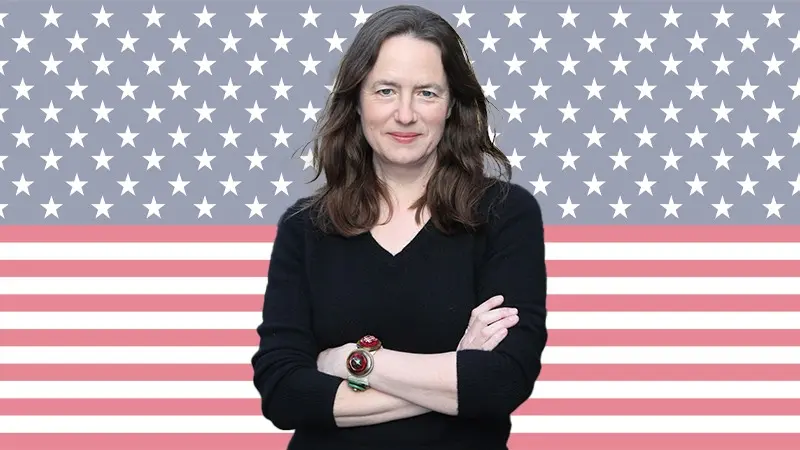
The selection of Professor Richardson as the inaugural laureate comes after a period of sustained and influential output that has transformed the way many Americans consume political news and historical context. For the past seven years, Richardson has maintained a rigorous schedule, publishing her nightly newsletter, "Letters from an American," which has grown from a personal project into a cultural phenomenon. As a professor of history at Boston College, Richardson brings a specialized academic lens to the chaotic flow of contemporary events, a method the WDA described as an acute historian’s reading of the present in the light of the nation’s past. By grounding the volatile headlines of the day in the long-term trends of American political development, Richardson has provided a stabilizing force for a readership seeking to understand the deeper currents of the current era.
The Gitlin-Auster Defender of Democracy Award was conceived not merely as a recognition of literary talent, but as a testament to the "wisdom, courage, and steadfastness" that the WDA believes are necessary to navigate the complexities of modern governance and social discourse. These three pillars—wisdom, courage, and steadfastness—were the hallmarks of Todd Gitlin and Paul Auster’s lives and careers. Gitlin, a renowned sociologist and a prominent figure of the New Left, spent decades analyzing the power of media and the mechanics of social movements. Auster, one of the most celebrated novelists of his generation, used his prose to explore the intricacies of American identity and the fragility of the human condition. By naming the award after these two foundational figures, the WDA seeks to honor writers who, like Gitlin and Auster, view their work as a form of public service and a defense against the erosion of democratic norms.
In its citation for the award, the WDA pointed to the unique structure and reliability of Richardson’s work. A central theme of the recognition was her commitment to transparency and intellectual honesty. Her "Letters" are famously fully sourced, a practice that the WDA noted as a crucial component of her success. By consistently crediting other writers and journalists, Richardson creates a collaborative map of the information landscape, reinforcing the importance of a free and functional press. This methodology gives new meaning to the long-standing adage that journalism is the "rough draft of history." However, the WDA was quick to point out that Richardson’s contributions often transcend the "roughness" typically associated with daily reporting. The organization noted that style and wit are the definitive hallmarks of her writing, allowing her to present complex historical trajectories and legal nuances in a manner that is both accessible and engaging for a broad audience.
The award underscores a broader philosophical stance held by the Writers for Democratic Action: that the writer holds a unique public responsibility during times of unprecedented crisis. In a landscape often defined by rapid-fire misinformation and the fragmentation of shared reality, the WDA views the power of words as a dual-purpose tool—both to record history as it unfolds and to actively change its course by informing the electorate. The organization’s leadership emphasized that in a "dangerous time," Richardson has upheld these values with magnificence, providing a model for how intellectuals can engage with the public sphere without sacrificing academic integrity.
The presentation of the award was conducted via a live-streamed event on Zoom, reflecting the modern, interconnected nature of Richardson’s community. Despite the virtual format, the event felt deeply personal and widespread, as viewers tuned in from organized "watch parties" located in various cities and towns across the country. This grassroots engagement serves as a testament to the community Richardson has built over the last seven years—a community that does not just passively consume her "Letters," but uses them as a basis for civic discussion and local organizing. The sight of citizens gathering to watch a historical discussion highlights the shift in how democratic engagement is being fostered in the digital age, moving away from centralized media hubs toward direct, writer-to-reader relationships.
Following the formal presentation of the Gitlin-Auster Award, the event transitioned into a deep-dive conversation between Professor Richardson and Siri Hustvedt. Hustvedt, a highly respected novelist, essayist, and scholar, was also a founding member of Writers for Democratic Action, making her the ideal interlocutor for a discussion on the role of the writer in the current political climate. The dialogue between the two women explored the nuances of narrative, the weight of historical precedent, and the emotional toll of witnessing a democracy under strain. Hustvedt’s involvement underscored the high level of intellectual synergy within the WDA, as members from different literary disciplines—history, fiction, and sociology—unite under the common goal of institutional preservation.
Throughout the evening, the atmosphere was one of both celebration and solemnity. While the award celebrated Richardson’s individual achievements, it also served as a sobering reminder of why such an award has become necessary. The WDA’s mission is rooted in the belief that democracy is not a self-sustaining machine, but a project that requires constant vigilance and the active participation of its citizens, particularly its storytellers. By honoring Richardson, the WDA is highlighting the necessity of "steadfastness"—the daily, often grueling work of showing up, night after night, to document the truth and provide context when the path forward seems unclear.
Richardson’s journey over the past seven years has seen her "Letters from an American" evolve from a series of Facebook posts into one of the most-read newsletters in the country. Her ability to synthesize the day’s most pressing news—ranging from Supreme Court decisions and legislative battles to international diplomacy—into a coherent narrative has made her an indispensable resource for millions. The WDA noted that her work does not merely summarize the news; it interprets it through the lens of the American experiment, reminding readers of the times the nation has faced similar crises and the methods used to overcome them. This historical grounding provides a sense of continuity and possibility that is often missing from the 24-hour news cycle.
The inaugural Gitlin-Auster Defender of Democracy Award sets a high standard for future recipients. It establishes a precedent that the defense of democracy is not solely the province of politicians or lawyers, but is also the duty of those who wield the pen. The WDA’s decision to honor a historian as its first recipient is a powerful statement on the importance of memory in a healthy society. As the organization noted, the ability to record history accurately is the first step toward the ability to change it for the better.
As the ceremony concluded, the sentiment shared by the WDA and the thousands of viewers across the country was one of profound gratitude. In awarding Heather Cox Richardson, the Writers for Democratic Action sought to recognize a voice that has become a beacon for those navigating the "unprecedented crisis" of the modern era. The organization concluded its presentation by stating that it was their distinct honor to honor her, reinforcing the idea that Richardson’s work is not just a collection of letters, but a vital piece of the American democratic fabric. The evening served as a reminder that even in a dangerous and uncertain time, the power of words—when backed by wisdom, courage, and style—remains one of the most potent defenses a democracy has.