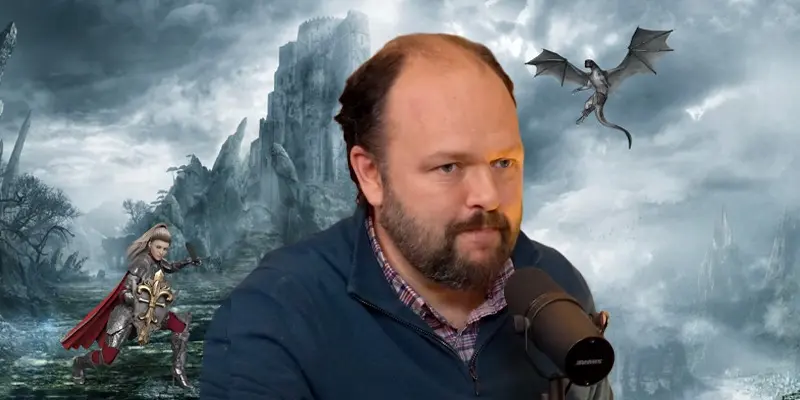
For some readers, this level of detail is a hallmark of the genre, reminiscent of the exhaustive appendices found in the works of J.R.R. Tolkien. Douthat’s commitment to the craft of world-building is evident in the supplemental materials provided to his Substack subscribers, which include hand-drawn maps of the Narsil Empire. In the community of high fantasy enthusiasts, a map is often seen as a prerequisite for legitimacy, signaling a commitment to a fully realized, immersive environment. Yet, the challenge remains for Douthat to translate this structural "magical thinking" into a compelling narrative that can hold the attention of a young adult audience.
The connection between Douthat’s conservative worldview and his interest in the utopian or fantastical has been noted before. A 2010 profile in Mother Jones characterized his vision of conservatism as falling into a "realm of the utopian," describing it as a form of "Tolkien-like thinking." This suggests that for Douthat, the creation of a secondary world is not a departure from his political philosophy, but rather an extension of it. In his columns, he often laments the loss of tradition and the flattening of the modern spiritual landscape; through fiction, he can construct a world where those traditions are vibrant, the stakes are cosmic, and the social order is governed by more than just materialist concerns.
The potential audience for "The Falcon’s Children" remains a subject of curiosity. Given Douthat’s prominence in conservative circles, the book may find a natural home among the "young apparatchiks" of think tanks like the Heritage Foundation or families looking for a contemporary alternative to the classics of the Western canon. There is a clear appetite within certain religious and political demographics for "wholesome" or "values-driven" fantasy that avoids the perceived pitfalls of modern mainstream YA literature. Douthat’s work, with its emphasis on history, hierarchy, and archangels, fits neatly into this demand.
However, critics of the project argue that there is no need to "reinvent" the wheel when it comes to Catholic or Christian-themed fantasy. The shadows of J.R.R. Tolkien and C.S. Lewis loom large over the genre, and their works continue to serve as the gold standard for blending theological depth with narrative mastery. Furthermore, readers seeking a different kind of spiritual or speculative experience have long turned to the works of Ursula K. Le Guin, particularly her Earthsea cycle, which offers a profound exploration of power and morality without the same ideological baggage.