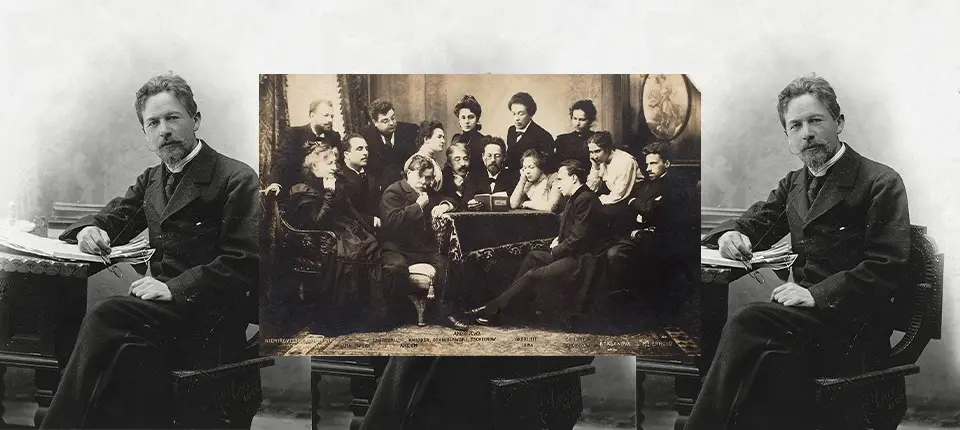
The history of literature is often defined as much by its failures as its triumphs. In mid-October 1896, Anton Chekhov’s The Seagull premiered at the Alexandrinsky Theatre in St. Petersburg. The night was a catastrophic failure; the audience hissed, the actors were rattled, and Chekhov himself fled the theater in despair. He famously declared that even if he lived to be seven hundred years old, he would never write another play. Yet, history tells a different story. Chekhov did write again, and The Seagull eventually became a cornerstone of modern drama. This spirit of creative perseverance and the complex relationship between the artist and their audience serves as a backdrop for a week of intense literary discourse, where the written word continues to grapple with the most pressing issues of the 21st century.
THE BEST OF THE LITERARY INTERNET
As the literary community reflects on Chekhov’s early struggles, the current landscape of letters is occupied by a diverse array of voices addressing everything from the geopolitics of the Middle East to the intricacies of corporate algorithms. This week, the conversation has been particularly focused on the intersection of narrative and survival. In a significant dialogue, Pulitzer Prize winner Adam Johnson sat down with Amitav Ghosh to discuss the latter’s work, The Wayfinder. Their conversation explored the many ways a single story can be told, particularly when that story involves the shifting tides of history and the environmental challenges that define the modern era. Ghosh, known for his deep dives into the colonial legacies of the spice trade and the climate crisis, continues to challenge how readers perceive the passage of time and the movement of people across borders.
The role of literature in a time of crisis is further emphasized by a profound reckoning with the ongoing violence in Gaza. In a series of reflections on how the genocide has reshaped the Middle East, writers are examining the collapse of traditional diplomatic narratives and the emergence of a new, starker reality for millions. This is not merely a political analysis but a cultural one, asking how the stories told by and about the region have been irrevocably altered by the scale of the suffering. It is a testament to the "work of witnessing," a theme that also resonates in the latest recommendations of Ukrainian literature. Oksana Lutsyshyna has highlighted essential works by Artur Dron, Andriy Lyubka, and Lena Lyagushonkova, authors who are currently navigating the complexities of writing from within a war zone. Their work serves as a vital bridge between the immediate trauma of conflict and the enduring necessity of cultural preservation.
In the realm of fiction, the week has seen high-profile releases and deep dives into the creative process. Bonnie Garmus, the celebrated author of the global phenomenon Lessons in Chemistry, has returned with a new coming-of-age novel titled Peck & Peck. In a conversation with Jane Ciabattari, Garmus discussed the role of poets and poetry in her latest work, exploring how the lyrical can intersect with the mundane to create a sense of wonder in a young protagonist’s life. The craft of writing itself remains a point of fascination, with Will Maclean offering a candid look at the messier side of creativity. Maclean’s approach—which involves "fucking up a notebook" as a prerequisite for writing a novel—suggests that the path to a finished manuscript is rarely linear or tidy. It is a sentiment that mirrors Chekhov’s own frustrations, reminding aspiring writers that the "flop" is often a necessary precursor to the masterpiece.
The literary world also paused this week to remember those who have shaped the field through their unique voices and mentorship. Josefine Kals provided a moving tribute to the late Stephen Dixon, a writer, professor, and prolific pen pal whose commitment to the short story form left an indelible mark on his students and peers. Similarly, the Reverend Al Sharpton shared a personal look at his relationship with his mentor, Jesse Jackson. Sharpton’s reflections, discussed in the context of shaping narratives of justice, highlight how the power of speech and the written word can be harnessed to drive social change. This theme of justice extends to the work of E.L. Shen, who wrote about her journey to understand her assassinated ancestor through the act of writing, demonstrating how literature can serve as a form of ancestral reclamation.
Technological and economic pressures on the industry have also come to the fore. A significant point of contention this week is the paradoxical relationship between traditional publishing and artificial intelligence. Many are asking why major publishers are suing Big Tech companies for copyright infringement with one hand while simultaneously embracing AI tools with the other. This tension reflects a broader anxiety about the future of intellectual property and the role of the human author in an increasingly automated world. Parallel to this is an investigation into the "real reason the rent is too damn high," which points a finger at greed-driven corporate algorithms. By using data to artificially inflate housing costs, these algorithms are reshaping the socio-economic landscape of cities, a topic that intersects with the literary world’s ongoing interest in how systemic forces dictate the lives of individuals.
The democratization of knowledge is another recurring theme, with a historical look at how newspapers once helped foster civic participation and shared understanding. This historical perspective provides a sharp contrast to the current fragmentation of the media landscape. However, some contributors find beauty and meaning in the smaller, more personal corners of life. One such essay explores the unexpected lessons learned from forming a relationship with a rescue raccoon, a narrative that uses the bond between human and animal to reflect on self-discovery and empathy. In a similar vein, Melissa King writes about the profound meaning of cooking and care within the Cantonese-American community in Southern California, illustrating how culinary traditions serve as a vital link to heritage and home.
The week’s literary offerings also delve into the darker chapters of history and the persistence of superstition. An exploration of medieval European witch hunts examines the systemic slaughter of nonconformist women, a grim reminder of how societies have historically policed the boundaries of "acceptable" behavior. On a more contemporary but equally somber note, an essay on gun violence and self-protection in the wake of tragedies like Nickel Mines asks how we learn to safeguard ourselves in a culture where the threat of violence is omnipresent.
For those looking for their next read, the "Lit Hub Questionnaire" and David Naimon’s annotated nightstand offer a glimpse into the reading habits of influential authors. Naimon, the host of the popular Between the Covers podcast, shares what is currently on his "To Be Read" (TBR) pile, providing a curated list for bibliophiles. The week also saw the release of the Independent Press Top 40 Bestsellers for both fiction and nonfiction, highlighting the strength and diversity of the independent publishing sector. From books on North Korea’s cult of personality recommended by Jonathan Cheng to five essential texts for understanding the Venetian ghetto and Jewish history, the breadth of topics available to readers remains vast.
In the world of visual and performing arts, the influence of literature is equally strong. Three recent films have prompted a discussion on how the public views poets and poetry, questioning whether the cinematic medium tends to romanticize or accurately portray the internal life of the writer. Meanwhile, the photography of Jean-Pierre and Eliane Laffont is being celebrated for its documentation of the radical changes in 1960s and 70s American counterculture. Their images capture a society in flux, much like the literature of the time.
The week concludes with a look at the natural world and the importance of conservation. An essay on the "unlikely beauty and hidden danger" of boglands and peatlands argues for the preservation of these vital ecosystems, which are often overlooked in broader environmental discussions. This focus on the land is echoed in a piece that attempts to move past the endless stereotyping of rural American life. The author argues that rurality means something different for everyone, and that literature has a responsibility to move beyond the "flyover country" tropes that have dominated the national imagination for too long.
From the superyachts of Monaco—the birthplace of a new novel—to the streets of Los Angeles, where the story of Black matriarch Biddy Mason is being retold, the literary internet continues to prove that stories are the primary currency of human experience. Whether they are born of failure, like Chekhov’s The Seagull, or crafted in the heat of a global crisis, these narratives remain our most effective tool for understanding the world and our place within it. As the week draws to a close, the sheer variety of these voices—addressing ghosts, algorithms, ancestors, and rescue animals—suggests that the literary world is as vibrant and essential as ever.