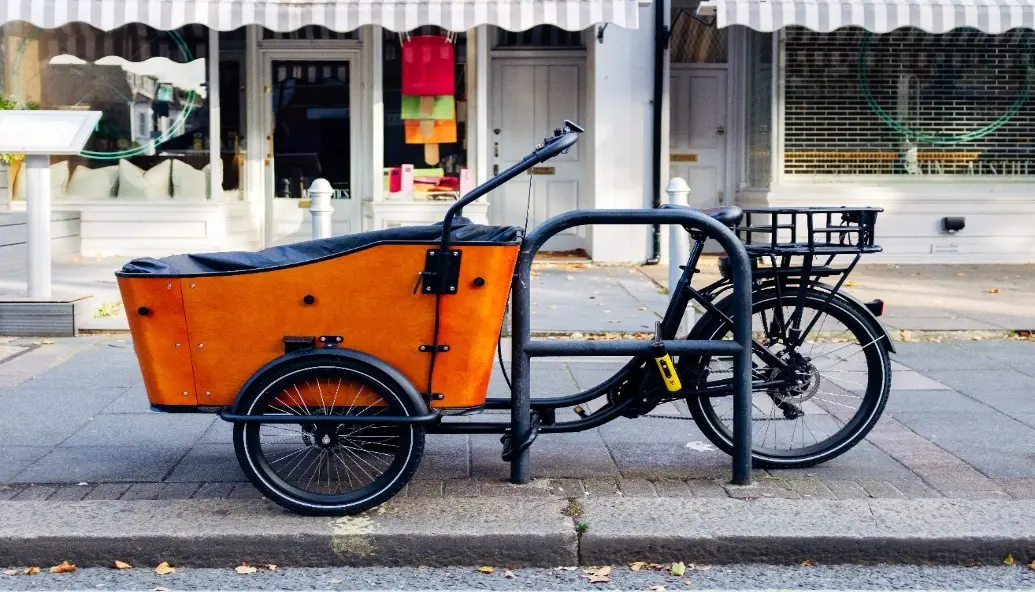
The growth in cargo bike usage is most pronounced in inner London, where the data indicates a staggering 149% increase over the three-year period ending in 2025. This localized spike reflects the specific operational advantages that cargo bikes offer in high-density urban environments. Unlike traditional delivery vans, cargo bikes are often able to bypass gridlock by utilizing London’s expanding network of cycle lanes and low-traffic neighborhoods. For many businesses, from independent local retailers to major multinational couriers, the transition to cargo bikes is not merely an environmental choice but a pragmatic response to the inefficiencies of traditional motoring in a metropolis where average traffic speeds have remained stubbornly low. These vehicles are increasingly being utilized to transport everything from perishable groceries and pharmaceutical supplies to construction tools and heavy parcels, proving that the "last mile" of delivery—the final and often most expensive leg of the supply chain—can be managed effectively without the need for a large, heavy vehicle.
Despite these encouraging figures, the sheer volume of diesel vans on London’s roads remains a significant obstacle to the city’s air quality and climate goals. The figure of 100,761 diesel vans represents a milestone that many environmental advocates hoped would never be reached, especially given the expansion of the Ultra Low Emission Zone (ULEZ) and other initiatives designed to disincentivize the use of high-polluting vehicles. The persistence of the diesel fleet suggests that while some sectors are moving toward electrification or cycle-based logistics, others remain tethered to traditional fuels. This may be due to a variety of factors, including the perceived lack of charging infrastructure for electric light commercial vehicles, the initial capital costs of fleet replacement, or a lack of regulatory pressure specifically targeted at the freight sector. Recent market volatility has also played a role, with industry analysts previously warning that diesel prices could potentially reach £2 per litre, a factor that should theoretically drive businesses toward alternatives but has yet to result in a mass exodus from the internal combustion engine.
To highlight this tension and showcase the viability of cleaner alternatives, a major public demonstration is scheduled for September 30th. Dubbed "The Cruise," the event will see more than 50 cargo bikes sweep through the heart of central London in a coordinated display of modern logistics. Organised by a coalition including Team London Bridge, Clean Cities, and the consultancy MP Smarter Travel, the ride is designed to serve as a highly visible proof of concept. It aims to demonstrate to policymakers, business owners, and the general public that the infrastructure and technology required to transform urban freight already exist and are being used successfully by a growing number of pioneers. By parading a diverse range of cargo bikes through some of the city’s most iconic streets, the organizers hope to shift the narrative from cargo bikes being a niche alternative to them being recognized as a central pillar of London’s future transport strategy.
Zak Bond, the Campaign Manager at Clean Cities, has been vocal about the implications of the current data. While acknowledging the impressive growth of the cargo bike sector, Bond points out that the simultaneous rise in diesel van numbers indicates that progress in cleaning up urban freight has effectively stalled. He argues that the market alone may not be enough to drive the necessary transition at the speed required to meet public health and environmental targets. According to Bond, the current policy environment needs to evolve rapidly to create the specific conditions required for cleaner delivery options to scale up and become the default choice for businesses of all sizes. He suggests that a dedicated zero-emission zone for freight in central London would be a transformative step, providing the regulatory "stick" to complement the "carrot" of cargo bike efficiency. Such a zone would aim to phase out the most polluting vans while providing businesses with the long-term certainty and structural support they need to invest in zero-emission fleets.
The urgency of this policy shift is underscored by the environmental impact of the current van fleet. Recent analysis conducted by Clean Cities has identified diesel vans as the single largest road-based source of nitrogen oxide (NOx) emissions in both central and inner London. NOx is a major contributor to poor air quality, linked to a range of respiratory and cardiovascular health issues among urban populations. While passenger cars have seen a more rapid transition toward electrification and hybrid technology, the commercial van sector has lagged behind, leaving it as a disproportionate contributor to the city’s pollution burden. This finding emphasizes the necessity of finding and scaling cleaner alternatives for urban deliveries, as the continued reliance on diesel for "last mile" logistics directly undermines the broader efforts to improve the health of Londoners.
The role of organizations like Team London Bridge in this transition is particularly significant. As a Business Improvement District (BID), Team London Bridge represents a community of businesses in one of the city’s most commercially vibrant areas. Their involvement in "The Cruise" suggests that the push for sustainable freight is increasingly coming from the business community itself, rather than just environmental activists. Businesses are beginning to recognize that a cleaner, less congested city is not only better for the environment but also more attractive for customers and employees. Furthermore, the efficiency gains associated with cargo bikes—such as reduced time spent searching for parking and the ability to use more direct routes—can offer a competitive advantage in an increasingly fast-paced delivery market.
The broader context of the UK’s industrial transition also provides a backdrop to this local struggle. Across the country, different sectors are experimenting with various forms of decarbonization. For instance, some UK recycling plants have recently begun ditching diesel in favor of hydrogen-powered machinery, signaling a wider industrial appetite for moving away from traditional fossil fuels. However, for urban logistics, the cargo bike represents a more immediate and scalable solution than hydrogen, particularly for the short-distance, high-frequency deliveries that characterize central London commerce. The challenge lies in bridging the gap between the successful pilot programs and small-scale adoptions seen today and a city-wide system where zero-emission delivery is the standard.
As the September 30th event approaches, the focus remains on how the capital can reconcile its record-high van numbers with its ambitions for a greener future. The data from TfL provides a clear indication that the appetite for change exists, as evidenced by the 126% increase in cargo bike use. Yet, the 100,761 diesel vans serving as a reminder of the status quo suggest that the transition is still in its early stages. The call for a zero-emission zone for freight reflects a growing consensus among campaigners that without decisive legislative intervention, the environmental benefits of the cargo bike boom may be offset by the continued growth of the traditional van fleet.
The success of "The Cruise" will likely be measured by its ability to influence this policy debate. By providing a visible demonstration of how goods can move through the capital in a cleaner, more efficient manner, the organizers are making a case for a future where the rumble of diesel engines is replaced by the quiet hum of electric-assist cycles. For London to truly transform its urban freight, the momentum seen in the cargo bike sector must be matched by a coordinated effort to phase out the diesel-heavy logistics of the past. As the city moves toward the middle of the decade, the balance between these two competing modes of transport will play a defining role in the quality of the air Londoners breathe and the efficiency of the city’s economy.