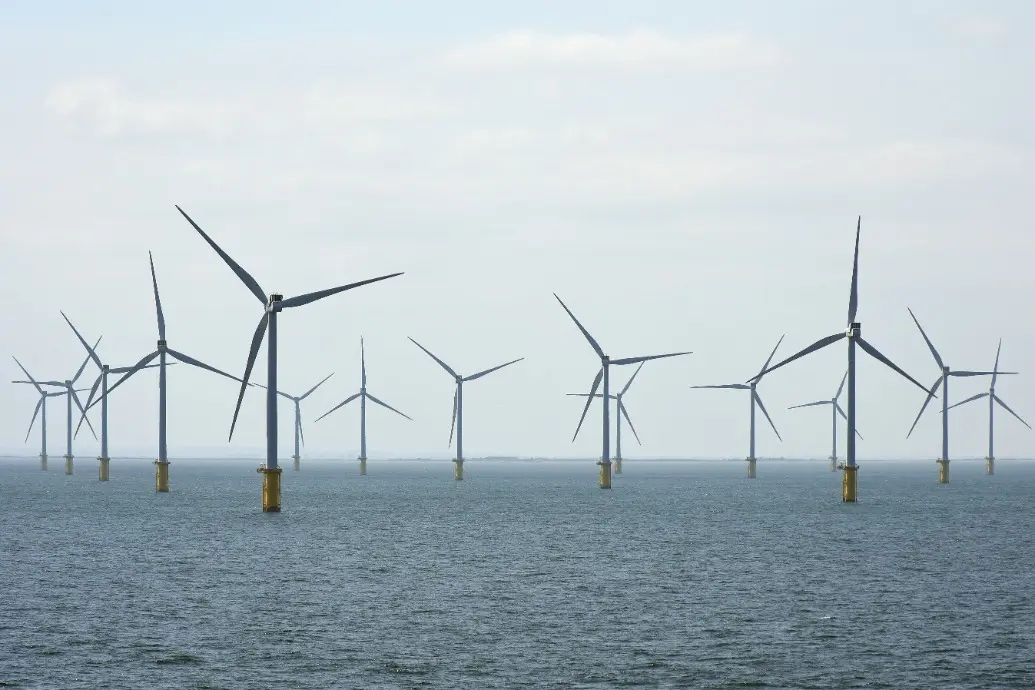
The financial viability of Berwick Bank B was recently bolstered when SSE secured a 20-year Contract for Difference (CfD) for 1.4GW of generation. This agreement was reached during the UK Government’s latest allocation round, providing the price certainty necessary to move forward with such a capital-intensive endeavor. With the revenue framework now largely in place, SSE has indicated that it is working toward a final investment decision (FID), which is expected to be reached in the coming year.
The scale of the Berwick Bank project is difficult to overstate. If the wider 4.1GW development reaches its full potential, it is estimated that the wind farm could generate enough clean, renewable electricity to power approximately 6.5 million UK homes annually. On a national scale, this single project has the capacity to meet more than 6% of the UK’s current total electricity demand, representing a massive leap toward the government’s goal of achieving a net-zero power system.
For the town of Montrose and the wider Angus region, the implications of this selection go far beyond the immediate job numbers. The establishment of a 35-year operations base provides a level of economic certainty rarely seen in industrial sectors. Unlike the construction phase of offshore projects, which can be cyclical and transient, operations and maintenance require a consistent, local presence. This leads to long-term investment in local schools, housing, and services, as families of the 100-strong permanent workforce settle in the area.
The redevelopment of the port itself is also a key part of the narrative. The transition of Montrose from a traditional port serving various North Sea industries into a specialized green energy hub required significant foresight and investment. The planned redevelopment of existing offices into a new operations hub will likely include advanced monitoring systems, data centers to analyze turbine performance in real-time, and sophisticated logistics facilities to manage the specialized vessels that ferry technicians to the turbines.
These vessels, often referred to as Service Operation Vessels (SOVs), are high-tech floating workshops that allow crews to remain at sea for weeks at a time. The Port of Montrose’s ability to accommodate these vessels and provide the deep-water access required was a significant factor in its selection. The proximity of the port to the Berwick Bank site—while further than some southern ports—is balanced by the existing infrastructure and the synergy with the Seagreen and Inch Cape projects.
The broader Berwick Bank project has been a focal point of discussions regarding the balance between rapid renewable deployment and environmental stewardship. SSE has engaged in extensive environmental impact assessments to ensure that the massive array of turbines—which will be located in the outer Firth of Forth—minimizes its impact on local bird populations and marine life. The successful navigation of these planning and environmental hurdles has been a prerequisite for the project’s progress to this stage.
As the UK seeks to reduce its reliance on imported fossil fuels and insulate itself from the volatility of global gas markets, projects like Berwick Bank are increasingly viewed through the lens of national security as much as environmental policy. By harnessing the consistent and powerful winds of the North Sea, the UK is effectively building a domestic "powerhouse" that provides price stability and energy independence.