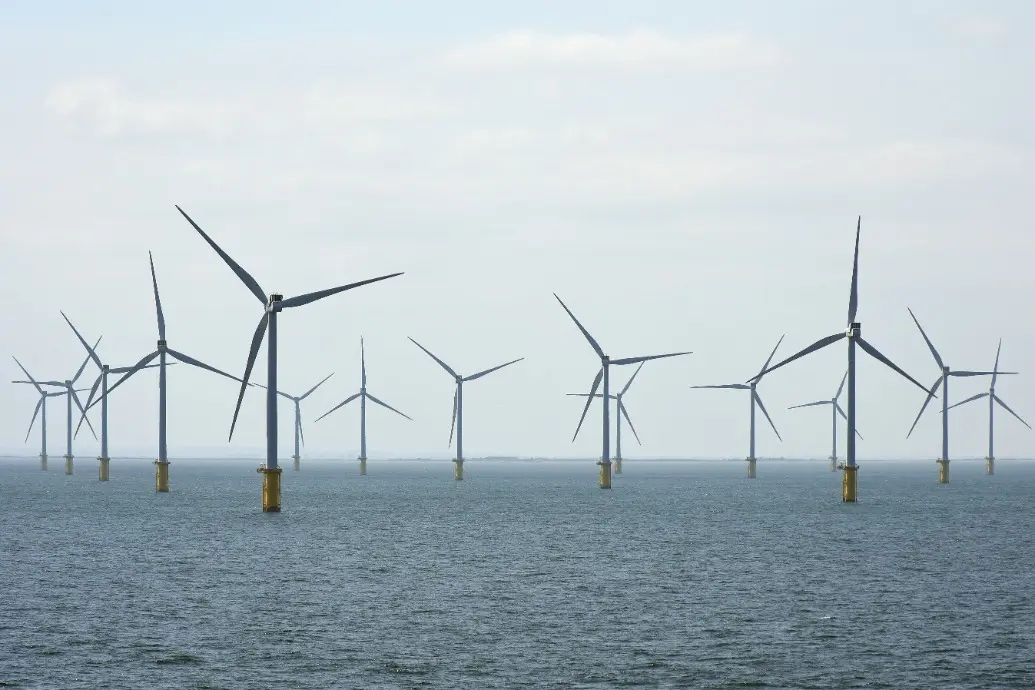
In a significant milestone for Scotland’s burgeoning renewable energy sector, Montrose Port has been officially named as the preferred operations and maintenance (O&M) base for the 1.4GW Berwick Bank B offshore wind farm. Developed by SSE Renewables, the project represents a cornerstone of the United Kingdom’s transition toward a decarbonized power grid and solidifies the Angus coastline’s position as a global leader in the offshore wind supply chain.
The decision to anchor the operations of Berwick Bank B at Montrose is expected to deliver a substantial economic boost to the local community, creating 100 new permanent, full-time roles. These positions will primarily consist of highly skilled technicians and engineers who will be tasked with the day-to-day oversight, maintenance, and technical management of the wind farm. Given the scale and complexity of the project, these roles are expected to span the entire operational life of the facility, which is projected to exceed 35 years.
Beyond the long-term operational workforce, the immediate future will see an uptick in local construction activity. An additional 30 jobs are slated to be supported during the initial phase of the partnership, as existing office facilities and infrastructure at Montrose Port undergo extensive redevelopment. This transformation will turn current port assets into a state-of-the-art operations hub, equipped to handle the logistical demands of one of the world’s most ambitious offshore energy developments.
The Berwick Bank B site is situated approximately 38 kilometers off the East Lothian coast. It serves as a critical component of the broader Berwick Bank offshore wind farm project, which has a total planned capacity of 4.1GW. Once fully operational, the cumulative project will stand as one of the largest offshore wind installations on the planet, reflecting the massive scale of investment currently flowing into the North Sea’s renewable resources.
First Minister John Swinney hailed the announcement as a testament to the strategic importance of Scotland’s maritime infrastructure. He emphasized that the nation’s ports are no longer just points of transit, but are instead becoming the engine rooms of the green energy revolution.
“Scotland’s ports are critical enablers of our offshore wind ambitions and key economic assets for surrounding communities,” the First Minister stated. He noted that the Port of Montrose is rapidly evolving into a premier international destination for the renewable energy industry. “The Port of Montrose is set to become one of the world’s largest offshore wind operations and maintenance hubs, supporting the Berwick Bank, Seagreen, and Inch Cape offshore wind farms.”
The selection of Montrose follows a competitive process and builds upon the port’s existing track record. By co-locating the O&M activities for Berwick Bank alongside other major projects like Seagreen—currently Scotland’s largest operational offshore wind farm—and the upcoming Inch Cape project, SSE and its partners are creating a concentrated cluster of expertise. This "hub" model allows for greater efficiencies in vessel sharing, spare parts logistics, and workforce training, making the Angus region a focal point for the global offshore wind industry.
The financial viability of Berwick Bank B was recently bolstered when SSE secured a 20-year Contract for Difference (CfD) for 1.4GW of generation. This agreement was reached during the UK Government’s latest allocation round, providing the price certainty necessary to move forward with such a capital-intensive endeavor. With the revenue framework now largely in place, SSE has indicated that it is working toward a final investment decision (FID), which is expected to be reached in the coming year.
The scale of the Berwick Bank project is difficult to overstate. If the wider 4.1GW development reaches its full potential, it is estimated that the wind farm could generate enough clean, renewable electricity to power approximately 6.5 million UK homes annually. On a national scale, this single project has the capacity to meet more than 6% of the UK’s current total electricity demand, representing a massive leap toward the government’s goal of achieving a net-zero power system.
For the town of Montrose and the wider Angus region, the implications of this selection go far beyond the immediate job numbers. The establishment of a 35-year operations base provides a level of economic certainty rarely seen in industrial sectors. Unlike the construction phase of offshore projects, which can be cyclical and transient, operations and maintenance require a consistent, local presence. This leads to long-term investment in local schools, housing, and services, as families of the 100-strong permanent workforce settle in the area.
The redevelopment of the port itself is also a key part of the narrative. The transition of Montrose from a traditional port serving various North Sea industries into a specialized green energy hub required significant foresight and investment. The planned redevelopment of existing offices into a new operations hub will likely include advanced monitoring systems, data centers to analyze turbine performance in real-time, and sophisticated logistics facilities to manage the specialized vessels that ferry technicians to the turbines.
These vessels, often referred to as Service Operation Vessels (SOVs), are high-tech floating workshops that allow crews to remain at sea for weeks at a time. The Port of Montrose’s ability to accommodate these vessels and provide the deep-water access required was a significant factor in its selection. The proximity of the port to the Berwick Bank site—while further than some southern ports—is balanced by the existing infrastructure and the synergy with the Seagreen and Inch Cape projects.
The broader Berwick Bank project has been a focal point of discussions regarding the balance between rapid renewable deployment and environmental stewardship. SSE has engaged in extensive environmental impact assessments to ensure that the massive array of turbines—which will be located in the outer Firth of Forth—minimizes its impact on local bird populations and marine life. The successful navigation of these planning and environmental hurdles has been a prerequisite for the project’s progress to this stage.
As the UK seeks to reduce its reliance on imported fossil fuels and insulate itself from the volatility of global gas markets, projects like Berwick Bank are increasingly viewed through the lens of national security as much as environmental policy. By harnessing the consistent and powerful winds of the North Sea, the UK is effectively building a domestic "powerhouse" that provides price stability and energy independence.
The 1.4GW allocated to Berwick Bank B in the most recent CfD round is a vital step in the project’s phased rollout. The CfD mechanism, which guarantees a fixed price for the electricity generated, is the primary tool used by the UK government to encourage investment in low-carbon generation. By de-risking the project for investors, the government ensures that large-scale infrastructure can be built at the lowest possible cost to consumers.
Looking ahead to the final investment decision next year, the industry will be watching closely to see how the supply chain responds. The commitment to Montrose Port is a clear signal to other suppliers—from cable manufacturers to turbine blade specialists—that the project is moving toward the construction phase. This often triggers a "domino effect" of further investment in the regional supply chain as companies seek to position themselves near the primary operations hub.
The 100 permanent roles at Montrose will require a diverse range of expertise. While mechanical and electrical engineers are the backbone of the workforce, the facility will also require specialists in health and safety, maritime logistics, and digital systems management. Many of these roles are expected to be filled through local recruitment and apprenticeship programs, providing a pathway for the next generation of Scottish workers to enter the high-growth renewable energy sector.
As the redevelopment of the Montrose Port offices begins, the transformation of the local skyline and economy continues. The shift from the era of oil and gas to the era of offshore wind is perhaps nowhere more visible than in Scotland’s east coast ports. With Berwick Bank B now firmly anchored at Montrose, the town is set to play a pivotal role in the UK’s energy story for the next four decades.
The project remains a centerpiece of SSE’s broader "Net Zero Lead" strategy, which involves billions of pounds in investment across the renewable spectrum. As the company moves toward the final investment decision, the partnership with Montrose Port stands as a blueprint for how large-scale infrastructure projects can integrate with local communities to provide both national benefits and local prosperity.
With the capacity to power millions of homes and the creation of a long-term industrial hub, the Berwick Bank project is not just an engineering feat; it is a fundamental shift in how the nation generates its power and supports its coastal economies. The 35-year commitment to Montrose ensures that the port will remain at the heart of this transition for a generation to come.