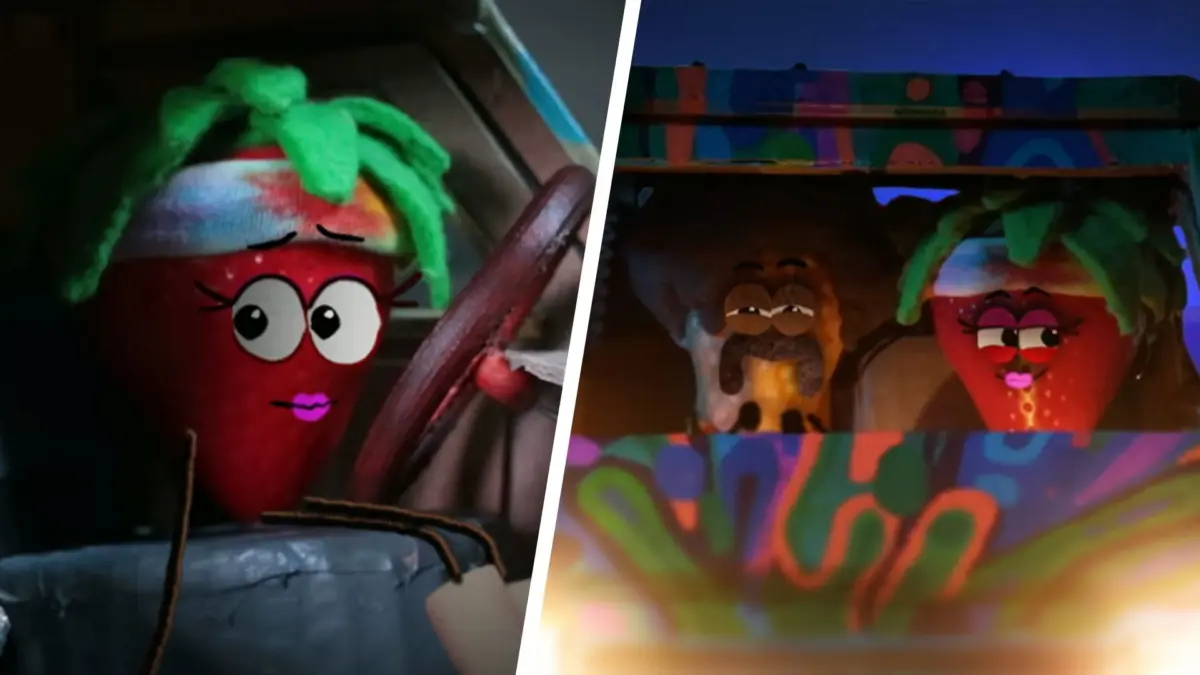
In the lead-up to the most anticipated video game release of the decade, references to Grand Theft Auto VI have become an almost inescapable part of the cultural zeitgeist. From social media memes to fashion aesthetics, the "Sun-drenched Vice City" vibe is everywhere. Now, that influence has reached the hallowed halls of Pixar Animation Studios, though perhaps not in the way audiences might expect. The studio’s latest experimental project, an artist-driven short film titled Fruit & Nut, opens with a pink and cyan neon title card that immediately evokes the high-stakes, neon-soaked world of Rockstar Games’ upcoming masterpiece. However, any similarity to the world of triple-A gaming ends the moment the animation begins, as the film quickly pivots into a surreal, handcrafted journey that challenges the very definition of the "Pixar style."
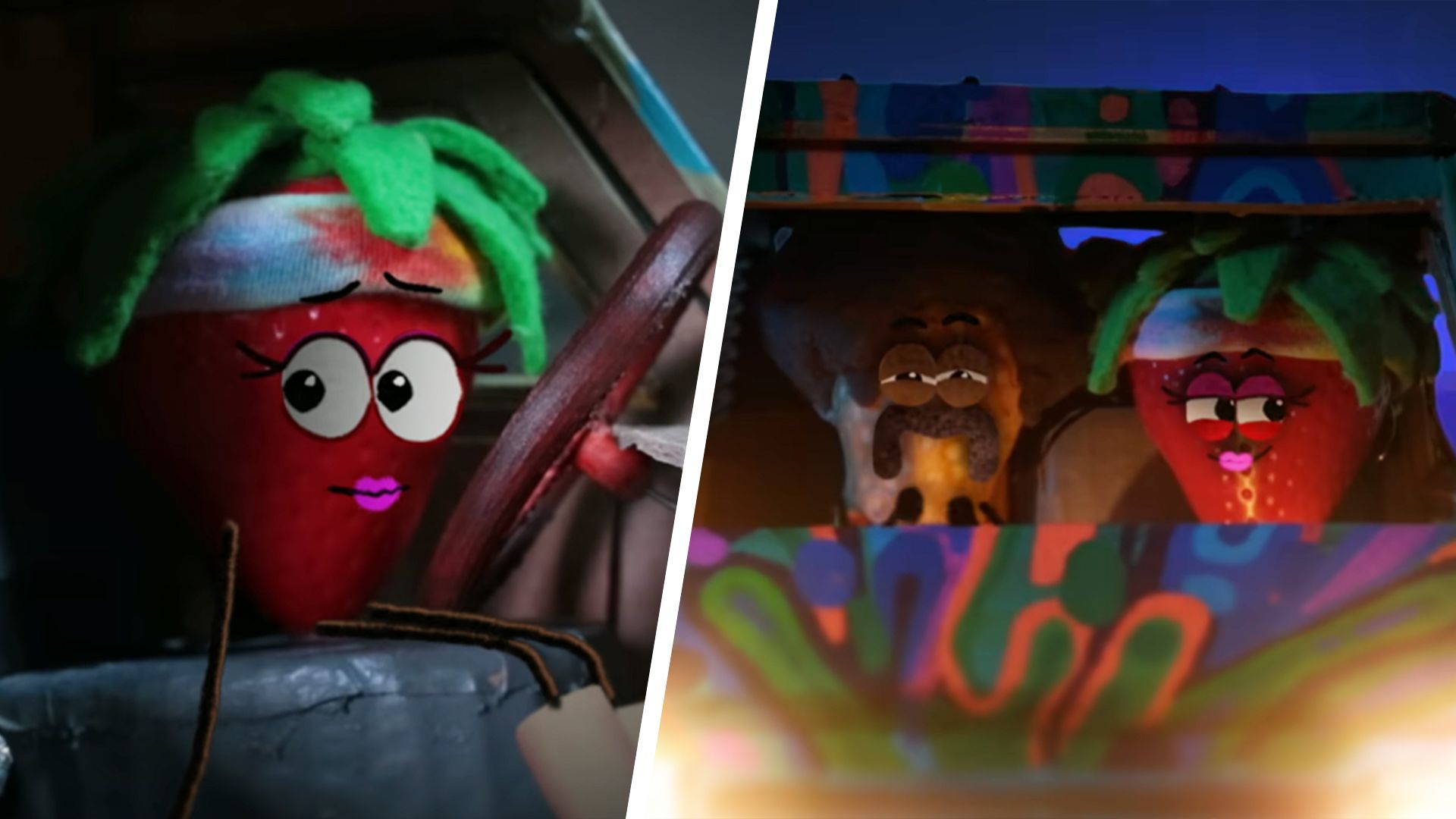
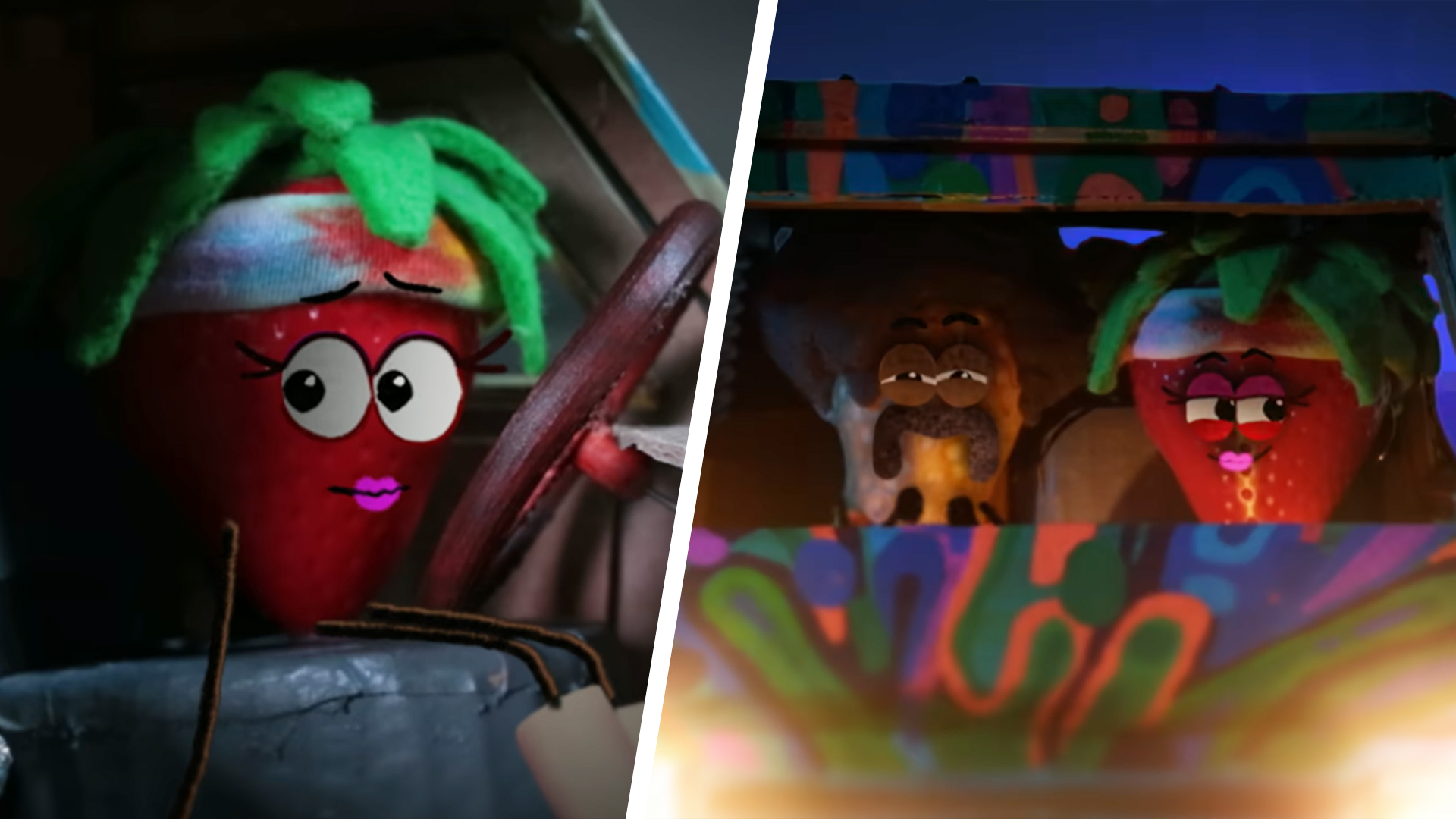
Directed by veteran Pixar artists Rej Bourdages and Tony Maki, Fruit & Nut is being billed by the studio as the "untold story of the most famous duo of all time." While Pixar is globally renowned for its cutting-edge 3D computer-generated imagery (CGI), this seven-minute short represents a bold departure from the digital perfection of films like Toy Story or Finding Nemo. Instead, Bourdages and Maki have opted for a tactile, stop-motion approach, utilizing physical puppets and tangible sets to tell a story that is as absurd as it is visually arresting.
The short film follows the unlikely partnership between a lonely peanut and a hitchhiking strawberry. What begins as a mundane encounter at a dive bar quickly escalates into a high-octane "couple in crime" narrative. After the peanut flees the bar to avoid a bill, he inadvertently becomes the getaway driver for a strawberry involved in a bank robbery. The plot, which draws thematic inspiration from classic road trip cinema like Thelma & Louise, serves as a psychedelic origin story for a popular snack combination. The narrative journey is punctuated by unexpected twists, culminating in a finale that has left viewers both baffled and delighted.
A Stylistic Departure for the Animation Giant
For decades, Pixar has been the gold standard for 3D animation. The studio practically invented the medium with the original Toy Story and has spent the last thirty years refining the physics of light, hair, and water to near-photorealistic levels. However, Fruit & Nut stands as a testament to the studio’s growing interest in diversifying its visual language. It is only the second stop-motion film ever released by Pixar, following the 2024 experimental short Self.
The decision to use stop-motion is significant. In an era where AI-generated imagery and hyper-clean digital renders are becoming commonplace, the "handcrafted" feel of Fruit & Nut offers a refreshing sense of imperfection. The puppets have weight and texture; the sets feel lived-in and physical. By combining these stop-motion elements with 2D animation sequences, Bourdages and Maki have created a hybrid look that feels more like an independent indie darling than a product of a multi-billion dollar studio.
This shift in direction is not accidental. It is the result of Pixar’s internal artist-driven program, an initiative designed to give employees a creative outlet outside the rigid structures of feature film production. This program serves as a spiritual successor to the studio’s earlier SparkShorts initiative, which produced acclaimed works like Kitbull and Float. These programs are vital for the health of the studio, allowing artists who usually spend years working on a single aspect of a massive feature—such as lighting or character rigging—to take the reins as directors and explore their own unique visions.
The Pedigree Behind the Project
The creative force behind Fruit & Nut consists of two of the studio’s most experienced hands. Rej Bourdages and Tony Maki are not newcomers to the industry; their fingerprints are all over some of the most successful and emotionally resonant films in modern animation. Their collective credits include Coco, Soul, Inside Out 2, and upcoming projects like Elio and Hoppers.
Having spent years contributing to the "Pixar look," Bourdages and Maki clearly relished the opportunity to break the rules. Their experience in big-budget storytelling allows Fruit & Nut to maintain a high level of narrative discipline even as its visuals become increasingly surreal and psychedelic. The short manages to pack a full character arc and a high-stakes heist into just seven minutes, proving that the duo’s skills in pacing and character development translate perfectly across different mediums.
The choice of protagonists—a peanut and a strawberry—allows for a level of physical comedy and visual metaphor that might feel out of place in a more grounded feature film. The "odd couple" dynamic is a staple of Pixar’s storytelling, but by stripping away the human (or anthropomorphic animal) element and replacing it with snack food, the directors are able to push the absurdity to its limits.
Tapping into the Zeitgeist
The early buzz surrounding Fruit & Nut has focused heavily on its aesthetic choices, particularly the aforementioned nod to GTA VI. In the current media landscape, references to high-profile pop culture events are a powerful way to garner attention, and Pixar’s marketing team has clearly recognized the meme potential of a "hard-boiled" crime story starring fruit and legumes.
Online commentators have been quick to point out the irony of Pixar—a studio synonymous with family-friendly, wholesome entertainment—releasing a film that adopts the visual language of a gritty crime thriller. This "boldly different" direction has sparked conversations about the future of the studio. As the animation industry becomes increasingly competitive, with studios like Sony Pictures Animation pushing boundaries with the Spider-Verse films, Pixar is under pressure to prove that it can still innovate and surprise its audience.
Fruit & Nut suggests that the studio is more than willing to meet that challenge. By allowing its artists to experiment with different techniques and tones, Pixar is building a library of diverse content that can appeal to a wider range of viewers. While these shorts are primarily released online rather than in theaters, their influence often trickles up into the studio’s larger projects.
The Value of Internal Experimentation
The importance of programs like the one that produced Fruit & Nut cannot be overstated. For a studio as large as Pixar, there is always a risk of creative stagnation. When a particular style becomes successful, the temptation is to repeat it indefinitely. However, by fostering an environment where experimentation is encouraged, Pixar ensures that it remains at the forefront of the industry.
These experimental shorts act as a laboratory for new techniques. The lessons learned during the production of Fruit & Nut—whether they involve the integration of 2D and 3D elements or the use of non-traditional textures—could easily find their way into the next Pixar blockbuster. We are already seeing evidence of this stylistic expansion in other upcoming projects. For instance, the marketing for the upcoming project Gatto has already showcased a distinct 2D animation style that moves away from the traditional Pixar aesthetic.
Furthermore, these projects serve as a vital talent-scouting tool. By giving artists like Bourdages and Maki the chance to direct, Pixar is developing its next generation of feature film directors. It allows the studio to see who can handle the pressures of leadership and who has a unique voice that deserves a larger platform.
A New Chapter for Pixar?
As Fruit & Nut makes its way across social media and animation forums, it serves as a reminder of the sheer talent housed within Pixar’s walls. It is a film that refuses to be put in a box, blending the gritty tropes of crime cinema with the whimsical absurdity of a children’s snack commercial.
The surprising twist at the end of the film, which adds another layer to its "origin story" premise, is a classic Pixar touch—proving that no matter how much the visual style changes, the studio’s commitment to clever, heart-filled storytelling remains constant.
For fans of animation, Fruit & Nut is a promising sign of things to come. It suggests a future where Pixar is not just the master of 3D CGI, but a versatile studio capable of tackling any medium, from stop-motion to traditional 2D. As the studio continues to evolve, these small-scale experiments will likely be remembered as the catalysts for a new era of creative freedom. Whether or not we see a full-length stop-motion feature from Pixar in the near future remains to be seen, but for now, the adventures of a peanut and a strawberry have successfully proven that there is still plenty of room for the unexpected in the world of animation.