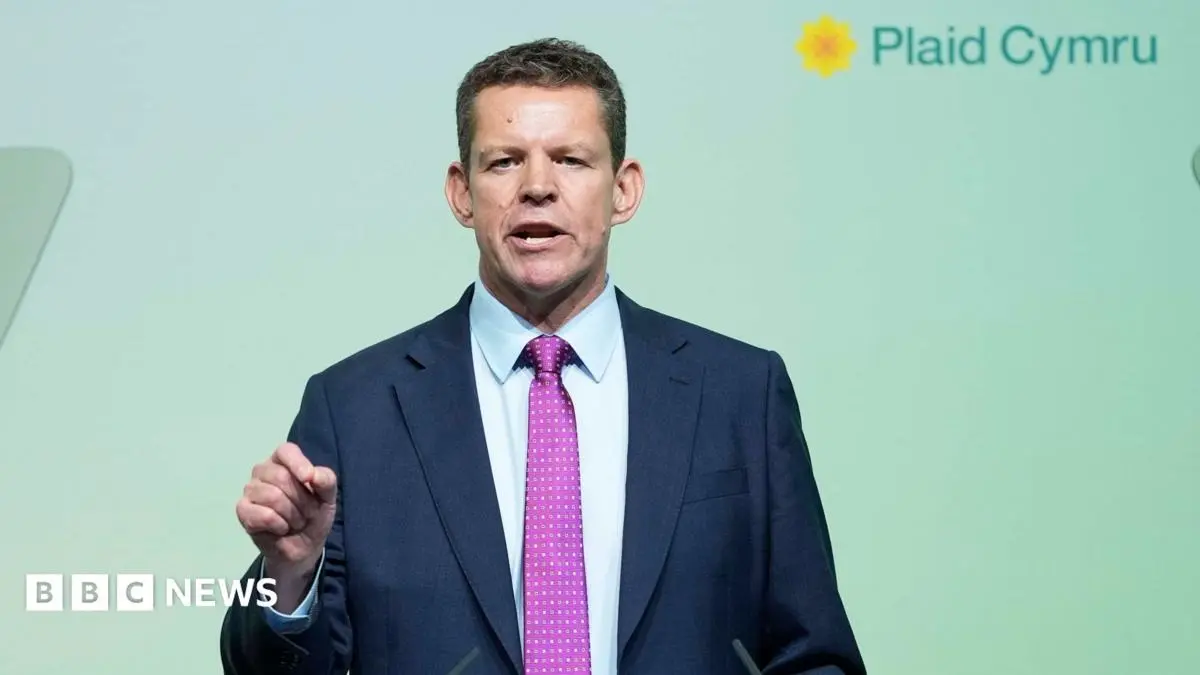
"There will be difficult decisions," ap Iorwerth told the audience, stressing that the current budget arithmetic demands a highly disciplined approach to public finances. He explained that the Welsh government would look to find savings by consolidating and streamlining public services, avoiding unnecessary duplication, and focusing strictly on delivering positive outcomes for the public. However, the First Minister drew a sharp ideological line between his administration’s approach to fiscal discipline and that of his political opponents on the right. He insisted that any efforts to streamline services must remain free of the damaging approach of the parties on the right, whom he accused of defining savings and waste through a narrow ideological lens rather than a practical commitment to public service delivery. This cooperative but firm stance underscores the tightrope ap Iorwerth must walk: negotiating with rival parties to pass his budget while maintaining Plaid Cymru’s core progressive values.
A central theme of ap Iorwerth’s address was the nature of the relationship between Cardiff and London. He revealed details of his personal interactions with Prime Minister Andy Burnham, expressing a cautious optimism about the potential for constructive collaboration, while simultaneously issuing a firm warning. The First Minister recalled a direct conversation with the Prime Minister, stating that he had looked him in the eyes and explicitly warned him not to undermine Wales as a nation or bypass the democratically elected Senedd. According to ap Iorwerth, the Prime Minister returned his gaze and promised that he would not take such actions—a commitment that the First Minister intends to hold him to. "I will hold him to that," ap Iorwerth declared to the conference hall, adding, "Wales will hold him to that."
The demand for parity with Scotland highlights the long-standing differences in how devolution has developed across the nations of the United Kingdom. In Scotland, the devolved parliament in Holyrood has long held extensive control over policing, civil and criminal justice, and a vast array of domestic policies. In contrast, the Welsh Senedd’s powers have developed more incrementally. Policing and justice in Wales remain under the direct control of the Home Office and the Ministry of Justice in Westminster, creating a complex administrative split where Welsh laws are passed by the Senedd but enforced by a system answerable to London. Similarly, while Scotland enjoys substantial control over its rail infrastructure, the Welsh rail network is only partially devolved and remains heavily dependent on decisions made in London.
The First Minister also highlighted the Crown Estate as a key area where Wales is being left behind. In Scotland, the management and revenues of the Crown Estate’s land and coastal assets have been devolved, providing a direct source of income for the Scottish government, particularly from offshore renewable energy projects. In Wales, the Crown Estate’s vast holdings—including the seabed out to the 12-nautical-mile limit—remain under the control of London, with the revenues generated flowing back to the UK Treasury rather than being reinvested directly into Welsh communities. Ap Iorwerth argued that his proposed "new deal" is essential to "redress the historic unfairness of our fiscal and constitutional settlement." He insisted that putting Wales on an equal footing with Scotland must be viewed as a "bare minimum" for any future relationship between Cardiff and London.