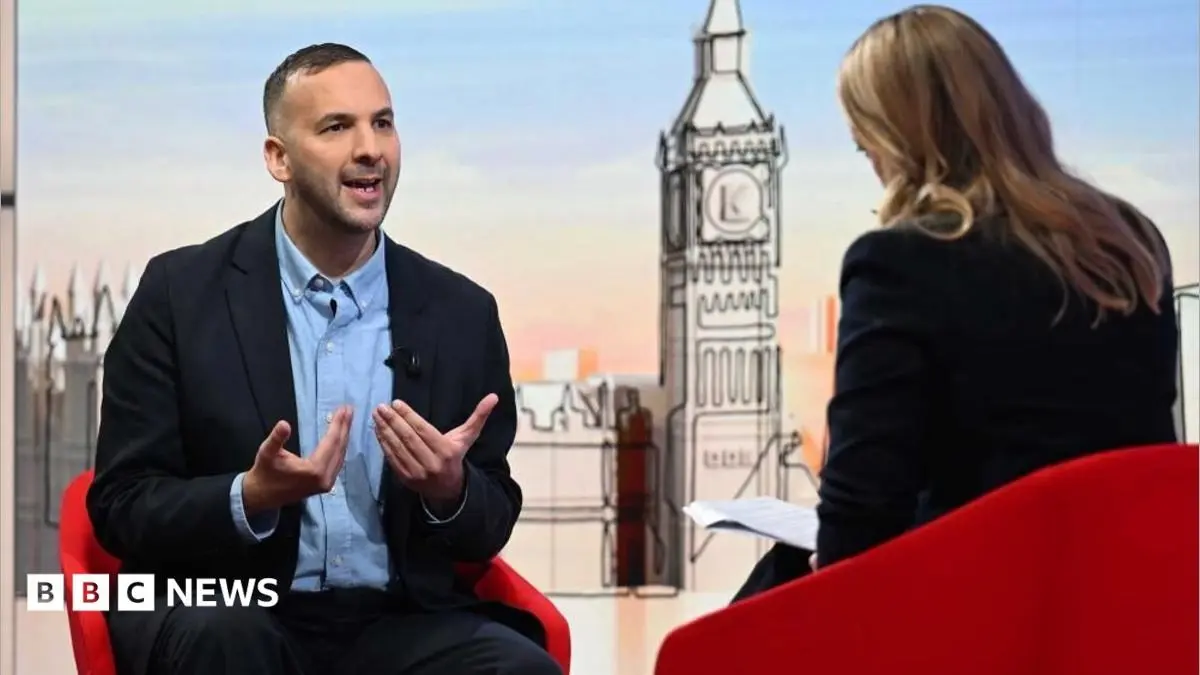
Polanski clarified during his television appearance that he had harbored significant reservations about the resolution prior to its passage. He pointed out that he had previously stated he could not support the motion unless two specific amendments were incorporated. The first amendment sought to avoid explicitly committing the party to a single democratic state as the predetermined outcome for the region, while the second aimed to insert explicit protections for Jewish Green members, ensuring that individuals who attend synagogues identifying as Zionist would not face disciplinary action within the party. However, conference delegates voted down both proposed amendments before passing the primary motion.
Pressed on whether he would use his authority as leader to intervene and strike down the decision, Polanski was firm in his refusal to bypass standard procedures. He stated clearly that he was not going to try to overturn the motion, while indicating his intention to seek modifications once the procedural timeline allows. He explained that at the first available opportunity, he intends to amend the policy to move away from prescribing a single-state solution, leaning instead toward a framework where Israelis and Palestinians are left to decide their collective future for themselves.
When asked by Kuenssberg why he would not modify internal party rules immediately to address the crisis, Polanski stressed his commitment to internal party procedures. He observed that under current Green Party governance rules, a motion passed at a national conference automatically becomes official policy for a two-year duration, preventing immediate amendments. He emphasized that when members make a decision through established democratic processes, he believes it is his duty as leader to respect that democratic will.
The interview also touched upon the philosophical and political definitions underpinning the motion. Asked directly whether he considers Zionism to be inherently racist, Polanski, who is himself Jewish, sought to shift the focus toward the human cost of the ongoing regional conflict. He remarked that he did not view discussing the nature of Zionism as the central controversy, stating instead that what is genuinely controversial is that 75,000 Palestinians have been killed in recent years.
Addressing Kuenssberg’s question regarding whether he recognized that for vast numbers of Jewish people around the world, Zionism simply represents the fundamental right to a secure national homeland, Polanski drew a sharp distinction between ideological concepts and real-world outcomes. He acknowledged that while many view Zionism as a search for safety, its practical implementation has resulted in severe consequences for the Palestinian population. He stressed that his primary commitment is to equal rights for both Israelis and Palestinians, arguing that the practical application of Zionism has consistently failed to deliver that outcome.
When questioned further on whether he believes the State of Israel possesses a legal or moral right to exist, Polanski offered a broad assessment of state sovereignty, stating that he does not believe any state possesses an inherent right to exist under international law.