Green Party leader Zack Polanski has announced that he will not attempt to overturn a controversial motion passed by party members that officially classified Zionism as a form of racism, confirming that the stance will remain binding policy until at least 2028.
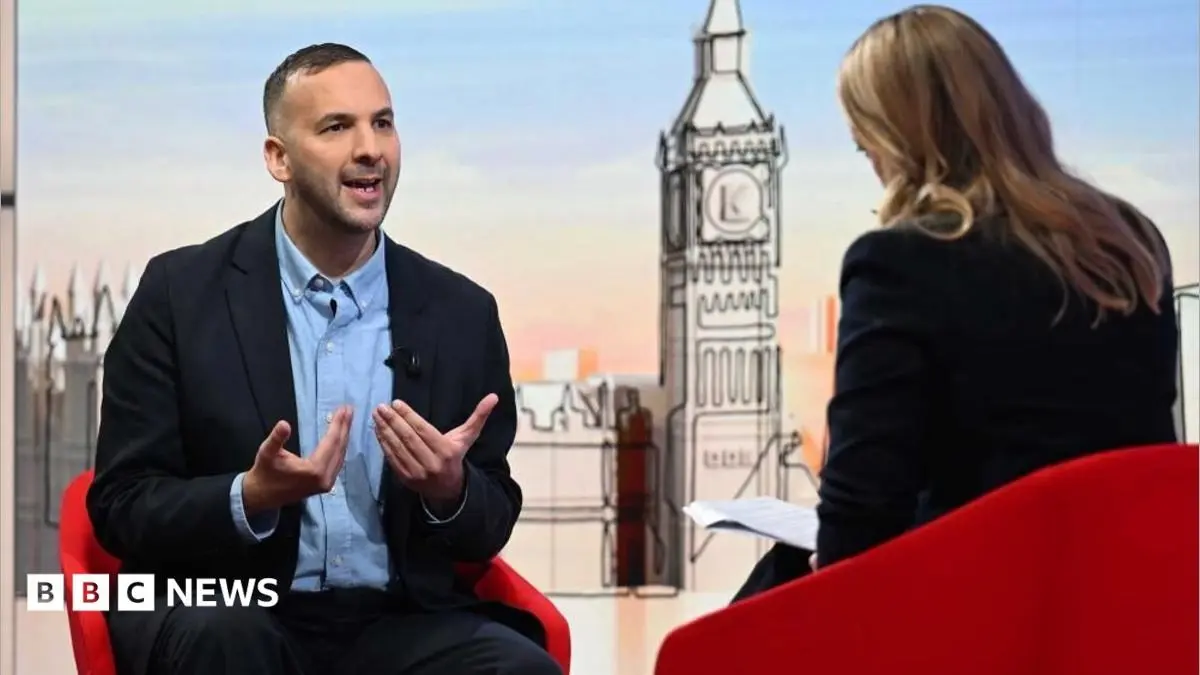
Appearing on the BBC’s Sunday with Laura Kuenssberg, Polanski explained that while he personally favors amending the language of the resolution, the internal democratic mechanics of the party mean that conference decisions must stand for a minimum of two years. He insisted that he would respect the democratic will of the membership rather than attempting to force through rule changes to override the decision.
The motion in question was adopted at the Green Party’s annual conference in Brighton earlier this month. It formally defined Zionism as an ideology dedicated to maintaining "an ethnonationalist Jewish state in historic Palestine to the exclusion and/or domination of the non-Jewish population." In addition to this definition, the text committed the party to advocating for "a single democratic state throughout historic Palestine," calling for a full arms embargo on Israel, and expressing an explicit institutional commitment to Palestinian liberation.
The passage of the resolution has triggered severe internal fractures and provoked widespread outrage across the broader political landscape. It has drawn fierce criticism from Green Members of Parliament, Jewish advocacy groups, figures within the government, and international partners within the European Green movement. The scale of the controversy also prompted the Equality and Human Rights Commission, the UK’s statutory equality watchdog, to formally write to the Green Party requesting further details regarding the policy and its potential ramifications.
The fallout from the vote cast a long shadow over the political standing of the leadership, directly affecting the final days of Polanski’s campaign in the Holborn and St Pancras by-election. Polanski ultimately finished second behind the Labour candidate, while facing intense scrutiny over his management of the internal debate and questions regarding his ongoing leadership.
Much of the internal criticism focused on the fact that Polanski abstained from casting a vote on the motion during the Brighton conference. The resolution passed by a margin of 1,022 votes in favor to 813 against. Critics have highlighted that this decision was decided by fewer than 2,000 voting delegates, representing a tiny fraction of the Green Party’s total overall membership, which stands at approximately 230,000.
Polanski clarified during his television appearance that he had harbored significant reservations about the resolution prior to its passage. He pointed out that he had previously stated he could not support the motion unless two specific amendments were incorporated. The first amendment sought to avoid explicitly committing the party to a single democratic state as the predetermined outcome for the region, while the second aimed to insert explicit protections for Jewish Green members, ensuring that individuals who attend synagogues identifying as Zionist would not face disciplinary action within the party. However, conference delegates voted down both proposed amendments before passing the primary motion.
Pressed on whether he would use his authority as leader to intervene and strike down the decision, Polanski was firm in his refusal to bypass standard procedures. He stated clearly that he was not going to try to overturn the motion, while indicating his intention to seek modifications once the procedural timeline allows. He explained that at the first available opportunity, he intends to amend the policy to move away from prescribing a single-state solution, leaning instead toward a framework where Israelis and Palestinians are left to decide their collective future for themselves.
When asked by Kuenssberg why he would not modify internal party rules immediately to address the crisis, Polanski stressed his commitment to internal party procedures. He observed that under current Green Party governance rules, a motion passed at a national conference automatically becomes official policy for a two-year duration, preventing immediate amendments. He emphasized that when members make a decision through established democratic processes, he believes it is his duty as leader to respect that democratic will.
The interview also touched upon the philosophical and political definitions underpinning the motion. Asked directly whether he considers Zionism to be inherently racist, Polanski, who is himself Jewish, sought to shift the focus toward the human cost of the ongoing regional conflict. He remarked that he did not view discussing the nature of Zionism as the central controversy, stating instead that what is genuinely controversial is that 75,000 Palestinians have been killed in recent years.
Addressing Kuenssberg’s question regarding whether he recognized that for vast numbers of Jewish people around the world, Zionism simply represents the fundamental right to a secure national homeland, Polanski drew a sharp distinction between ideological concepts and real-world outcomes. He acknowledged that while many view Zionism as a search for safety, its practical implementation has resulted in severe consequences for the Palestinian population. He stressed that his primary commitment is to equal rights for both Israelis and Palestinians, arguing that the practical application of Zionism has consistently failed to deliver that outcome.
When questioned further on whether he believes the State of Israel possesses a legal or moral right to exist, Polanski offered a broad assessment of state sovereignty, stating that he does not believe any state possesses an inherent right to exist under international law.
Polanski also addressed direct calls for personal accountability regarding his leadership throughout the political storm. Vivien Lichtenstein, the chair of the Jewish Greens, had publicly requested that Polanski issue an apology for his handling of the conference proceedings and the resulting fallout. When asked if he intended to offer such an apology, Polanski responded unequivocally, stating that he was not sorry at all.
Despite his refusal to apologize, Polanski sought to reassure Jewish members concerned about their place within the organization. He maintained that no Jewish member of the Green Party would be excluded or subjected to discrimination based on their faith, background, or heritage. He stressed that being Jewish and holding supportive views toward Israel are two entirely distinct concepts that should not be conflated.
The leadership’s stance has done little to soothe external outrage or resolve growing political blockades. Phil Rosenberg, president of the Board of Deputies of British Jews, issued a scolding reaction to Polanski’s interview statements. Rosenberg declared that presiding over a political party whose official policy the leader openly disagrees with until at least 2028 represents an untenable position. He argued that the Green Party’s newly adopted platform effectively erases Jewish identity and experience, calls for the elimination of Israel, and sends a message to the vast majority of Jewish people—who hold a core belief in Israel’s right to exist—that they are unwelcome within the party.
The procedural mechanisms that allowed the motion to pass have also ignited calls for radical structural reform from within the parliamentary party. Green MP Ellie Chowns and other prominent party figures have argued that the current member-led decision-making framework must undergo an immediate review. They contend that allowing policy that drastically impacts the party’s national standing to be determined by such a small proportion of the total membership exposes the party to severe reputational damage.
Meanwhile, the political consequences of the vote have begun to manifest at the local government level. The Labour Party announced that it will actively terminate existing power-sharing arrangements with Green councillors on local authorities across the country, unless individual Green representatives explicitly disown and distance themselves from the conference motion. Commenting on the situation, Prime Minister Andy Burnham offered a sharp condemnation, labeling the conference resolution as "antisemitic."
Responding to Labour’s ultimatum regarding local government partnerships, Polanski declined to issue a central directive to local representatives, maintaining that it remains entirely up to individual Green councillors to evaluate their local circumstances and act as they see fit. With internal divisions unresolved, leadership reviews demanded, and external alliances collapsing, the Green Party remains firmly locked into the controversial policy platform for the foreseeable future.