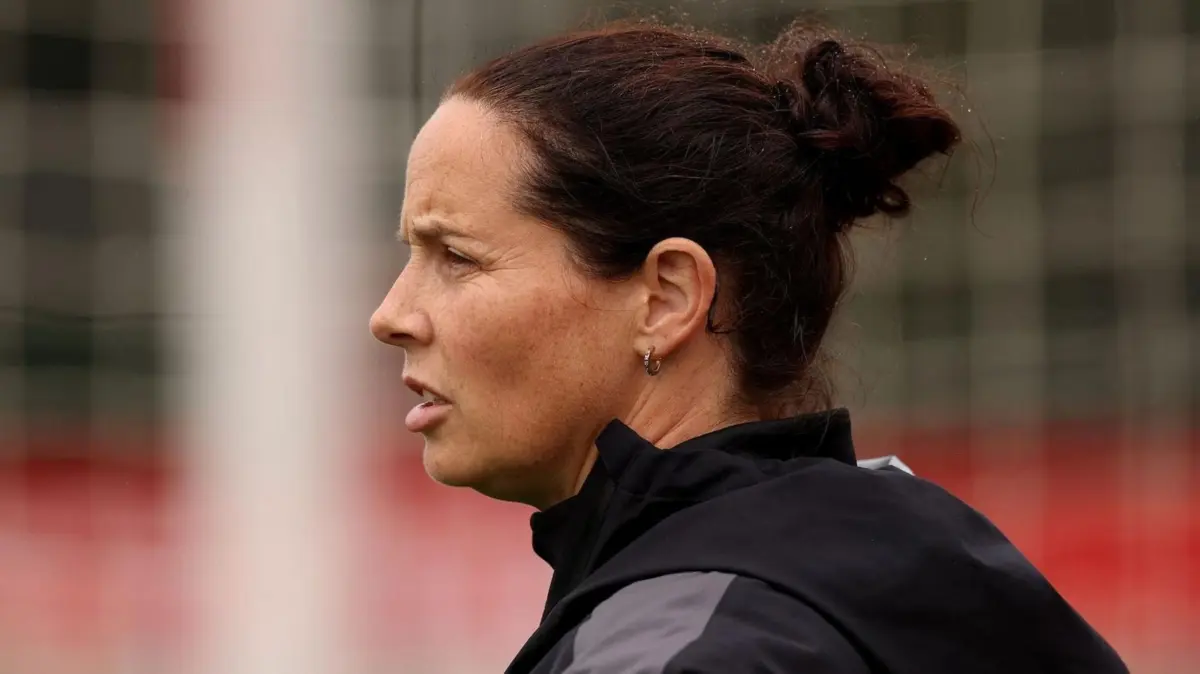
Despite being ranked 68th in the world—37 places below Wales at 31st—Albania represents a significant hurdle. Under Wilkinson, Wales has learned not to underestimate lower-ranked opposition, particularly those with a clear identity and home-field advantage.
Wilkinson spoke candidly about the threat Albania poses, recalling the second group game where the scoreline perhaps flattered Wales. "I think I’ve spoken quite honestly [about how in] the second group game against them, they definitely could have scored at least once or twice," she noted.
Albania is characterized as a team that understands its limitations and plays to its strengths, often relying on a compact defensive block and clinical efficiency on the break. "I expect it to be a resilient performance from both teams, to stick in it and try to bring our best versions of ourselves," Wilkinson said. "They give everything for their badge like we will for ours, so it’ll be a tough match."
Wales’ away form has been a point of concern. While they topped their qualifying group thanks to emphatic home wins over the Czech Republic, Albania, and Montenegro, their performances on the road were less consistent. Draws against the Czechs and in Montenegro highlighted a difficulty in maintaining the same level of dominance away from home—a trend Wilkinson will be desperate to buck on Friday.
The Long and Winding Road to Brazil
The stakes for this tie are immense. Success against Albania over two legs would earn Wales a place in the World Cup play-off final in early December. Their opponent in that final would be either Romania or Norway. The latter, currently managed by former Wales boss Gemma Grainger, would likely enter as heavy favorites, adding a layer of narrative intrigue to Wales’ potential path to the tournament.
However, even a victory in the play-off final does not guarantee a ticket to the 2027 World Cup in Brazil. The qualification process is notoriously complex. Of the eight European play-off winners, seven will progress directly to the finals. The eighth team—determined by being the lowest-ranked nation based on their performance in the group stages of qualifying—will be forced into an inter-confederation play-off tournament scheduled for February.
When asked about the convoluted nature of the qualification path, Wilkinson preferred to stay focused on the immediate task. "This is above my pay grade," she remarked. "What I will say is it doesn’t help to get stuck in what could be or what comes afterwards. There’s different scenarios here, but it’s not for us to change that. For right now, this is our path and we’ll just keep taking care of what’s in front of us one step at a time."
For a nation that recently celebrated its first-ever qualification for a major tournament in the form of Euro 2025, the prospect of reaching a World Cup represents the ultimate evolution of the women’s game in Wales. Despite the injuries and the difficult road ahead, the mood within the camp remains one of determined optimism. On Friday night in Shkoder, the first step toward Brazil begins, and for Rhian Wilkinson, that step starts with keeping the ball out of the Welsh net.