The injury list reads like a "who’s who" of the Welsh starting lineup. Perhaps most significant is the absence of Ceri Holland. Since the retirement of the legendary Jess Fishlock, Holland has emerged as the team’s most influential creative force, providing the drive and vision in midfield that often unlocks stubborn defenses. Her absence leaves a creative void that Wilkinson must find a way to fill.
The defensive and goalkeeping ranks have been equally depleted. Olivia Clark, the first-choice goalkeeper, is among those sidelined, along with back-up keeper Poppy Soper. This leaves the Dragons thin in the most specialized position on the pitch. The defensive unit is further weakened by the loss of Rhiannon Roberts, Hayley Ladd, and Ella Powell—all players with significant international experience and tactical reliability.
Further up the pitch, the absences of Laura Hughes, Mia Ross, and the pacey Ffion Morgan limit Wilkinson’s options for rotation and tactical adjustments. Aside from Soper, every player on the injury list would have been a strong contender for a starting spot or a primary role off the bench.
A Youthful New Look for the Dragons

The silver lining of such an extensive injury list is the opportunity it affords the next generation of Welsh talent. The squad traveling to Albania has a distinctly youthful appearance, featuring six uncapped players and several others who are only just beginning their international careers.
Among the newcomers looking to make their mark are goalkeepers Soffia Kelly and Lucy Farrell-Shrouder, who find themselves thrust into the senior setup following the injuries to Clark and Soper. The defensive line sees the inclusion of centre-back Cadi Rodgers, while wide player Heidi Hills and forwards Casi Gregson and Olivia Francis round out the group of potential debutants.
They are joined by a cohort of players who, while capped, possess minimal international experience. Scarlett Hill, Phoebie Poole, Tianna Teisar, and Chloe Williams have only a handful of appearances between them, yet they may be called upon to play significant minutes in what are arguably the highest-stakes matches of their careers.
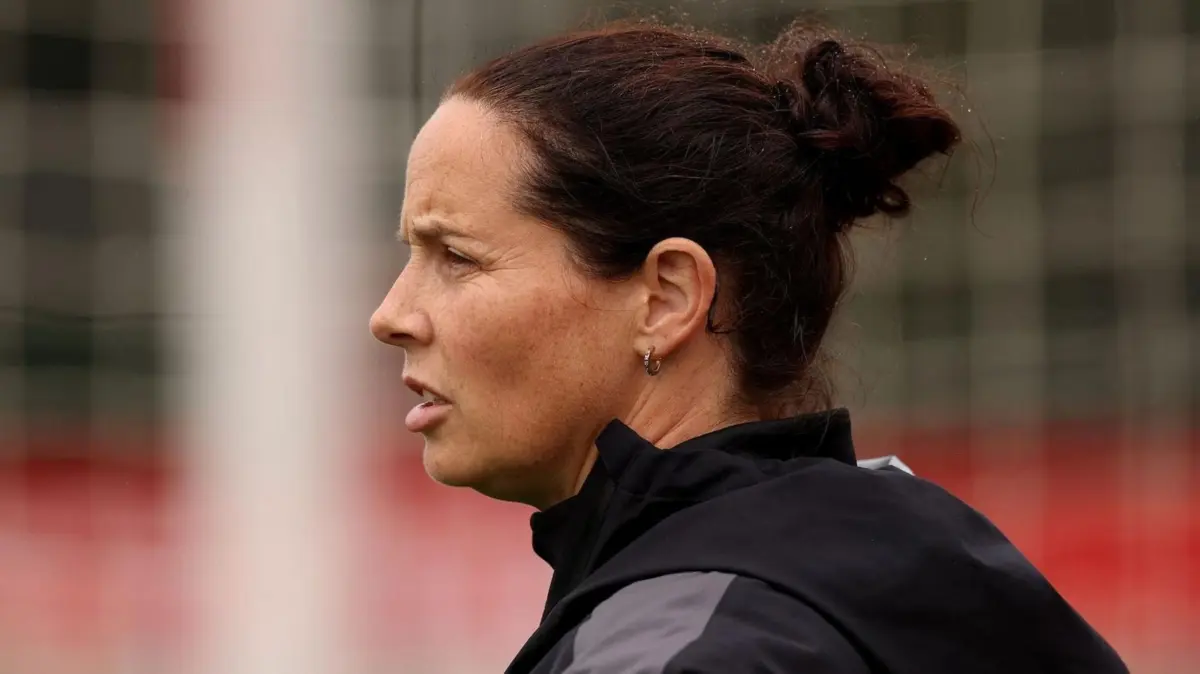
Wilkinson, however, remains confident in her young charges. She pointed to a long-standing policy of integrating youth players into senior training sessions as the reason why these players are ready to step up. "I think it would be silly for me to say that having nine injuries was predictable—I think that was out of the norm," Wilkinson admitted. "If I could have had no injuries I would have, but equally this is football and we adapt and we are a small country. I don’t think we can pretend that we have unlimited players, so the fact that I’m able to put together a team of 23 that has such strength and with a lot of experience is a good thing."
The manager insisted that the inexperienced players are "absolutely" ready for the pressure of a play-off. "They’ve trained with a great intensity, they’ve done their work off the pitch and really involved themselves in meetings," she added. "They’ve done everything they can to put themselves in the best possible position to get minutes."
Analyzing the Opposition: The Albanian Threat