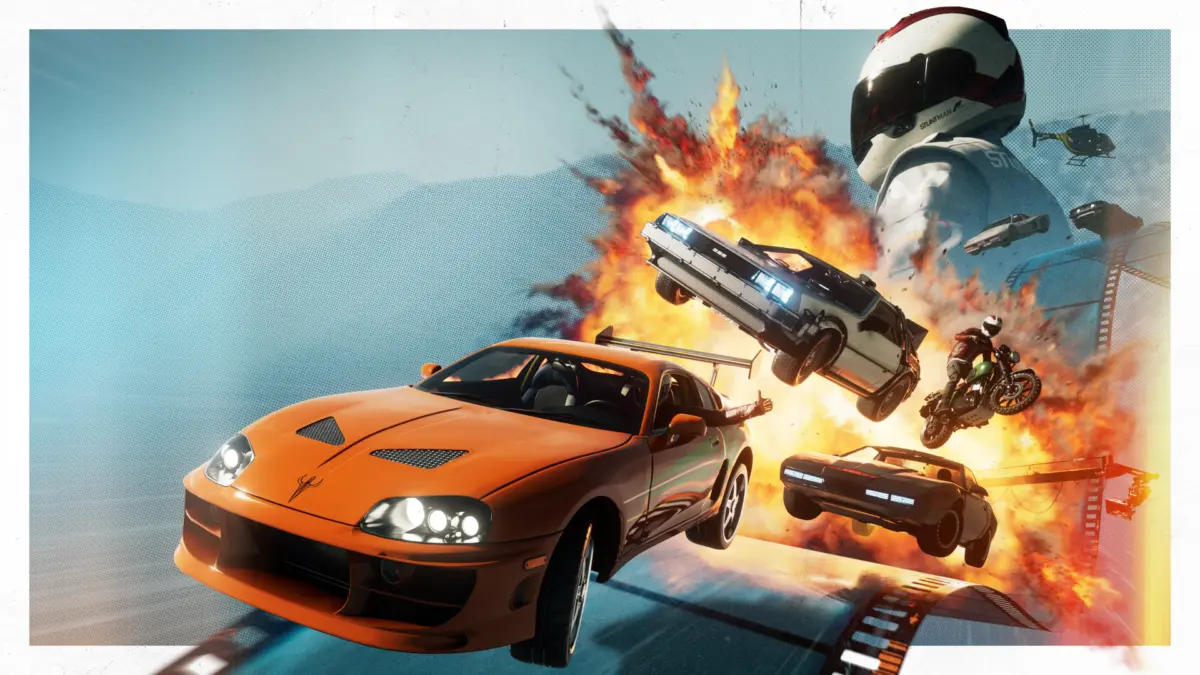
The world of video games is often a cycle of rebirth, where once-dormant intellectual properties find new life under the stewardship of developers who grew up playing them. Among the most unexpected but welcome resurrections in recent memory is Stuntman: Hollywood, a modern reimagining of a franchise that hasn’t seen a new entry in nearly two decades. Developed by Saber Interactive, the title represents more than just a nostalgic trip back to the early 2000s; it is an ambitious attempt to bridge the gap between interactive entertainment and the golden age of Hollywood blockbusters.
Slated for a release in 2027, Stuntman: Hollywood is positioning itself as a tour of the past in two distinct ways. First, it revives a gameplay loop that was unique in its era—tasking players not with winning a race, but with executing precise, dangerous maneuvers on a film set. Second, it leverages a massive stable of iconic film and television brands, from the neon-soaked streets of Miami Vice to the time-traveling antics of Back to the Future. By combining the "perfect run" mechanics of the original games with high-fidelity licenses from Universal Pictures and beyond, Saber Interactive is looking to create a definitive stunt-driving simulator.
The Pedigree of a Cult Classic
To understand the anticipation surrounding Stuntman: Hollywood, one must look back to the franchise’s origins. The original Stuntman, released in 2002, was developed by the Newcastle-based studio Reflections Interactive—the same team behind the revolutionary Driver series. Published by the now-defunct French company Infogrames, the game was a departure from traditional racing titles. It wasn’t about the finish line; it was about the process. Players were cast as a fledgling stunt driver working through various film sets, required to hit specific marks, perform jumps, and endure "takes" until the director was satisfied.
The game was notorious for its difficulty, demanding millisecond-perfect timing and a high tolerance for trial and error. Despite its punishing nature, it resonated with players who craved the fantasy of being a Hollywood daredevil. A sequel, Stuntman: Ignition, followed in 2007 under THQ, but the franchise eventually faded into the background as the industry shifted toward open-world driving and narrative-heavy experiences.
For many years, the Stuntman IP sat in the archives of various holding companies, an unlikely candidate for a big-budget reboot. However, the shifting tides of the gaming industry—and the specific corporate history of Saber Interactive—provided the perfect opening for its return.
The Road to Independence and Iconic Partnerships
The provenance of Stuntman: Hollywood is as complex as a Hollywood contract negotiation. According to Tim Willits, Chief Creative Officer of Saber Interactive, the project’s roots can be traced back to the company’s tenure under the Embracer Group. Embracer, known for its rapid and massive acquisition strategy, purchased Saber Interactive in 2020. During this period, Saber found itself in possession of a vast catalog of legacy IPs, including Stuntman.
As Willits explained during an interview at Gamescom, the decision to revive the brand was born from a combination of internal passion and external opportunity. "Stuntman was an IP that Embracer owned, so when we were in the Embracer family, we were like, ‘Hey, we love driving games,’" Willits noted. The timing was fortuitous; Saber had a team coming available with significant experience in the driving genre, and the company’s burgeoning relationship with Universal Pictures provided the final piece of the puzzle.
Saber had already established trust with Universal through projects involving Jurassic Park and Turok. When the idea of a licensed Stuntman game was pitched, Universal was immediately on board. This partnership allowed Saber to move beyond generic parodies of action movies—a staple of the original games—and instead place players directly into the driver’s seats of the most famous vehicles in cinema history.
The corporate landscape for Saber has changed significantly since those early development days. In 2024, Saber Interactive successfully separated from the Embracer Group in a deal worth approximately $247 million, becoming an independent entity under a company owned by Saber co-founder Matthew Karch. This independence has allowed the studio to focus its resources on its most promising projects, with Stuntman: Hollywood standing as a pillar of its future lineup.
A Cinematic Sandbox of Blockbuster IPs
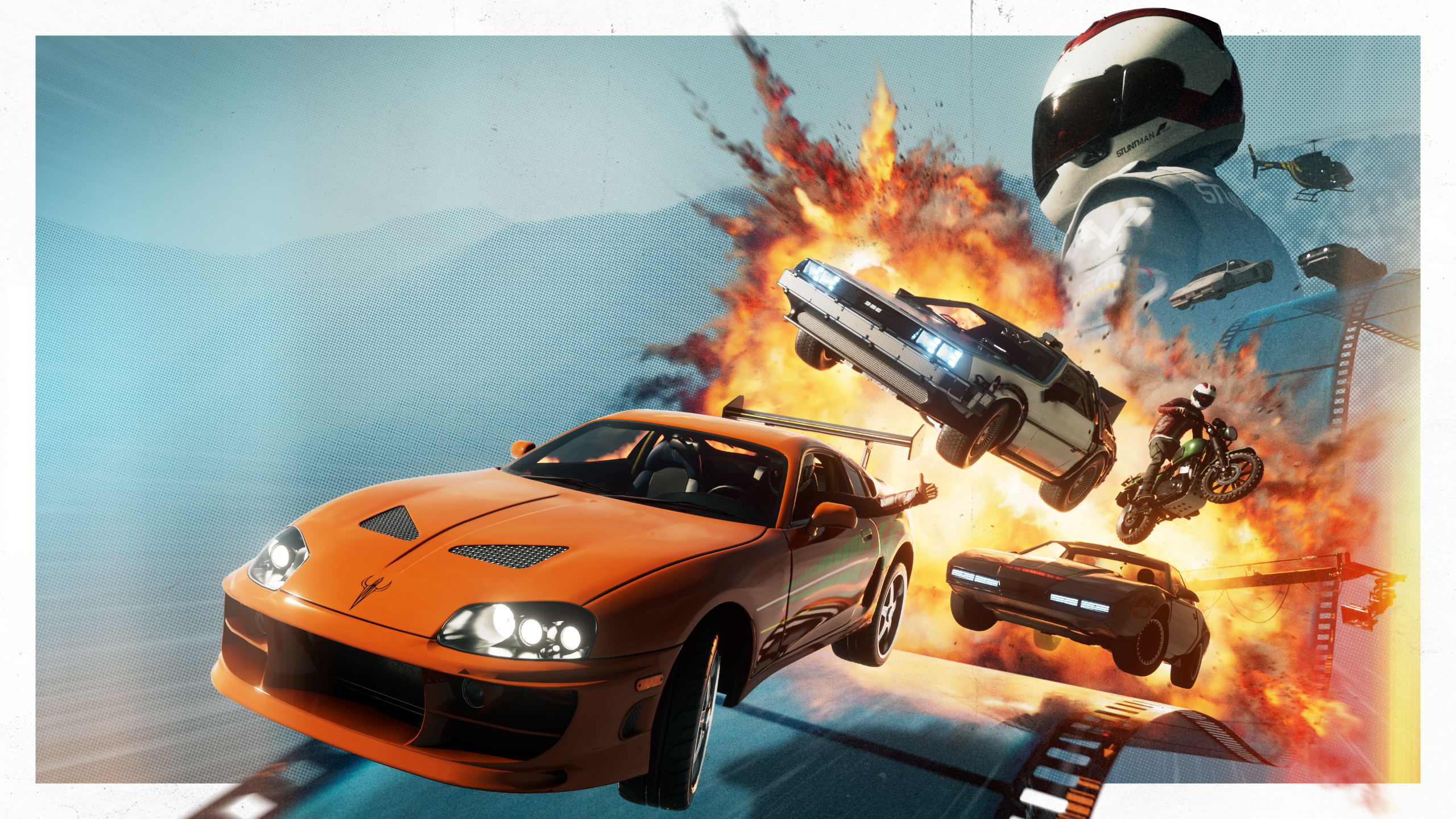
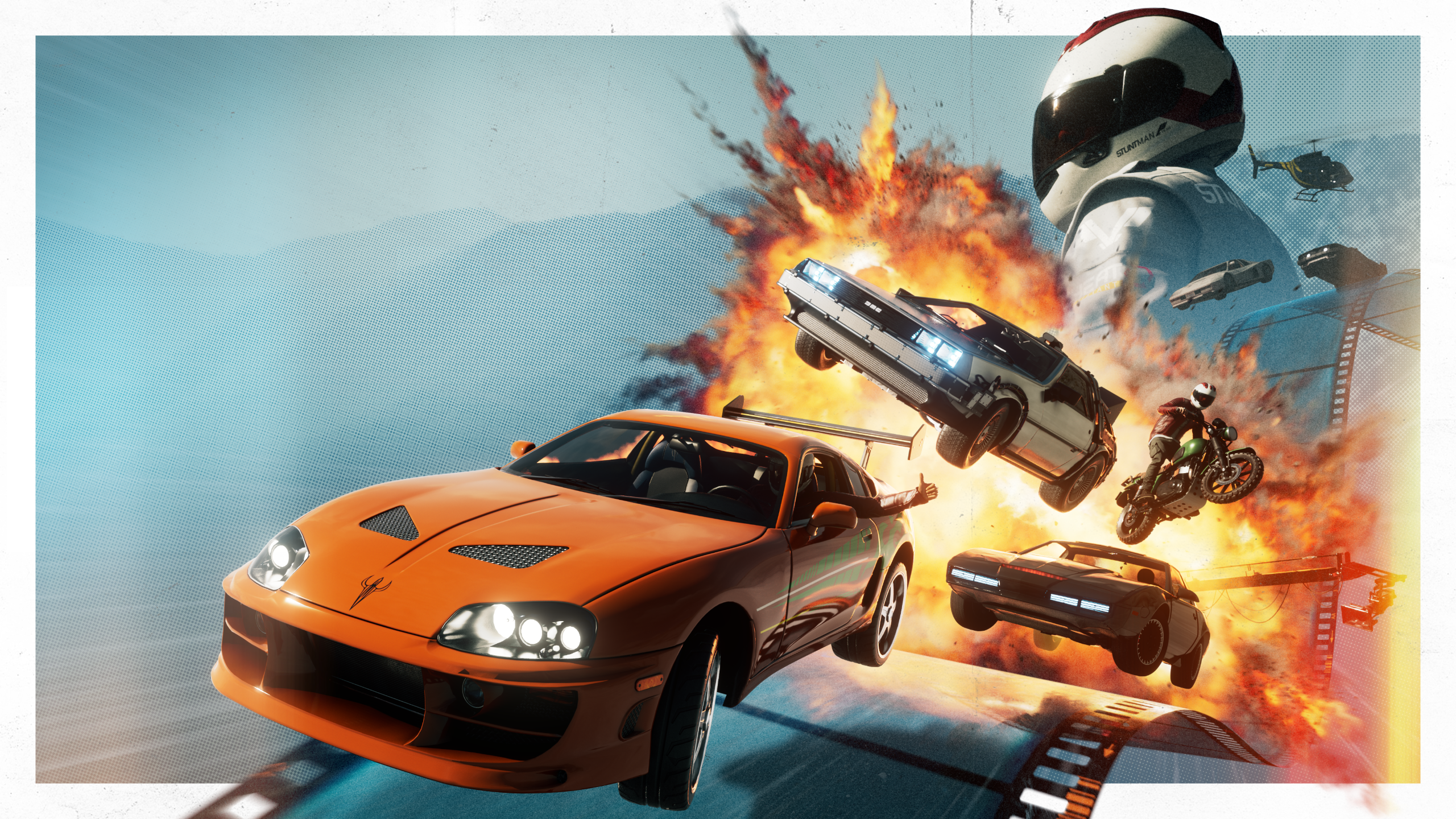
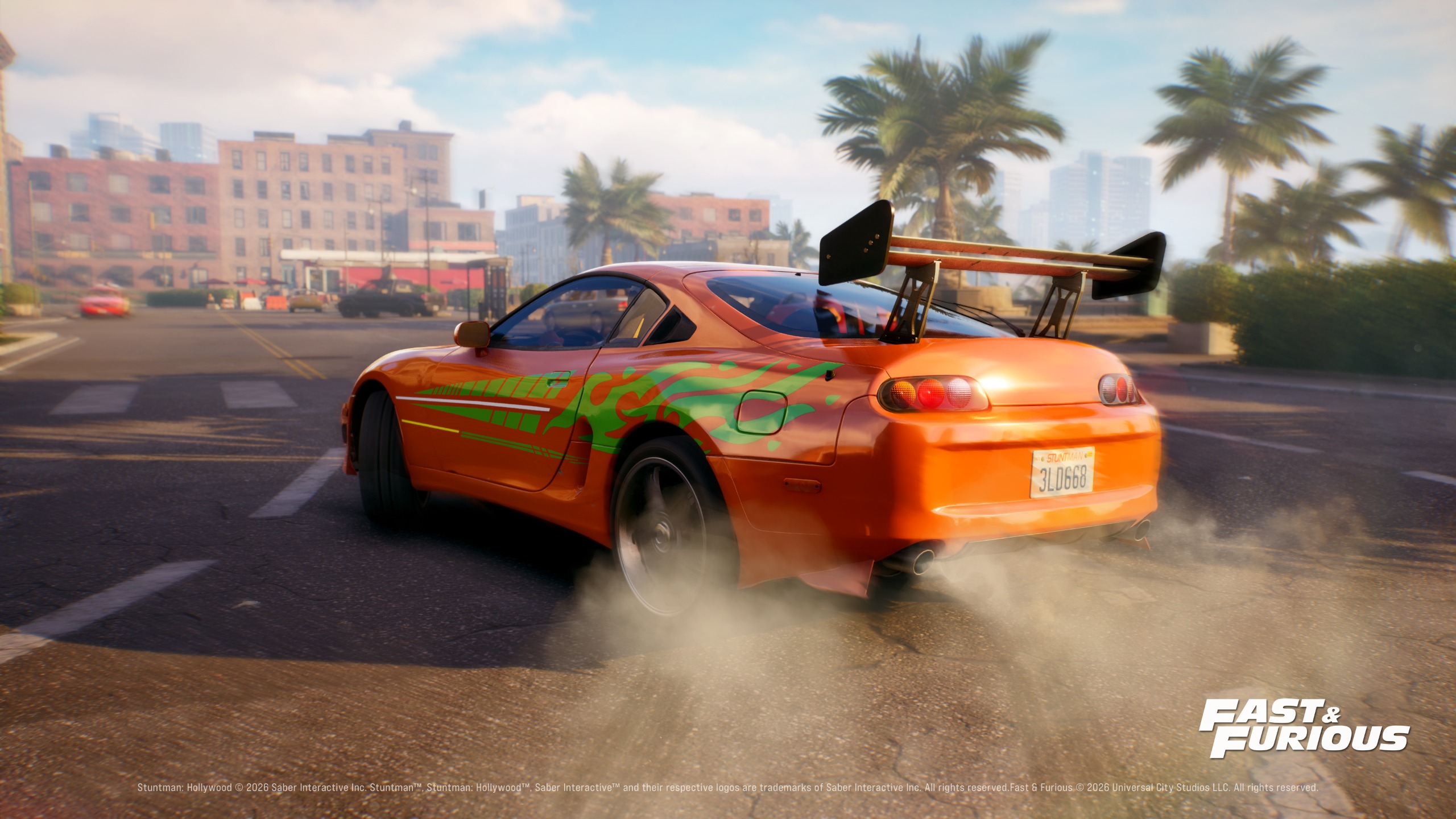
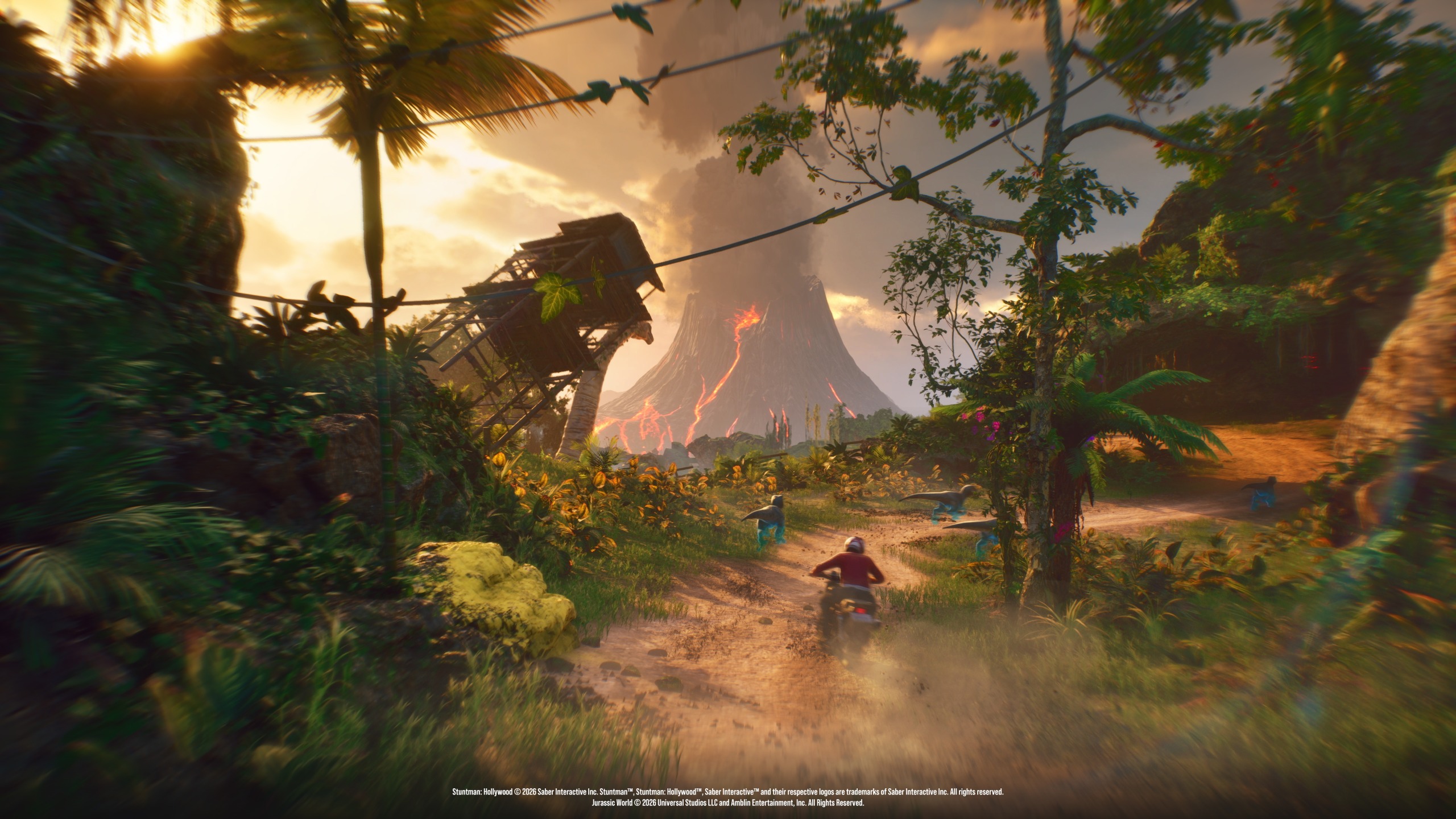
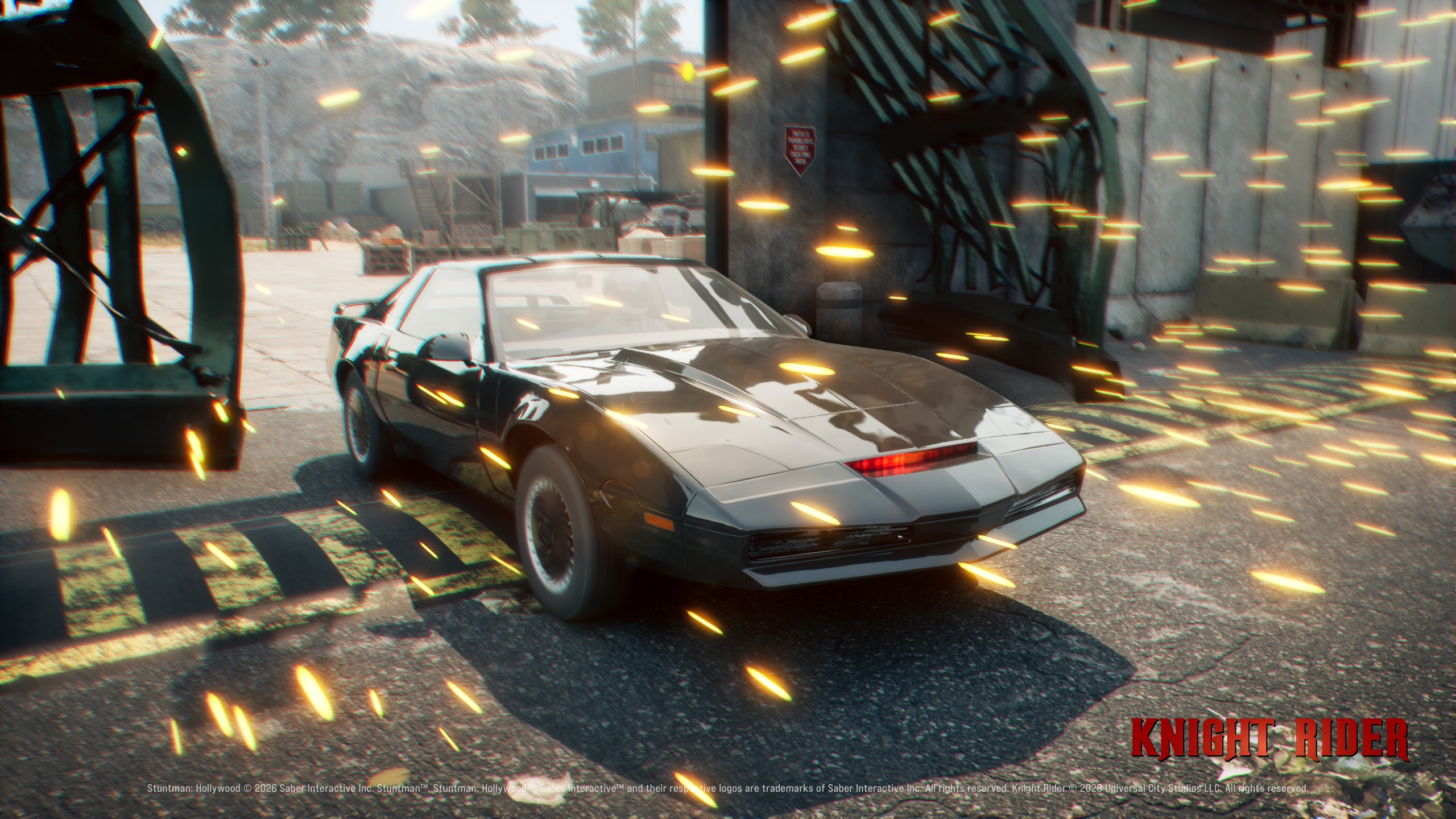
The core appeal of Stuntman: Hollywood lies in its unprecedented access to legendary film properties. For a stunt-driving game, the "set" is the star, and Saber has curated a lineup that spans decades of pop culture. The confirmed roster of licenses includes The Fast and the Furious, Knight Rider, Miami Vice, Back to the Future, Jurassic World, and the cult-classic Death Race.
The involvement of the movie studios has gone beyond mere licensing. According to Willits, the "movie people" were deeply engaged in the creative process, offering ideas and even providing assets to ensure the game captured the specific feel of each franchise. This collaboration ensures that a Miami Vice sequence doesn’t just look like a generic beach drive; it captures the specific 1980s aesthetic, from the lighting to the architecture.
Saber’s strategy of cultivating deep ties with the film industry is becoming a hallmark of the studio. Beyond the Universal partnership, the company is also working with Lionsgate on an upcoming John Wick game. Willits highlighted the synergy between the two mediums, noting that working directly with Keanu Reeves and director Chad Stahelski—a former stuntman himself—has been instrumental. Stahelski’s background as a stunt coordinator and his love for video games make him a natural collaborator for Saber, further cementing the studio’s reputation as the go-to developer for cinematic adaptations.
Hands-On: The "Bite-Sized Awesomeness" of Stunt Driving
During a hands-on demo at Gamescom, the gameplay philosophy of Stuntman: Hollywood became clear. Willits describes the experience as "bite-sized awesomeness," a term that perfectly captures the high-intensity, short-duration missions that define the game.
The demo featured five distinct stunt-driving runs, each lasting between five and ten minutes. These aren’t long-distance treks; they are concentrated bursts of action that require total focus. In every run, the player is guided by a director’s voice in their ear—a mechanic that serves as both a tutorial and a narrative anchor. The director provides real-time feedback, shouting instructions and offering praise or criticism based on the player’s performance.
To assist players in the heat of the moment, the game employs a sophisticated UI system. A dynamic line on the road shows the ideal route, while proximity indicators alert the driver when they need to get "paint-scraping close" to an object without actually making contact. This balance of guidance and challenge is a modernization of the original game’s notoriously steep learning curve. While the demo proved to be relatively forgiving—allowing for a few "howlers" before requiring a restart—the real depth lies in the rating system. Much like the original, players are graded on their precision, speed, and flair, providing a massive amount of replay value for those seeking a perfect "five-star" take.
The variety of tasks within a single run is staggering. In one sequence, a player might be required to drift through a narrow alleyway, weave through a series of timed explosions, and then scatter a traditional pile of movie-set cardboard boxes for dramatic effect. Every run culminates in a "hero stunt"—a grand finale that demands a crescendo of speed and timing. One such climax involved launching a white Ferrari Testarossa off a ramp and onto the deck of a speeding super-yacht, a moment that feels pulled directly from a high-budget action sequence.
Iconic Vehicles and Stylized Visuals
The vehicles in Stuntman: Hollywood are more than just tools; they are characters in their own right. The demo showcased a diverse garage: the sleek Ferrari Testarossa for Miami Vice missions, an agile off-road motorbike for the dinosaur-infested locales of Jurassic World, and the high-tech, talkative KITT from Knight Rider. The inclusion of the drifting-spec Toyota from The Fast and the Furious and the reinforced muscle cars of Death Race ensures that every mission feels mechanically distinct.
Even the legendary DeLorean from Back to the Future makes an appearance. While the real-world DeLorean was often criticized for its sluggish performance, Saber Interactive has opted for "movie logic," giving the car the power and handling necessary to perform death-defying stunts. Each vehicle handles with a weight and physics profile suited to its cinematic counterpart, though a dedicated drift button ensures that players can always initiate stylish slides when the director calls for them.
Visually, the game strikes a balance between modern fidelity and artistic stylization. While the resolutions and textures are built for current-generation hardware, the game avoids the sterile look of some modern simulators. Instead, it employs individual art directions for each film set. The Miami Vice levels are bathed in the pastel pinks and neon blues of the 80s, while other sets adopt a slightly more "cartoony" or heightened reality to emphasize the "stunt" nature of the world. This approach prevents the game from feeling like a generic racer and keeps the focus on the fun and mayhem of a movie set.
A Modern Era for a Classic Concept
As Saber Interactive continues development toward the 2027 release window, Stuntman: Hollywood looks poised to reclaim its niche in the gaming market. By leaning into its identity as a "throwaway and ephemeral" but highly addictive experience, it avoids the bloat that plagues many modern AAA titles. It is a game designed for short sessions of intense fun, grounded in the universal language of cinema.
For those who grew up watching the iconic car chases of the 80s and 90s, or for those who simply enjoy the challenge of a high-stakes driving line, Stuntman: Hollywood offers a unique proposition. It is a celebration of the craft of stunt driving, wrapped in the glamorous, explosive packaging of Hollywood’s biggest hits. When it eventually launches on PlayStation 5, Xbox Series X/S, and PC, it will invite a new generation of players to step onto the set and wait for those three famous words: "Quiet on set… Action!"