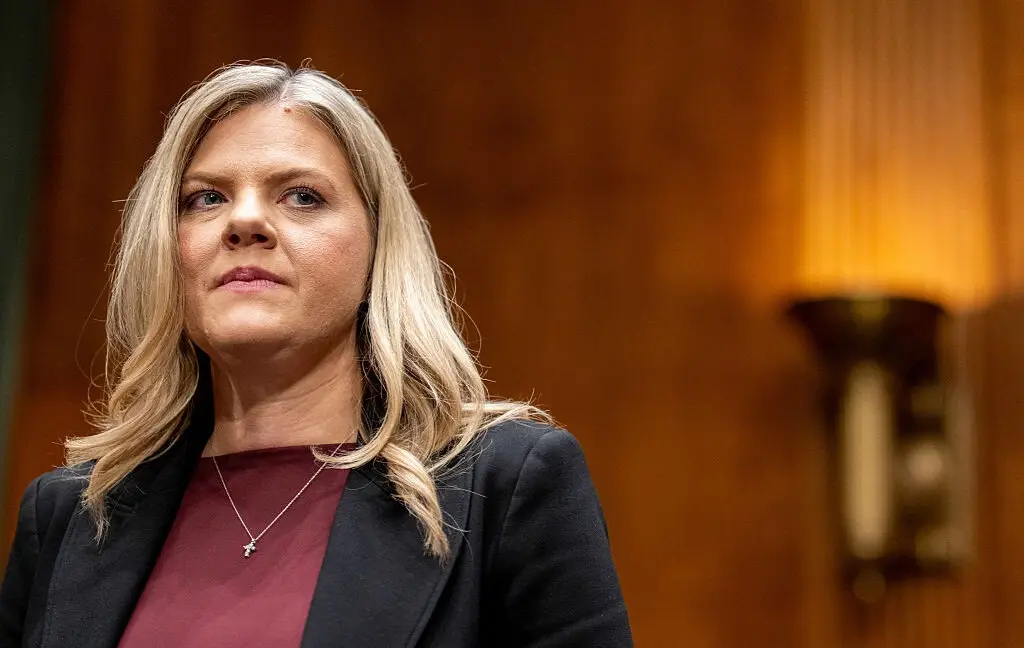
"I wish it wasn’t so difficult for members of the administration to just plainly say that the president’s wrong," Hassan said. "And it’s really concerning to me that you are equivocating on it here."
Hassan emphasized that when public officials hesitate to clarify scientifically sound facts in favor of protecting political sensitivities, it creates confusion for pregnant women and families relying on sound medical advice from the federal government.
Bad options
The scrutiny continued as lawmakers turned their attention to statements made regarding childhood immunization schedules and vaccine formulation. Sen. Lisa Blunt Rochester (D-Del.) focused her questioning on vaccine claims made by Trump in August, specifically addressing reports that Overton herself had suggested to the president that combination vaccines could be divided into multiple, individual shots.
Blunt Rochester noted the immense practical and regulatory hurdles associated with such a policy proposal. Public health experts and regulatory framework analysis indicate that even if there were legitimate scientific reasons to believe that splitting combination vaccines would improve safety or efficacy, doing so would require massive financial investments and years of rigorous clinical trials before the individual replacement vaccines could receive regulatory approval in the United States.
Highlighting the impracticality of recommending such an approach without extensive prior testing, Blunt Rochester pressed Overton on whether presenting such a concept to the White House was appropriate.
"So obviously," Blunt Rochester asked, "you think these were good options, correct?"
Overton avoided commenting directly on the quality or scientific backing of the idea, choosing instead to define the baseline responsibilities of her advisory position within the executive branch. Overton replied that, in her current role, her job is simply to give Trump options.
Unsatisfied with the general explanation of advisory duties, Blunt Rochester pressed further on whether an advisor should filter out unrealistic or harmful suggestions before presenting them to the president.
"You wouldn’t have provided bad options, right?" Blunt Rochester asked.
Once again, Overton refused to answer the direct question, leading to visible frustration from the Delaware senator over the witness’s reluctance to address a fundamental principle of policy advising.
"This is just a simple question," Blunt Rochester interjected, attempting to guide the witness back to the core query. "This, I thought, was the easy question."