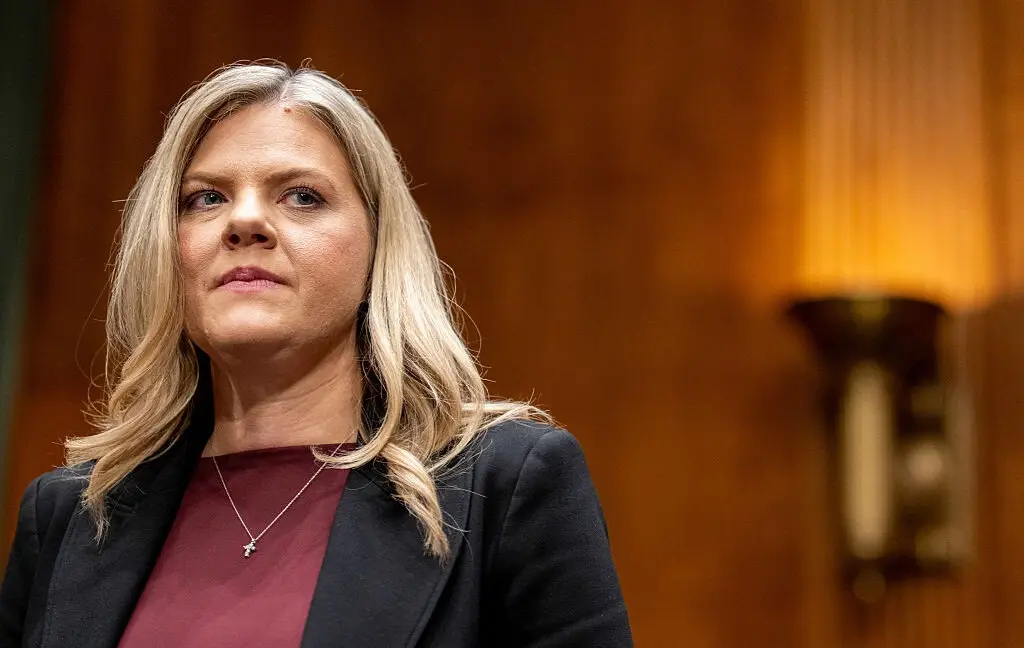
WASHINGTON — A contentious Capitol Hill hearing highlighted growing tensions over federal public health policy as Democratic lawmakers repeatedly challenged administration official Overton over unproven medical assertions made by the president, controversial vaccine recommendations, and the influence of corporate campaign contributions on federal regulatory decisions.
Throughout the session, members of the Senate panel sought direct answers regarding whether administration officials were pushing back against scientifically unsupported statements originating from the White House. However, Overton repeatedly declined to directly criticize or refute statements made by President Donald Trump, maintaining that the chief executive’s primary goal remains achieving positive health outcomes for the nation.
The exchange repeatedly underscored a stark divide between lawmakers seeking clear, unequivocal endorsements of established medical consensus and administration officials defending their role as policy advisors providing flexible options to the executive branch.
Public Health Claims and Medical Consensus
The questioning began with a tense back-and-forth regarding the administration’s public messaging on routine health matters and presidential inquiries into medical topics. Defending the president’s approach to health guidance, Overton emphasized the broad nature of the administration’s motives.
"Senator, the president asks questions and wants the best outcomes for the American people right now," Overton told the panel during an early line of questioning.
However, Sen. Maggie Hassan (D-N.H.) aggressively pressed Overton on a specific, high-profile medical claim previously amplified by the president concerning the use of common pain medication during pregnancy. Hassan zeroed in on Trump’s false claim that taking Tylenol while pregnant is linked to the development of autism in children.
Demanding a straightforward assessment of the scientific accuracy of the assertion, Hassan pushed Overton to state clearly whether the president’s comments were inaccurate.
"Was he wrong when he said that? Yes or no?" Hassan asked.
Overton declined to offer a direct "yes" or "no" answer regarding the president’s correctness. Instead, Overton adhered closely to a prepared statement regarding the current state of scientific literature.
"There is no current evidence of a causal link between Tylenol and autism," Overton answered.
The refusal to explicitly state that the president’s assertion was incorrect drew sharp criticism from Hassan, who argued that the reluctance of administration representatives to publicly correct clear medical inaccuracies undermines public trust in health guidance.
"I wish it wasn’t so difficult for members of the administration to just plainly say that the president’s wrong," Hassan said. "And it’s really concerning to me that you are equivocating on it here."
Hassan emphasized that when public officials hesitate to clarify scientifically sound facts in favor of protecting political sensitivities, it creates confusion for pregnant women and families relying on sound medical advice from the federal government.
Bad options
The scrutiny continued as lawmakers turned their attention to statements made regarding childhood immunization schedules and vaccine formulation. Sen. Lisa Blunt Rochester (D-Del.) focused her questioning on vaccine claims made by Trump in August, specifically addressing reports that Overton herself had suggested to the president that combination vaccines could be divided into multiple, individual shots.
Blunt Rochester noted the immense practical and regulatory hurdles associated with such a policy proposal. Public health experts and regulatory framework analysis indicate that even if there were legitimate scientific reasons to believe that splitting combination vaccines would improve safety or efficacy, doing so would require massive financial investments and years of rigorous clinical trials before the individual replacement vaccines could receive regulatory approval in the United States.
Highlighting the impracticality of recommending such an approach without extensive prior testing, Blunt Rochester pressed Overton on whether presenting such a concept to the White House was appropriate.
"So obviously," Blunt Rochester asked, "you think these were good options, correct?"
Overton avoided commenting directly on the quality or scientific backing of the idea, choosing instead to define the baseline responsibilities of her advisory position within the executive branch. Overton replied that, in her current role, her job is simply to give Trump options.
Unsatisfied with the general explanation of advisory duties, Blunt Rochester pressed further on whether an advisor should filter out unrealistic or harmful suggestions before presenting them to the president.
"You wouldn’t have provided bad options, right?" Blunt Rochester asked.
Once again, Overton refused to answer the direct question, leading to visible frustration from the Delaware senator over the witness’s reluctance to address a fundamental principle of policy advising.
"This is just a simple question," Blunt Rochester interjected, attempting to guide the witness back to the core query. "This, I thought, was the easy question."
Blunt Rochester continued to push for transparency regarding the scientific foundation of the vaccine advice discussed within the administration. She asked Overton specifically whether she had reviewed scientific data regarding the feasibility and safety of splitting the Measles, Mumps, and Rubella (MMR) vaccine into separate doses, or whether she had evaluated claims regarding whether current vaccine doses were the size of a soda bottle.
Throughout the additional line of questioning, Overton again dodged the specific inquiries, declining to detail what specific data had been reviewed or to clarify the origins of the unusual claims regarding vaccine dosage sizes.
Flavored vapes
The hearing also brought renewed attention to leadership vacancies and regulatory shifts at the Food and Drug Administration (FDA). The FDA has been without a confirmed commissioner since May, when Dr. Marty Makary resigned from the position following reported tension with the White House over e-cigarette regulation. Makary stepped down after resisting administrative pressure to approve the sale of flavored e-cigarette and vape products.
Despite widespread, bipartisan opposition from health advocates and lawmakers who view flavored e-cigarettes as products designed and marketed primarily to attract youth, the FDA issued a policy directive in early May allowing their sale.
Sen. Chris Murphy (D-Conn.) presented a detailed timeline during the hearing, alleging a direct connection between political fundraising and the sudden policy reversal regarding flavored vapes.
Setting out the chronological order of events, Murphy detailed how the regulatory shift unfolded over the course of less than a week:
"On April 30th, it’s a Thursday afternoon, Reynolds, one of the biggest tobacco companies in the country, makes an $8 million donation to the president. Two days later on Saturday, because of that donation, they have lunch with the president and they tell him that they want a change in FDA rules, especially regarding flavored vapes. The president calls the FDA commissioner, he calls the secretary of [the health department], and three days later on Tuesday, new guidance is issued that paves the way to the sale of flavored vapes."
Following his detailed recap of the sequence of events, Murphy asked Overton directly whether she saw a clear correlation between the $8 million corporate donation and the rapid policy modification by regulatory officials. Murphy further pressed Overton on whether she believed such a rapid, donor-driven timeline represented how the FDA should properly operate when making decisions that impact public health and youth safety.
Overton rejected the senator’s premise and defended the administration’s integrity without addressing the specific dates, financial contributions, or meetings outlined in Murphy’s timeline.
"I reject the framing of that question," Overton replied, adding that Trump remains "committed to the best possible outcomes for American[s]."
The hearing concluded with key questions regarding FDA oversight, executive advisory standards, and public health communications remaining sharply contested between administration officials and congressional overseers.