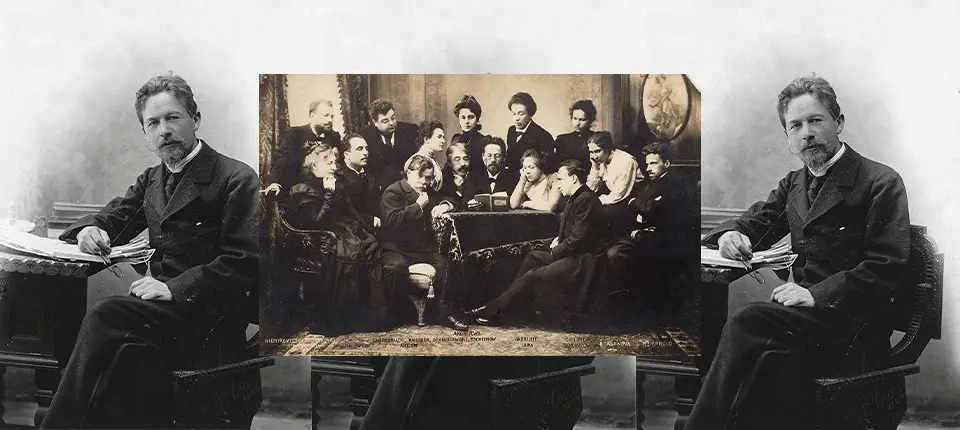
The third week of October has long held a peculiar place in the annals of literary history, marked by one of the most famous opening-night disasters in the theater. In October 1896, Anton Chekhov’s The Seagull premiered at the Alexandrinsky Theatre in St. Petersburg. The production was a catastrophe of such proportions that the audience hissed at the performers, and the playwright, overwhelmed by shame and frustration, fled the theater during the second act. The experience led Chekhov to famously declare, “Not if I live to be seven hundred will I write another play.” History, of course, proved him wrong. Chekhov would go on to write Uncle Vanya, Three Sisters, and The Cherry Orchard, fundamentally altering the course of modern drama. This anniversary serves as a perennial reminder that the initial reception of a work—whether a flop in St. Petersburg or a polarizing debut in the digital age—rarely dictates its ultimate legacy.
As the literary community reflects on Chekhov’s early struggles, the contemporary landscape continues to grapple with its own series of complex narratives, shifting from the nuances of craft to the urgent pressures of global politics. The literary internet this week has been dominated by a blend of deep-seated historical reflection and immediate, often painful, social commentary, illustrating the diverse ways in which writers today are attempting to make sense of a fractured world.
THE BEST OF THE LITERARY INTERNET
Among the most significant dialogues to emerge this week is a conversation between Pulitzer Prize winner Adam Johnson and the esteemed novelist Amitav Ghosh. The two discussed Ghosh’s latest work, The Wayfinder, delving into the multifaceted nature of narrative construction. Their exchange focused on the "many ways to tell a single story," a theme that resonates deeply in an era where perspective is often contested. Johnson and Ghosh explored how storytelling can serve as both a map for the future and a means of reclaiming histories that have been obscured by time or colonial influence.
This concern with historical and contemporary perspective is mirrored in a sobering analysis of the ongoing crisis in Gaza. The discourse has moved beyond immediate reportage to a profound "reckoning with civilization itself." Analysts and writers are examining how the genocide in Gaza has fundamentally reshaped the Middle East, altering geopolitical alliances and forcing a global re-evaluation of international law and humanitarian ethics. The literary world, in particular, has become a space for this witnessing, providing a platform for voices that seek to document the human cost of the conflict and the structural failures that allowed it to escalate.
In a more intimate look at the writing life, the Lit Hub Questionnaire recently featured five authors who provided candid answers to seven recurring questions. These profiles offer a glimpse into the idiosyncratic habits and philosophies of contemporary creators, proving that there are "no wrong answers" when it comes to the creative process. This sense of personal exploration is further extended by Bonnie Jo Campbell, who curated a list of seven literary ghost stories. Campbell suggests that these spectral narratives are more than mere genre exercises; they represent the lingering traumas and unresolved histories that continue to haunt the modern psyche.
The week also saw a touching tribute to the late Stephen Dixon. Writer and professor Josefine Kals shared her memories of Dixon, not just as a prolific and influential author known for his relentless prose, but as a dedicated pen pal. Kals’ reflection highlights the importance of literary mentorship and the deep, often private connections that sustain writers throughout their careers. Similarly, Bonnie Garmus, the bestselling author of Lessons in Chemistry, sat down with Jane Ciabattari to discuss her latest novel, Peck & Peck. Garmus’s new work is described as a coming-of-age story centered on poets and poetry, a departure that explores the formative power of verse and the vulnerability required to live a life dedicated to art.
The role of the written word in society was also explored through a historical lens, with an examination of how early newspapers helped democratize knowledge and foster civic participation. By making information accessible to the broader public, these publications laid the groundwork for modern democratic engagement. This historical context provides a sharp contrast to contemporary discussions about the "democratization" of information in the age of Big Tech. Specifically, the industry is currently grappling with a paradox: publishers are suing major technology firms for copyright infringement related to artificial intelligence while simultaneously embracing AI tools for their own operations. This tension between protecting intellectual property and adopting labor-saving technology remains one of the most pressing challenges for the future of the book trade.
Global literature remains a vital conduit for understanding international crises. Oksana Lutsyshyna recently highlighted essential works of Ukrainian literature by authors such as Artur Dron, Andriy Lyubka, and Lena Lyagushonkova. These writers are engaged in the "work of witnessing," documenting the lived experience of a nation under siege. Their work underscores the role of literature as a form of cultural resistance and a means of preserving national identity in the face of aggression.
On a more personal and perhaps unexpected note, the literary community found room for reflections on the natural world and domestic life. One essay detailed the profound lessons learned from forming a relationship with a rescue raccoon, exploring how interspecies empathy can lead to greater self-understanding. Another piece took a critical look at modern interior design, making a case against the ubiquitous trend of painting walls white. The author argues that behind a blank wall lies a myriad of hidden meanings, suggesting that our aesthetic choices are often reflections of deeper social anxieties or a desire for sterile perfection.
Economic issues were also at the forefront of this week’s literary discourse. A deep dive into the housing crisis asked the question many are currently facing: "Why is the rent so high?" The answer, according to the analysis, lies partly in greed-driven corporate algorithms that have revolutionized—and exploited—the rental market. This intersection of technology and basic human needs highlights the systemic inequalities that define modern urban life.
Historical trauma was further explored in an investigation into medieval European witch hunts. The piece argues that these events were not merely outbursts of superstition but were part of a systemic slaughter of nonconformist women. By framing the witch hunts as a targeted campaign against those who challenged social norms, the article draws parallels to contemporary struggles over gender and bodily autonomy.
The legacy of civil rights activism was a major theme as Al Sharpton remembered his mentor, Jesse Jackson. Sharpton’s reflections, and a companion piece by Anand Giridharadas, explore how "The Rev" worked to shape narratives of justice in America. These articles trace the evolution of the civil rights movement and the ongoing effort to keep hope alive in the face of systemic opposition.
The darker side of American life was addressed in a poignant essay on gun violence and the ways in which individuals learn to protect themselves. Following the "Nickel Mines" tragedy, the piece reflects on the psychological toll of living in a society where the threat of violence is ever-present and the concept of "self-protection" has become a complex and often tragic necessity.
In the realm of cultural history, the week featured a profile of Biddy Mason, the Black matriarch who helped build Los Angeles. Mason’s journey from enslavement to becoming one of the most prominent landowners and philanthropists in California is a testament to the foundational contributions of Black women to the American West—histories that are often omitted from traditional narratives. This was complemented by an examination of the Venetian ghetto and Jewish history, highlighting five essential books that provide a deeper understanding of the world’s first segregated neighborhood and its lasting impact on Jewish identity.
The creative process itself was explored through various lenses, from Will Maclean’s admission of "fucking up a notebook" to write a novel, to an exploration of how a story can be born among the superyachts of Monaco. For those looking for practical advice on reading, Peter Brown, author of The Wild Robot, shared his insights on what makes a great read-aloud book, emphasizing the rhythmic and emotional qualities that engage young audiences.
Finally, the week’s literary news concluded with a look at the "Independent Press Top 40 Bestsellers" for both fiction and nonfiction, highlighting the vibrant diversity of the small-press world. From Jonathan Cheng’s recommendations on books for understanding North Korea’s cult of personality to Melissa King’s reflections on what cooking and care meant in her Cantonese-American upbringing in Southern California, the breadth of topics reflects a community that is deeply engaged with the world. Whether it is E. L. Shen using writing to understand an assassinated ancestor or an appeal to preserve the "unlikely beauty and hidden danger" of boglands and peatlands, the literary internet continues to prove that, despite the stereotypes, there is no single narrative for rural life or any other part of the human experience. As Chekhov eventually learned, the failure of a single performance is never the end of the story; it is merely the prelude to a much larger, more complex work.