Beyond the science of the sear, the physical construction of the cookware plays a vital role in its performance. While the term "stainless steel" is used broadly, the quality varies significantly based on how many layers of metal are bonded together. Because stainless steel itself is a relatively poor conductor of heat, high-quality pans utilize "ply" construction, sandwiching layers of highly conductive metals like aluminum or copper between layers of durable steel.
Standard consumer pans are often 3-ply, which is sufficient for basic tasks. However, for those looking for professional-grade performance, 5-ply construction is the recommended standard. These five layers of bonded metal provide better heat retention and more even distribution, which is crucial for high-heat searing and oven use. This durability is the reason why Eater, in its collaboration with Heritage Steel, opted for a 5-ply design. In a world of disposable products, there is a growing demand for "chef-approved" gear that is hardy enough to survive a commercial line yet refined enough for a home kitchen.

The benefits of the material extend into the realm of chemistry. Stainless steel is nonporous and non-reactive. This is a critical feature when working with acidic ingredients such as tomatoes, citrus, or wine. While reactive materials like cast iron or carbon steel can leach a metallic taste into a slow-simmered tomato sauce or a wine-based deglaze, stainless steel remains inert, preserving the intended flavor profile of the dish.
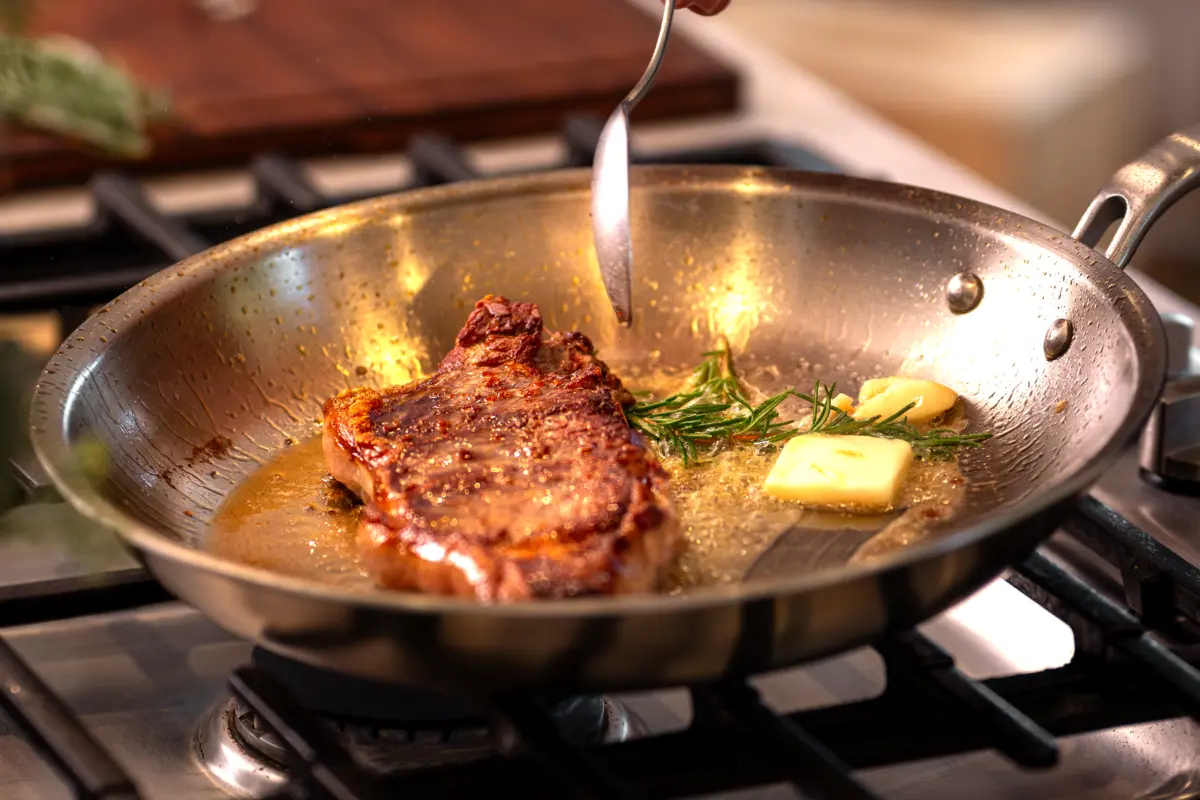
Furthermore, the "wear and tear" that spells the end for a nonstick pan is a non-issue for steel. There is no delicate coating to flake off into food or scratch with a metal utensil. In a stainless steel saucepan, a cook can whisk a roux or a delicate béarnaise with a metal whisk to their heart’s content. You can use metal spatulas to scrape up the fond—those flavorful browned bits stuck to the bottom of the pan after searing—without any fear of damaging the surface. In fact, that ability to scrape and deglaze is exactly how the best sauces are born, a technique that is largely impossible with coated cookware.
Maintenance, while different from nonstick, is straightforward. The key to preserving the pristine look of the metal is patience. Experts recommend letting a pan cool completely before washing to prevent thermal shock, which can warp the metal. Once cleaned, drying the pan with a microfiber cloth prevents the formation of unsightly water spots caused by mineral deposits in the water. For many, this ritual of care is part of the appeal.
Lester views the learning curve of stainless steel not as a deterrent, but as an opportunity. In her view, the pan acts as a teacher for those willing to pay attention. "I think people think it is hard to use," Lester notes, acknowledging the hesitation many new cooks feel. However, she points out that we live in an era of unprecedented access to culinary knowledge. "There are countless YouTube videos, TikToks, and Reels [out there], and if you’re friends with a chef, we are always happy to pick up the phone and walk you through [it]."