In the quiet, sterile environment of an operating room, a patient under general anesthesia appears to be in a state of total suspension. To the casual observer, and even to the historical understanding of medical science, the mind in this state is essentially "off"—a blank slate where consciousness is extinguished to allow for invasive surgery without pain or memory. However, groundbreaking new research from Baylor College of Medicine suggests that beneath this veil of profound stillness, the human brain remains startlingly active, performing complex cognitive feats that were once thought to be the exclusive domain of the wide-awake mind.
The study, published recently in the prestigious journal Nature, reveals that even when a person is fully unconscious under the effects of general anesthesia, their brain continues to process language, recognize intricate patterns, and even anticipate which words will come next in a sentence. These findings do more than just update our understanding of pharmacology; they challenge the very foundations of how we define the relationship between the physical brain and the elusive concept of consciousness.
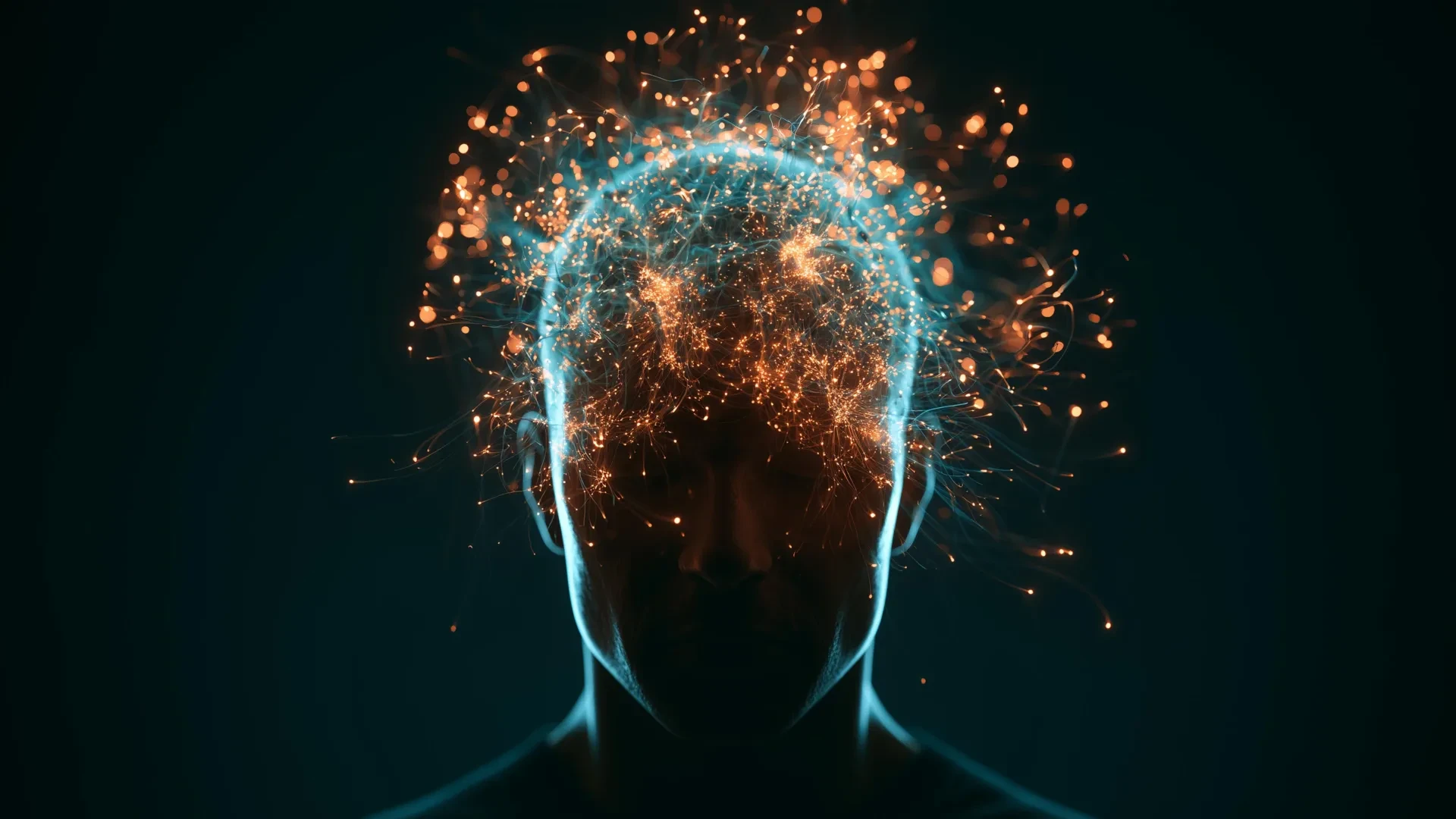
"Our findings show that the brain is far more active and capable during unconsciousness than previously thought," said Dr. Sameer Sheth, a professor and the Cullen Foundation Endowed Chair of Neurosurgery at Baylor, as well as a McNair Scholar. "Even when patients are fully anesthetized, their brains continue to analyze the world around them. The lights may be dimmed, but the machinery of the mind is still humming with activity."
Probing the Depths of the Hippocampus
The journey to these discoveries began in a unique clinical setting. To investigate the mysteries of the unconscious brain, Dr. Sheth—who also serves as a neurosurgeon at Baylor St. Luke’s Medical Center—and his team worked with patients undergoing surgery for epilepsy. These specific procedures require the placement of electrodes to monitor brain activity, providing a rare and medically necessary window into the most sensitive regions of the human intellect.
The researchers focused their attention on the hippocampus, a seahorse-shaped structure tucked deep within the temporal lobe. The hippocampus is widely regarded as the brain’s "librarian," playing a fundamental role in the formation of new memories, the organization of information, and the navigation of both physical and conceptual spaces. Because of its central role in learning, it was the ideal place to look for signs of "hidden" cognition.
To capture the activity of this region with unprecedented clarity, the team utilized Neuropixels probes. These state-of-the-art recording devices represent a significant leap forward in neurotechnology. Unlike traditional electrodes that might capture the general "hum" of a large group of cells, Neuropixels probes are capable of monitoring the electrical signals of hundreds of individual neurons simultaneously. This high-resolution data allowed the researchers to observe how specific clusters of nerve cells responded to external stimuli in real-time.
According to the researchers, this technology had never before been applied to investigate the human hippocampus in this particular context. It provided a granular view of neural behavior, allowing the team to see how the brain responded to sounds and language even when the patient was unable to perceive them or report any experience of them.
Learning Without Awareness: The "Oddball" Test
The first phase of the study focused on a fundamental aspect of intelligence: pattern recognition. While the patients were deeply anesthetized, the researchers played a series of repeating tones. Occasionally, this rhythm was broken by an "oddball" sound—a tone that differed in pitch or duration from the others.
In an awake brain, such a change triggers a clear neural response as the mind notes the deviation from the established pattern. Surprisingly, the researchers found that the neurons in the anesthetized hippocampus also reacted differently to these unexpected sounds. The brain was "listening" and identifying the break in the pattern, even though the person was unconscious.
More significantly, as the experiment progressed, the brain cells became increasingly efficient at distinguishing these unusual tones. This phenomenon is a hallmark of neural plasticity—the brain’s ability to adapt and change its responses based on experience. The fact that this plasticity was observed during general anesthesia suggests that the basic building blocks of learning remain functional even in the absence of conscious thought. The brain was not just passively receiving sound; it was "learning" the environment and adjusting its expectations.
The Complexity of Language in the Dark
Encouraged by the results of the tone experiments, the Baylor team moved toward a much more complex challenge: the processing of human language. Language is one of the most sophisticated tasks the human brain performs, requiring the rapid decoding of sounds into meaning, syntax, and context.
The researchers played short stories to the anesthetized patients while the Neuropixels probes continued to record the firing patterns of hippocampal neurons. The data revealed a level of sophistication that stunned the team. The neural activity was not just a generic response to noise; instead, the researchers identified distinct patterns of activity that corresponded to different categories of words. The brain appeared to be differentiating between nouns, verbs, and adjectives.
This indicates that the hippocampus was processing the semantic features of the language—the actual meaning and grammatical function of the words—rather than simply registering the acoustic properties of the speech.
However, the most provocative discovery was yet to come. The researchers found that the neural signals also contained information that could be used to predict upcoming words. As a sentence unfolded, the brain appeared to be calculating what was likely to be said next, based on the words it had already "heard."
"The brain appears to anticipate what comes next in a story, even without conscious awareness," explained Dr. Sheth, who also serves as Director of The Gordon and Mary Cain Pediatric Neurology Research Foundation Laboratories at Texas Children’s Hospital.
Predictive Coding: The Brain’s Internal Architect
This ability to look ahead is known as predictive coding. In contemporary neuroscience, predictive coding is viewed as a primary way the brain interacts with the world. Rather than being a passive recorder of information, the brain is an active generator of hypotheses. It uses previous experiences and established patterns to build a model of the world, constantly guessing what will happen next to save energy and improve reaction times.
Until now, scientists generally believed that this type of high-level anticipation required the "top-down" influence of a conscious, attentive mind. Finding evidence of predictive coding in an unconscious state suggests that these neural processes are more autonomous than previously believed.
"This kind of predictive coding is something we associate with being awake and attentive, yet it’s happening here in an unconscious state," said Dr. Benjamin Hayden, a professor of neurosurgery at Baylor and a key member of the research team. This suggests that the brain’s "prediction engine" is a fundamental, low-level process that doesn’t necessarily need the "driver" of consciousness to stay in gear.
Redefining Consciousness and the AI Connection
The implications of this study reach far beyond the operating room, touching on both philosophy and the future of artificial intelligence.
The findings force a re-evaluation of what consciousness actually is. If the brain can process language, learn from patterns, and predict future events while unconscious, what is the specific role of "awareness"? One theory bolstered by this study is that consciousness may not be defined by the activity of a single region like the hippocampus, but rather by the way information is integrated and shared across a vast network of brain regions. In this view, while the hippocampus can still "think" in isolation during anesthesia, the person remains unconscious because the "global" communication network required for subjective experience has been temporarily severed.
Furthermore, the study highlights a fascinating parallel between biological brains and artificial intelligence. Modern Large Language Models (LLMs), such as those that power advanced AI chatbots, operate on a principle very similar to the predictive coding observed in the study. These AI systems analyze massive datasets to predict the most statistically likely next word in a sequence.
The fact that the human hippocampus does something similar while unconscious suggests that predictive modeling is a universal strategy for making sense of information, whether in a biological or silicon-based system. By studying these similarities, researchers hope to gain a better understanding of how both natural and artificial intelligence function.
Paving the Way for Future Technologies
Beyond the theoretical, the Baylor study offers tangible hope for the development of new medical technologies, particularly in the field of brain-computer interfaces (BCIs).
If the brain continues to process language even when a person cannot speak or respond, scientists might be able to tap into those signals to help patients with severe neurological injuries. This could lead to the creation of advanced speech prosthetics for individuals who have lost the ability to communicate due to stroke, traumatic brain injury, or conditions like ALS.
"Can we use these signals to deploy and run a speech prosthetic for some of the parts of the brain that are damaged by stroke or injury?" asked Dr. Vigi Katlowitz, the study’s first author and a neurosurgery resident at Baylor. "These are questions that we can now consider in relation to this part of the brain."
By identifying the specific neural signatures of language processing, researchers may eventually be able to translate a patient’s internal "predictions" or "thoughts" into synthesized speech, providing a voice to those who have been silenced by illness or injury.
A New Frontier of the Mind
Despite the excitement surrounding these findings, the researchers are careful to note the limitations of their work. The study focused on a specific type of general anesthesia and a specific region of the brain. It remains to be seen if these same processes occur during other states of unconsciousness, such as natural sleep or a coma.
Additionally, because the study focused on the hippocampus, further research is needed to see how other parts of the brain contribute to these unconscious processes and how they might interact when the "global" network of the brain is re-engaged upon waking.
Nevertheless, the Baylor research marks a turning point in our understanding of the human mind. It suggests that the boundary between the conscious and the unconscious is far more porous than we once imagined. Even in the deepest sleep of anesthesia, the brain remains an active, learning, and predicting entity, working tirelessly behind the scenes.
As Dr. Sheth concluded, "This work pushes us to rethink what it means to be conscious. The brain is doing much more behind the scenes than we fully understand, proving that even in silence, the mind is never truly still."