Friday’s ban is not an isolated incident but rather the latest chapter in a long-standing pattern of attempts to restrict press access. In 2018, the White House revoked the press pass of then-CNN reporter Jim Acosta following a heated exchange during a news conference. That move was eventually overturned by a federal judge who ordered the pass restored. More recently, in February 2025, the administration barred the Associated Press from the Oval Office and other small-pool events. That specific dispute arose from the news agency’s refusal to adopt the administration’s preferred terminology, “Gulf of America,” in place of the globally recognized “Gulf of Mexico.” While a lower court initially ordered the AP’s access restored, the D.C. Circuit overruled that decision in June 2025, handing the administration a temporary legal victory in its effort to dictate the language used by the press.
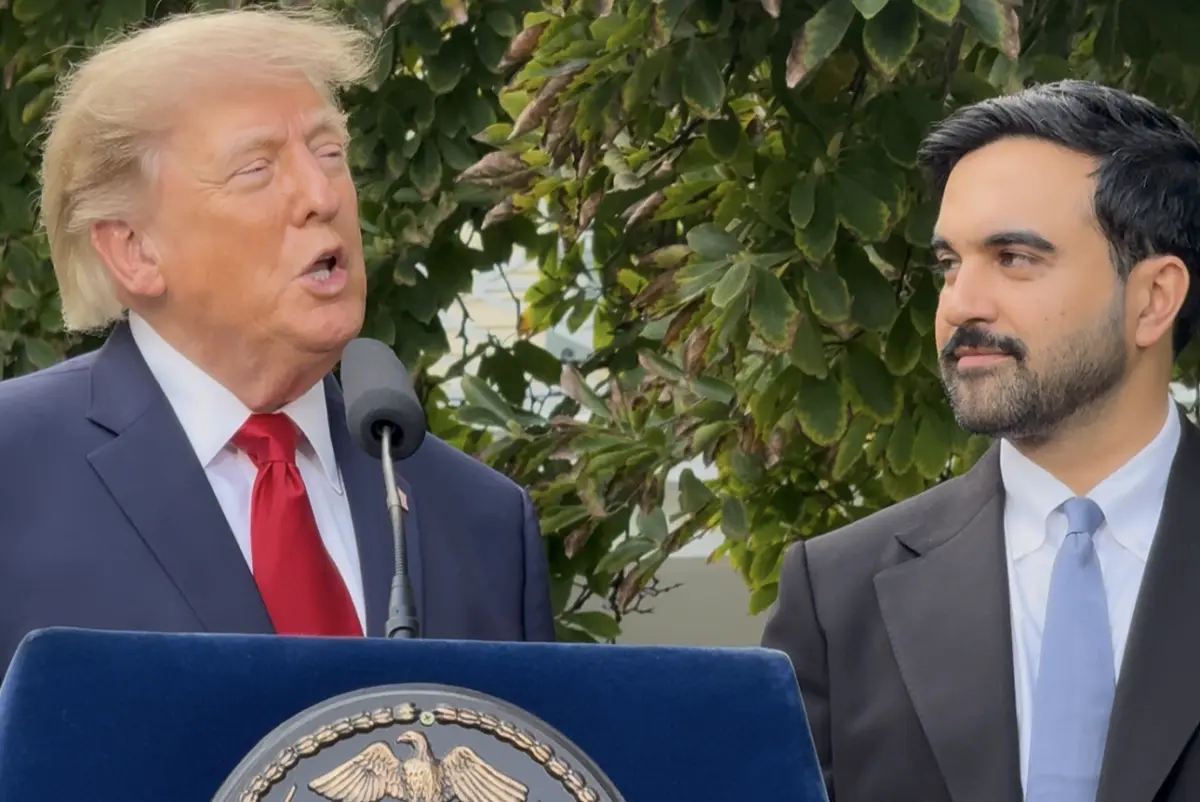
At Gracie Mansion, reporters seized the opportunity to ask the president about his closed-door conversation with the mayor regarding these restrictions. Mamdani reiterated that he had been firm with Trump about ensuring the press would be present for the public portion of the visit. Trump, seemingly unfazed, responded with a mix of humor and renewed attacks. He joked that the press would never truly boycott him because of the ratings he generates, before once again disparaging the outlets he had banned.
“If you look at CNN, it’s fake news. If you look at MS NOW, I don’t even know what MS NOW is,” Trump said, dismissing the organizations. He defended his decision to bar them from the White House by drawing a comparison between the two residences. “I really think I have an obligation not to allow them into another very special house. This is a special house, Gracie Mansion. Well, the White House is the most special of all houses.”
Temporary Protected Status
Beyond the debate over press freedom, the meeting between Trump and Mamdani delved into a critical policy issue with profound implications for New York City’s economy and social fabric: the future of Temporary Protected Status (TPS). When The City reporter Katie Honan questioned the president on the matter, Mamdani revealed that he had used their private time to advocate for the restoration of TPS for Haitian immigrants.
Mamdani framed the issue not just as a humanitarian concern, but as an economic necessity. He informed the president that a broad coalition of New York leaders—including pastors, real estate developers, and executives in the healthcare and hospitality sectors—had expressed deep anxiety over the potential mass loss of work authorization for Haitian nationals. Mamdani emphasized that by controlling the designation of TPS, the president holds the power to “either deliver or deny stability” for thousands of individuals who have built lives, families, and careers in New York.
TPS is a designation granted to nationals of countries where ongoing armed conflict, environmental disasters, or other extraordinary and temporary conditions make it unsafe for them to return. While it allows recipients to live and work legally in the U.S., it does not provide a direct pathway to permanent residency or citizenship. Haiti has held this status since the devastating 2010 earthquake, but the program has been a frequent target of the Trump administration’s restrictive immigration agenda.