The history of Trump’s relationship with the Haitian community has been marked by dramatic shifts. During his 2016 campaign, he visited Miami’s Little Haiti and declared himself the community’s “biggest champion.” However, once in office, his administration moved to terminate TPS for Haitians in 2017, with then-Department of Homeland Security (DHS) Secretary Kristi Noem arguing that the administration was “returning TPS to its original status: temporary.” That decision was challenged in a Brooklyn federal court, where a judge ruled in April 2019 that the termination was motivated by political bias and could not proceed.
The conflict reignited in 2025 when Trump again moved to revoke the status. Following another round of protracted legal battles, the Supreme Court ruled in June 2026 that the DHS had the authority to proceed with cutting off protections. This decision affects an estimated 330,000 to 350,000 Haitians nationwide. Although a new lawsuit has been filed alleging that the termination was racially motivated, the ruling remains in effect, and the protections are set to expire.
The consequences of this policy shift are already being felt in New York City. As of July 24, the expiration of TPS has cut off legal work authorization for hundreds of thousands of people. The impact reached into the halls of local government itself; New York City Hall was recently forced to terminate Haitian employees who had no other legal pathway to maintain their employment.
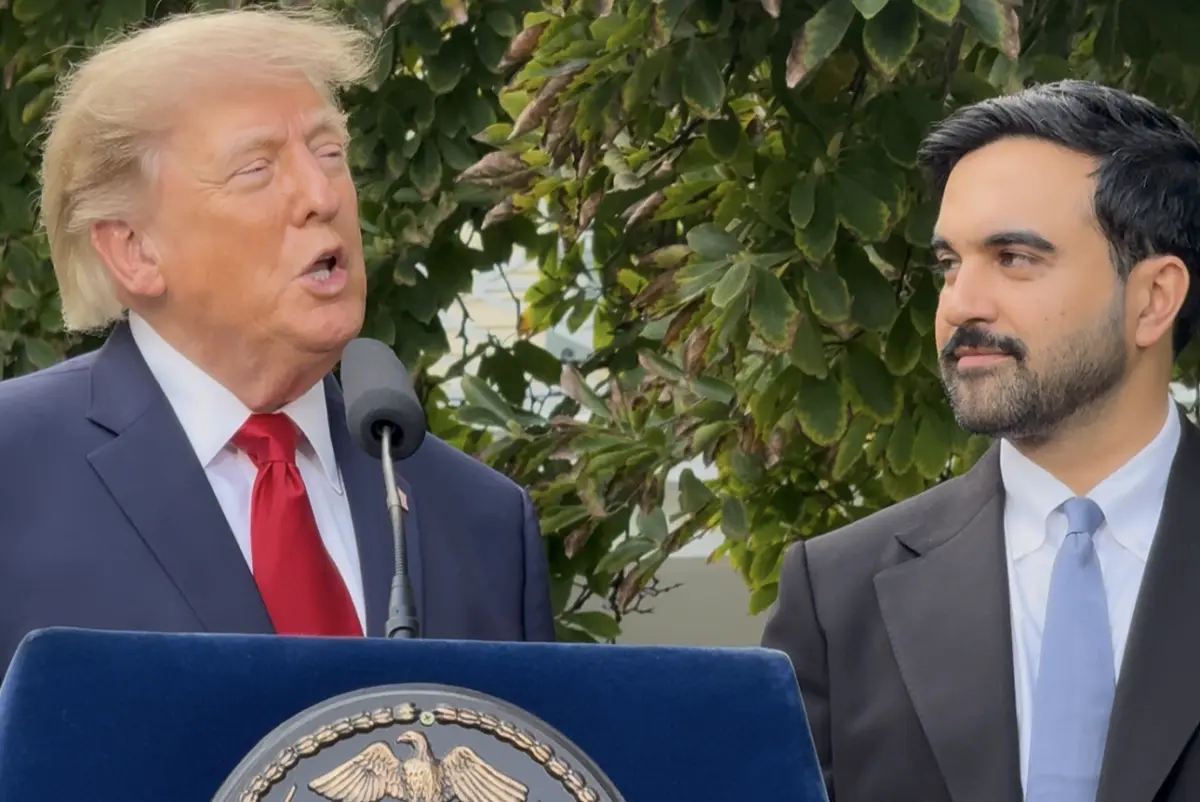
“The mayor feels very strongly about [TPS],” Trump acknowledged before departing Gracie Mansion on Monday. “I feel strongly about a lot of things. I feel strongly about taking care of people, and that’s what we do. We’re doing a good job of it.”
The stakes for New York are particularly high. The city is home to the nation’s second-largest Haitian population, trailing only Miami. More than 160,000 Haitians live in the five boroughs, with the largest concentrations in Brooklyn’s Flatbush and East Flatbush neighborhoods. This community is a pillar of the city’s essential workforce, particularly in healthcare. According to data from the Center for Migration Studies, New York State has approximately 7,000 Haitian TPS holders working as nursing assistants and home caregivers. In a city where 57% of the healthcare workforce is composed of immigrants—and nearly 75% of home health aides are foreign-born—the loss of these workers threatens to destabilize an already strained system.
After the president’s departure, Mayor Mamdani disclosed that the meeting had come about through a personal invitation. He noted that the two had previously discussed the president’s own fond memories of Gracie Mansion from his years as a private citizen in New York, a rare point of personal connection in a relationship otherwise defined by the friction between city and federal priorities. Despite the cordiality of the visit, the fundamental disagreements over the role of the press and the rights of immigrant workers remain unresolved, leaving the city to navigate the fallout of a federal agenda that continues to challenge the status quo.