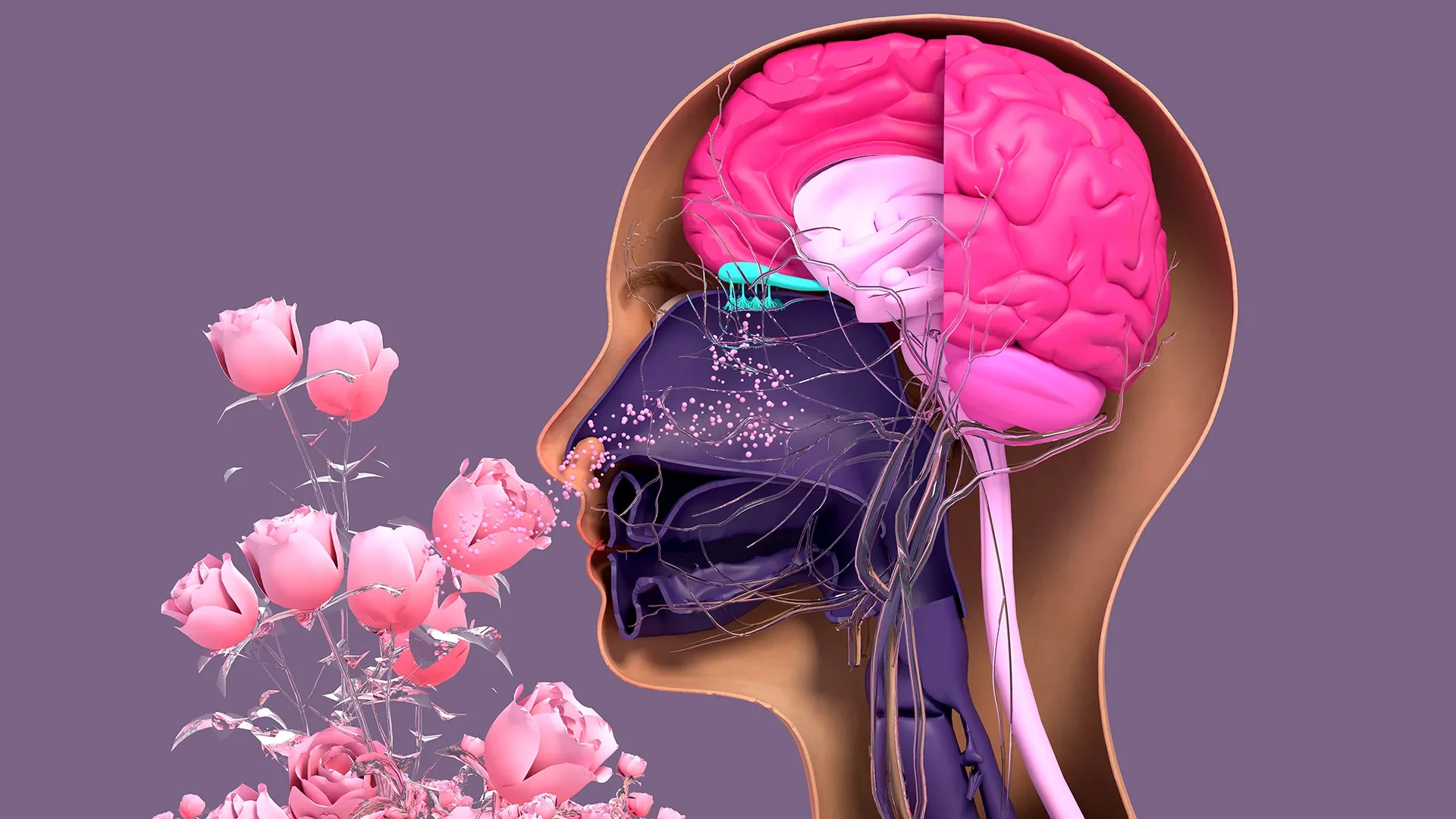
In the intricate landscape of the human sensory system, the sense of smell often operates as a silent sentinel, grounding us in our environment, alerting us to danger, and enriching the tapestry of memory and emotion. Yet, despite its importance, the biological mechanisms that allow the nose to repair itself after injury or illness have long remained partially obscured. Now, a breakthrough study from researchers at Tufts University School of Medicine and the Graduate School of Biomedical Sciences (GSBS) is shedding new light on the regenerative potential of the nasal cavity.
Using a sophisticated, newly devised three-dimensional model to study the regeneration of nerve tissue in the nose, the research team, in collaboration with international colleagues, has made a discovery that challenges long-held assumptions in the field of olfactory science. Their findings reveal that a specific type of stem cell, previously dismissed by many as largely dormant or inactive, may actually play a cornerstone role in preserving and restoring the sense of smell.
This discovery centers on the remarkable resilience of the olfactory system. Unlike the delicate cells of the central nervous system—such as those found in the brain and spinal cord, which possess a notoriously limited capacity for repair—the sensory neurons located within the nasal cavity are biological anomalies. They possess a profound and persistent ability to regenerate throughout a person’s life. This constant state of renewal is a biological necessity; because these neurons are situated in the nasal passages, they are under near-constant assault from the outside environment, exposed to everything from allergens and pollutants to bacteria and viral pathogens.
However, this regenerative engine is not invincible. Factors such as severe viral infections—a reality made globally prominent by the COVID-19 pandemic—prolonged exposure to environmental toxins, and the inevitable process of aging can significantly hamper the function of these cells. When the neurons or the stem cells responsible for replacing them lose their ability to replicate or function, the result is often a partial or complete loss of smell, known respectively as hyposmia or anosmia. To better understand these failures and find ways to reverse them, the Tufts team developed a new, easy-to-create, three-dimensional olfactory tissue mouse model, or "organoid."
Their research, which was recently published in the journal Cell Reports Methods, utilizes this mouse-based organoid to map the complex communication network between the various stem cells that inhabit the nose. Specifically, the study focuses on the interplay between two primary types of stem cells: horizontal basal cells (HBCs) and globose basal cells (GBCs). By observing these cells in a controlled, three-dimensional environment, the researchers were able to see how they support one another to cultivate new, functional, smell-sensing nerve tissue.
"Our research suggests that these two stem cells may be interdependent," says Brian Lin, the senior author of the study and a research assistant professor in the Department of Developmental, Molecular and Chemical Biology at Tufts. "One type that we thought was largely dormant—HBCs—may actually play a crucial role in supporting the production of new neurons and the repair of damaged tissue."
For years, the scientific consensus had largely favored the globose basal cells (GBCs) as the primary drivers of everyday neuronal replacement, viewing the horizontal basal cells (HBCs) as a reserve population that only activated under conditions of extreme tissue damage. However, the Tufts model provided a more nuanced perspective. By utilizing the organoid, the team identified a specific subpopulation of HBCs that are characterized by their production of a protein known as KRT5.
The researchers observed that these KRT5-producing HBCs were not merely sitting on the sidelines. Instead, they were active participants in the formation of the organoids and the subsequent generation of new olfactory neurons. To test the importance of these cells, the team performed a selective depletion experiment, removing these specific HBCs from the organoid cultures. The results were stark: without these "dormant" cells, the generation of new neurons was significantly impaired. These findings suggest that HBCs are far more than a backup system; they are essential players in the day-to-day regenerative process, providing a necessary foundation or signaling environment that allows the olfactory system to maintain its function.
The implications of this study extend beyond the basic understanding of cell biology; they offer a potential window into the mechanics of sensory decline. As we age, our ability to taste and smell often diminishes, which can lead to decreased appetite, poor nutrition, and a lower quality of life. The Tufts team used their 3D model to investigate this phenomenon by comparing cells from mice of different ages.
"We also looked at cells from mice of different ages and grew them in the model," Lin explains. "We found a decline in the ability of the older mice cells to generate new neurons. We think this is due to a decrease in the GBC population as we age, but we need to do more work to test this hypothesis and if so, develop ways to rejuvenate them."
By identifying exactly which cell populations are dwindling or losing efficacy over time, researchers hope to eventually develop targeted therapies that can "re-prime" the nasal stem cells, effectively turning back the clock on the olfactory system and restoring lost sensory function to the elderly.
An Easy-To-Use Model
One of the most significant contributions of this study is the nature of the model itself. While high-tech laboratory "organs-on-a-chip" and complex organoids are becoming more common, they often require specialized equipment and significant financial investment, which can gatekeep research and slow the pace of discovery.
The lead author of the study, Juliana Gutschow Gameiro, recognized this hurdle early on. A former Ph.D. student visiting the Graduate School of Biomedical Sciences from the State University of Londrina in Paraná, Brazil, Gameiro was dedicated to creating a model that was accessible. Her goal was to design a system that could be replicated in laboratories with limited funds and standard equipment, ensuring that the study of olfactory regeneration is not restricted to only the most well-funded institutions.
According to Lin, this accessibility is more important now than ever. "Because loss of smell is associated with COVID-19, as well as with Parkinson’s disease and other conditions, a much larger number of researchers from a variety of different fields have begun researching olfactory epithelial cells in the last few years," he says.
The sudden global focus on anosmia during the pandemic revealed how little was known about the long-term recovery of nasal tissue. By providing an "easy-to-use" model, the Tufts team is offering a standardized platform for non-stem cell biologists and researchers across disciplines to study how these neurons regenerate and, perhaps more importantly, why that process fails in the face of disease. Whether it is investigating the neurodegenerative pathways of Parkinson’s or the inflammatory response to a viral infection, the organoid provides a clear, three-dimensional view of the cellular interactions at play.
Next Step: A Human Organoid
While the current mouse-tissue model has provided groundbreaking insights, the Tufts researchers are already looking toward the next horizon: the development of a human-based olfactory organoid. The transition from animal models to human tissue is a critical step in the journey toward clinical applications.
The ultimate goal is to create a human organoid that can serve as a high-fidelity platform for drug screening. Such a tool would allow scientists to test thousands of potential compounds to see which ones might stimulate the regeneration of olfactory neurons or protect them from damage. This could lead to the development of nasal sprays or other treatments for patients whose sense of smell has been eradicated by chronic illness, trauma, or aging.
However, creating a human version of the nasal organoid presents a unique set of challenges that were not present in the mouse model. One of the primary obstacles is the difficulty of obtaining pure olfactory tissue from human subjects.
"It’s challenging to get pure olfactory tissue from humans," Lin notes. Currently, the process of collecting these cells is invasive and technically difficult. Patients are typically anesthetized, and a medical professional must use a specialized brush—similar to the long wands used for COVID-19 PCR tests—to reach deep into the uppermost reaches of the nasal cavity.
The problem lies in the geography of the nose. The olfactory epithelium, where the smell-sensing neurons live, is situated very close to the respiratory epithelium, which is responsible for moving air and mucus. When a sample is taken, it almost inevitably contains a mixture of both types of stem cells. Unlike in the mouse model, where researchers can more easily isolate specific tissues, human respiratory and olfactory stem cells are notoriously difficult to separate once they have been collected.
The research team’s next challenge is to bridge this gap. They are currently working to develop a simple, inexpensive technique that would allow labs to separate these human olfactory stem cells from their respiratory counterparts and successfully coax them to grow into 3D structures in the laboratory.
If successful, this work could revolutionize the field of regenerative medicine. By moving beyond two-dimensional cell cultures and whole-animal testing, human organoids offer a middle ground that is quicker, less expensive, and potentially more predictive of human responses during clinical trials. While organoids have already been successfully developed for organs like the lungs and kidneys, the olfactory system has remained a difficult frontier—until now.
The findings from Tufts University provide a roadmap for understanding the "dormant" potential within our own bodies. By revealing the interdependence of stem cells and providing the scientific community with the tools to study them, Lin and his colleagues are paving the way for a future where the loss of smell is no longer an irreversible consequence of age or illness, but a treatable condition. As the team continues to refine their models and move toward human applications, the silent work of the horizontal basal cells may finally be given the recognition it deserves in the story of human health and recovery.