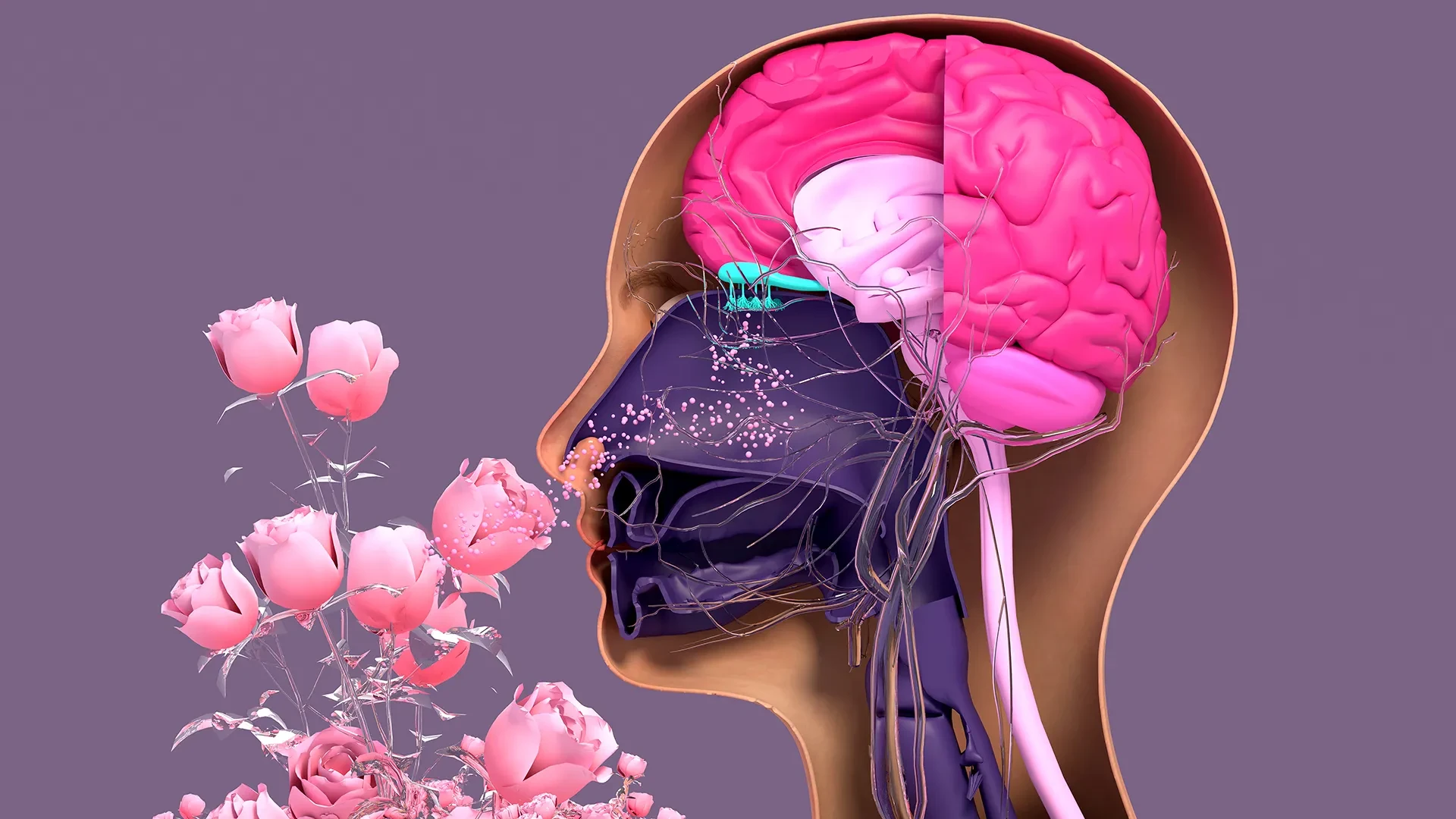
In the complex architecture of the human sensory system, the ability to detect odors is often taken for granted—until it vanishes. Whether through the natural progression of aging, exposure to environmental toxins, or the lingering effects of viral infections like COVID-19, the loss of smell can profoundly diminish one’s quality of life, affecting everything from nutritional habits to emotional well-being and personal safety. Now, a breakthrough study from researchers at Tufts University School of Medicine and the Graduate School of Biomedical Sciences (GSBS) is shedding new light on how the body maintains this vital sense and, more importantly, how it might be restored.
By developing a sophisticated, three-dimensional model of nasal nerve tissue, the research team has uncovered a surprising dynamic within the stem cell populations responsible for sensory regeneration. Their findings, recently published in the journal Cell Reports Methods, suggest that a specific type of stem cell previously dismissed as largely dormant actually plays a foundational role in the birth of new neurons. This discovery not only reshapes the scientific understanding of olfactory biology but also provides a new, accessible tool for laboratories worldwide to study the mechanisms of nerve repair.
The Remarkable Resilience of the Nasal Cavity
To understand the significance of the Tufts study, one must first appreciate the unique biological landscape of the nose. Unlike the central nervous system—where neurons in the brain and spinal cord are notoriously difficult to repair or replace once damaged—the olfactory system possesses a rare and remarkable regenerative capacity. Because the sensory neurons in the nasal cavity are constantly exposed to the external environment, including pathogens, pollutants, and physical trauma, they have evolved to undergo a continuous cycle of death and renewal throughout a person’s life.
However, this regenerative engine is not invincible. Factors such as chronic inflammation, the toxic effects of certain chemicals, and the biological shifts associated with aging can exhaust the system. When the replenishment of these neurons slows or stops, the result is anosmia (the total loss of smell) or hyposmia (a partial loss). While the medical community has long recognized the role of stem cells in this process, the exact "conversations" happening between different cell types have remained difficult to observe in real-time.
To bridge this gap, the Tufts team devised a new three-dimensional olfactory tissue mouse model, or organoid. These "mini-organs" grown in a lab setting allow scientists to mimic the complex architecture of living tissue far more effectively than traditional two-dimensional cell cultures. The model was designed to be "easy-to-create," a deliberate choice intended to lower the barrier for researchers across various disciplines who are now pivoting toward olfactory science in the wake of the global pandemic.
Redefining the Role of Horizontal Basal Cells
The centerpiece of the study involves a re-evaluation of two primary stem cell populations found in the olfactory epithelium: horizontal basal cells (HBCs) and globose basal cells (GBCs).
Historically, the scientific consensus held that GBCs were the primary "workhorses" of the nose, actively dividing to replace lost sensory neurons. In contrast, HBCs were often viewed as a reserve force—dormant cells that only sprang into action under conditions of extreme tissue injury. The Tufts research, however, tells a different story of interdependence.
Using their new 3D model, the researchers identified a specific subpopulation of HBCs, characterized by the production of a protein known as KRT5. Far from being passive bystanders, these KRT5-producing HBCs were found to be essential for the healthy generation of new neurons. When the team selectively depleted these cells from the organoid cultures, the production of new olfactory neurons was significantly impaired, regardless of the presence of other stem cells.
"Our research suggests that these two stem cells may be interdependent," explains Brian Lin, senior author on the study and a research assistant professor in the Department of Developmental, Molecular and Chemical Biology at Tufts. "One type that we thought was largely dormant—HBCs—may actually play a crucial role in supporting the production of new neurons and the repair of damaged tissue."
This finding suggests that the "dormant" HBCs are actually providing a necessary environment or signal that allows the GBCs to function correctly. This symbiotic relationship means that any therapy aimed at restoring the sense of smell must likely address the health and activity of both cell populations, rather than focusing on a single "master" stem cell.
The Impact of Aging on Sensory Renewal
One of the most pressing questions in olfactory research is why the sense of smell naturally declines as people get older. To investigate this, the Tufts team utilized their organoid model to compare the regenerative capabilities of cells taken from mice of various ages.
The results were telling. The researchers observed a clear and consistent decline in the ability of cells from older mice to generate new neurons within the 3D model. While the exact cause of this decline is still being investigated, the team’s preliminary observations point toward a thinning of the GBC population over time.
"We found a decline in the ability of the older mice cells to generate new neurons," Lin says. "We think this is due to a decrease in the GBC population as we age, but we need to do more work to test this hypothesis and if so, develop ways to rejuvenate them."
By identifying the specific cellular breakdown that occurs with age, the researchers hope to eventually find ways to "reboot" the regenerative process, potentially offering a way to reverse age-related sensory loss.
A Tool for the Global Scientific Community
Beyond the specific biological discoveries, the study is notable for its emphasis on scientific accessibility. The lead author of the study, Juliana Gutschow Gameiro, joined the Tufts team as a visiting Ph.D. student from the State University of Londrina in Brazil. Her mission was to develop a model that did not require the prohibitive costs or specialized equipment often associated with high-level stem cell research.
The timing of this development is critical. In the years following the emergence of COVID-19, the sense of smell has moved from a niche area of study to a frontline concern for neurologists, virologists, and general practitioners.
"Because loss of smell is associated with COVID-19, as well as with Parkinson’s disease and other conditions, a much larger number of researchers from a variety of different fields have begun researching olfactory epithelial cells in the last few years," Lin notes.
By creating a model that is easy to use and inexpensive to maintain, the Tufts team is essentially democratizing the study of the nose. This allows scientists who may not be specialized stem cell biologists to incorporate olfactory tissue modeling into their work, potentially accelerating discoveries in how viruses like SARS-CoV-2 interact with nasal tissue or how early-stage neurodegenerative diseases manifest in the olfactory system.
The Next Step: The Human Frontier
While the mouse-tissue model has provided invaluable insights into the basic mechanics of nerve regeneration, the ultimate goal for the Tufts researchers is to translate these findings into human health applications. The team is currently working toward the development of a human olfactory organoid.
If successful, a human-based model would serve as a powerful platform for drug screening. Currently, testing potential treatments for smell loss relies heavily on whole animal studies or limited human cell cultures, both of which have significant drawbacks in terms of speed, cost, and accuracy. An organoid could allow researchers to test thousands of compounds to see which ones best stimulate the KRT5-producing HBCs or bolster the GBC population in human tissue.
However, the path to a human organoid is fraught with technical challenges. Obtaining high-quality, pure olfactory tissue from human subjects is a difficult procedure. It typically requires a patient to be anesthetized while a specialized brush—similar to the swabs used for COVID-19 testing but pushed much deeper into the nasal cavity—is used to collect cells.
The primary hurdle lies in the "purity" of the sample. In mice, researchers can precisely isolate olfactory stem cells. In humans, the collection process often results in a mixture of olfactory cells and respiratory cells (the cells that line the rest of the airway). Because these cell types look and behave similarly in a lab setting, they are notoriously difficult to separate.
The research team’s next challenge is to develop a simple, inexpensive technique for separating these human olfactory stem cells and coaxing them to grow into the same 3D structures they have successfully created with mouse tissue.
As the scientific community continues to grapple with the long-term sensory effects of the pandemic and the challenges of an aging population, the work being done at Tufts provides a crucial foundation. By uncovering the hidden activity of "dormant" cells and providing the tools to see them in action, researchers are moving closer to a future where the loss of smell is no longer an inevitable or permanent condition.