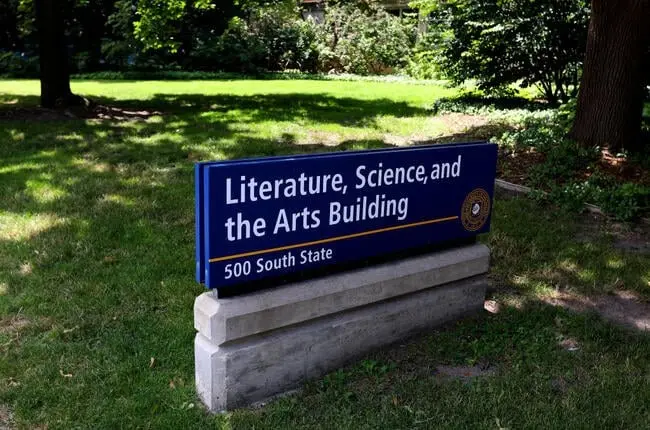
ANN ARBOR, Mich. — In a significant reversal of a policy intended to alleviate the academic pressures facing incoming freshmen, the University of Michigan’s College of Literature, Science, and the Arts (LSA) has announced an immediate pause on its recently unveiled pass–no credit grading pilot program. The decision, coming less than two months after the program’s initial announcement in August 2026, follows a wave of public scrutiny and what university leadership describes as a "distorted narrative" regarding the university’s academic standards.
The pilot program, which was scheduled to take effect for the fall 2027 entering class, would have fundamentally altered the transcript landscape for first-year students. Under the proposed model, all freshmen within the LSA—the university’s largest college—would have been graded on a pass–no credit basis during their first semester. While students would still have received traditional letter grades and detailed feedback from their instructors to gauge their progress, those marks would not have been factored into their cumulative grade point averages (GPAs), nor would the specific letter grades have appeared on official transcripts sent to external entities, such as graduate schools or prospective employers.
However, the university’s attempt to modernize its approach to the first-year transition has met with a complicated reception. In a letter addressed to the leadership of the College of Literature, Science, and the Arts and subsequently shared with Inside Higher Ed, University of Michigan President Domenico Grasso expressed deep reservations about the environment surrounding the pilot’s rollout. Grasso noted that the program had become the center of a national conversation that he believes mischaracterizes the university’s objectives and the capabilities of its student body.
Misconceptions and the Narrative of "Coddling"
According to President Grasso, the pilot program became a lightning rod for "extensive media coverage," much of which he characterized as being built upon "distorted narratives about our intentions." The primary concern for the administration was not the internal mechanics of the grading shift, but rather the external perception of the University of Michigan’s academic rigor.
"It has become clear that the misconceptions and questions raised about the program put the pilot’s success at risk," Grasso wrote in his letter. He further articulated a concern that the students themselves—those the program was designed to support—might suffer the most from the public’s misinterpretation of the policy. Grasso expressed a specific worry that Michigan students could be "unfairly portrayed as coddled or unprepared for the demands of a rigorous Michigan education."
This narrative of "coddling" has become a frequent point of contention in contemporary higher education debates, often pitting institutional efforts to support student mental health against traditional views of academic "grit" and meritocracy. By pausing the program, the university appears to be attempting to protect its brand and the professional reputation of its graduates from the suggestion that a Michigan degree has been "watered down" by more flexible grading policies.
The Original Intent: Addressing a Mental Health Crisis

The College of Literature, Science, and the Arts originally proposed the pass–no credit system as a direct response to the escalating mental health challenges observed among college-aged individuals nationwide. When the pilot was first announced in August, university officials framed it as a proactive measure to "help students start strong."
The transition from high school to a Tier 1 research university like Michigan is often cited as a period of extreme stress. For many students, the first semester is a high-stakes adjustment period involving not only advanced coursework but also the social and emotional challenges of independence. The LSA’s proposal sought to create a "grace period" where students could acclimate to the university’s high academic expectations without the immediate fear that a single difficult course or a rocky transition period would permanently damage their long-term GPA.
Under the paused plan, the "pass–no credit" designation was intended to encourage intellectual risk-taking. Proponents of such systems argue that when students are not hyper-focused on the impact of a grade on their permanent record, they are more likely to engage deeply with the material, explore unfamiliar subjects outside their comfort zones, and develop more sustainable study habits. The university had emphasized that the "rigor" would remain unchanged; professors would still hold students to the same standards, and the "pass" threshold would still require satisfactory academic performance.
An Uncertain Future for the Pilot
Despite the clear pedagogical and wellness-based reasons for the pilot, the university’s leadership has decided that the current climate is too volatile to proceed. An update posted to the University of Michigan’s official website confirmed that the pause was requested "to allow further input, analysis, and discussion."
This move highlights the delicate balancing act that modern universities must perform between internal academic innovation and external public relations. While the LSA had designed the program based on internal data regarding student success and well-being, the external reaction—fueled by social media and national news outlets—created a pressure that the administration felt could not be ignored.
The details of what this "pause" will entail remains vague. President Grasso’s letter did not provide a specific timeline for when the pilot might be reconsidered or what specific metrics would be used to evaluate its viability during this interim period. Furthermore, a spokesperson for the College of Literature, Science, and the Arts declined to provide additional commentary on the duration of the pause or the specific nature of the "additional input" the university intends to seek.
This lack of clarity leaves both current faculty and prospective students in a state of limbo. Faculty members who had begun preparing for the shift in grading philosophy for the 2027 academic year must now revert to traditional grading expectations, while the "Class of 2031"—those who would have been the first to experience the pilot—face an uncertain landscape regarding their first-semester evaluations.
The Broader Landscape of Grading Reform

The University of Michigan is not the first elite institution to explore the merits of "grade covering" or "shadow grading" for first-year students. Several other top-tier universities have implemented similar policies with the goal of fostering a more collaborative and less competitive academic environment during the crucial first months of college.
Institutions that have successfully navigated these changes often point to data showing that students who are given the space to adjust to college-level work without GPA pressure tend to perform better in subsequent years. However, Michigan’s experience serves as a cautionary tale for how such initiatives can be perceived by the public, alumni, and employers if the communication strategy does not effectively counter the perception of diminishing standards.
For Michigan, the challenge lies in reconciling its identity as a premier, high-rigor institution with its commitment to student welfare. The "distorted narratives" mentioned by Grasso suggest that in the court of public opinion, the nuances of "pass–no credit"—where grades are still earned but simply not displayed—are often lost, replaced by the simpler, more controversial idea that students are no longer being held accountable.
Next Steps and Institutional Reflection
The pause on the LSA pilot program marks a moment of institutional reflection for the University of Michigan. As the college moves forward with its "analysis and discussion," it will likely need to address the gap between its internal goals and external perceptions.
The university’s decision to prioritize the reputation of its students’ "academic strength and resilience" suggests that for now, the traditional grading system remains a vital component of the Michigan "brand." Whether the university will eventually find a way to reintroduce the pilot with a different communication strategy, or if the plan will be quietly shelved, remains to be seen.
As the mental health crisis among college students continues to be a primary concern for educators across the country, the outcome of Michigan’s "pause" will likely be watched closely by other institutions considering similar reforms. For the time being, however, the status quo of letter grades and GPA calculations will remain the standard for all first-year students in Ann Arbor, as the university seeks to navigate the complex intersection of academic policy and public narrative.