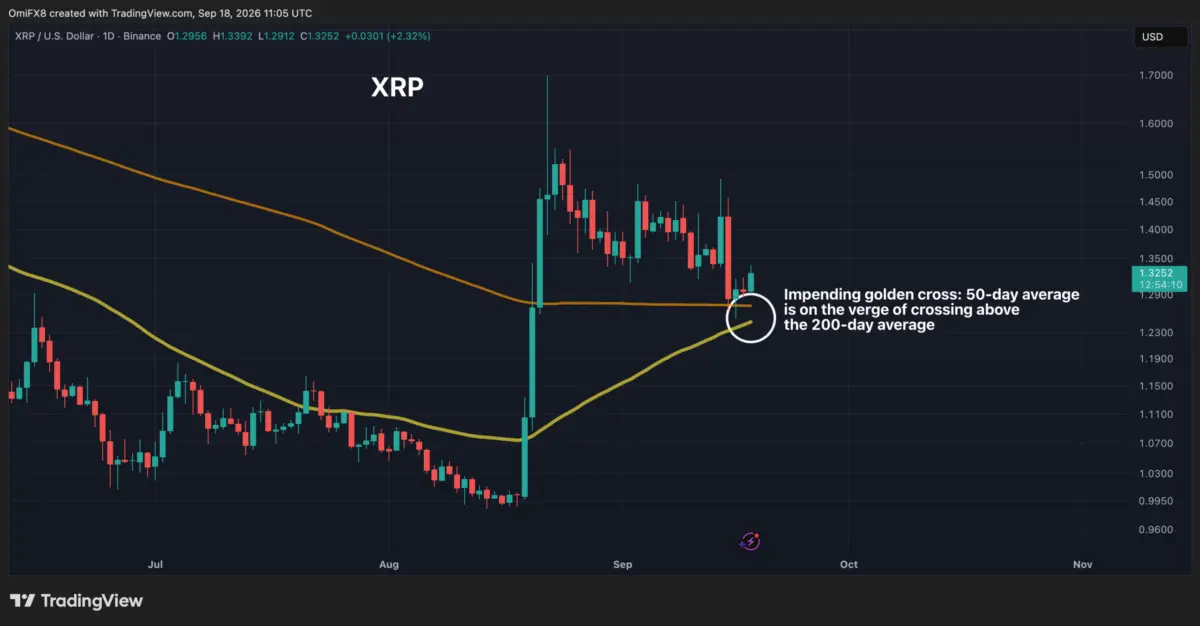
The lack of long-term endurance for these signals suggests that XRP often experiences "fakeouts" or bull traps, where initial momentum fails to attract enough sustained buying pressure to overcome long-term resistance levels. Of the 16 recorded instances, six did not even manage to survive the three-month mark before the trend reversed.
Despite this lack of long-term reliability, the golden cross has historically been a potent catalyst for significant short-term gains. For the 10 instances where the signal lasted at least three months, the returns were often dramatic. Five of those cases saw price surges ranging from 85% to over 1,000%. Notable examples include the April 2017 cross, which preceded a staggering 1,009.6% rally, and the February 2021 cross, which led to a 135% gain. These figures indicate that while the golden cross may not guarantee a permanent bull market for XRP, it frequently serves as a precursor to explosive, high-velocity price action.
Bitcoin Weathers a Stormy Week
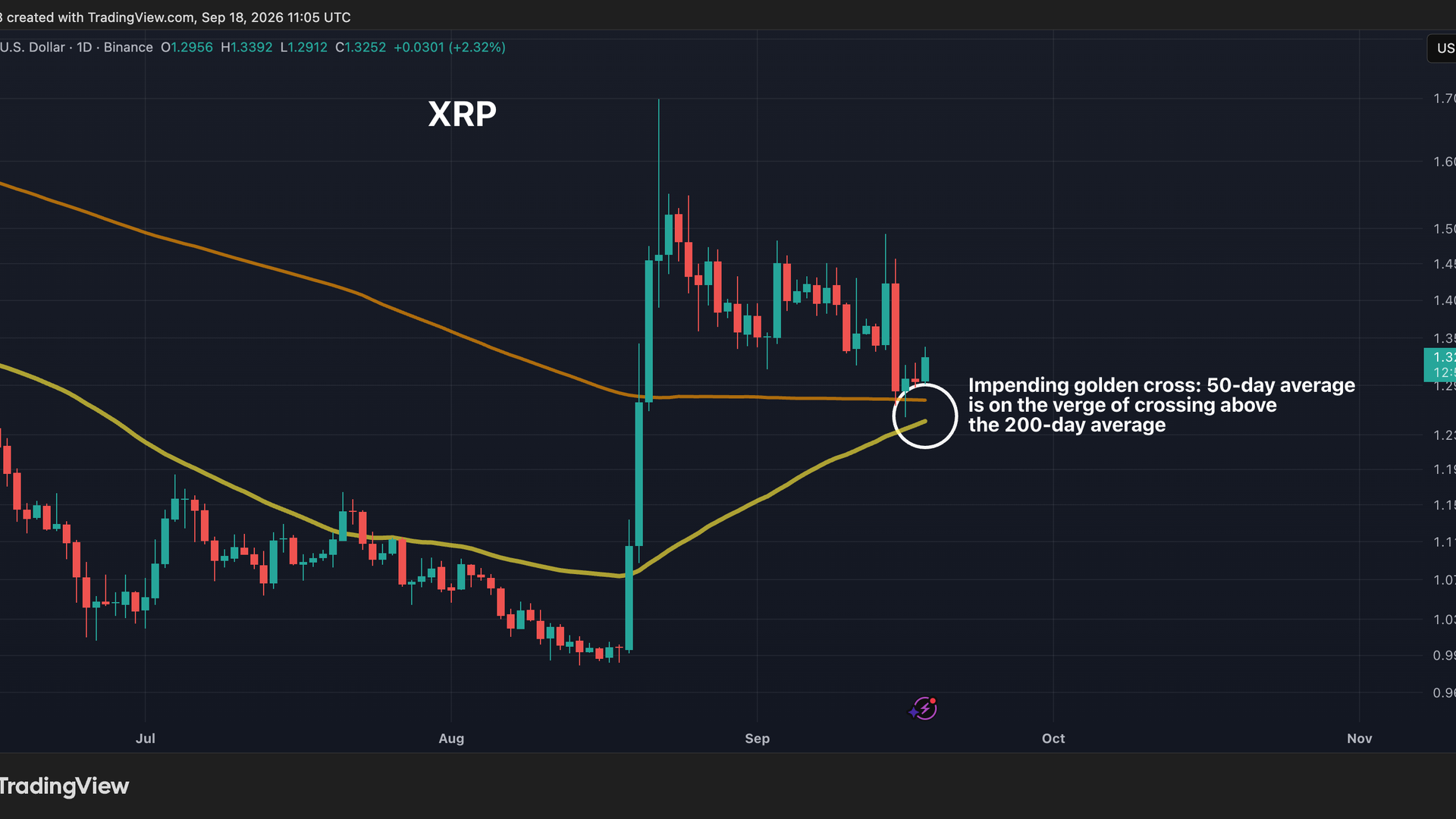
While XRP prepares for its technical milestone, Bitcoin continues to serve as the foundation of market stability. The premier cryptocurrency has faced a gauntlet of challenges over the past week, most notably a Federal Reserve interest rate increase that typically exerts downward pressure on risk assets. Additionally, the digital asset industry faced a political setback with the Clarity Act, a piece of legislation aimed at providing regulatory definitions for stablecoins and digital assets, which hit unexpected hurdles in the legislative process.
Despite these factors, Bitcoin has remained remarkably steady, trading near the $78,000 mark. This price level is roughly unchanged from a week ago, suggesting that the market has already priced in much of the current regulatory and economic uncertainty. Analysts remain broadly optimistic about Bitcoin’s prospects, noting that its ability to hold its ground in the face of "hawkish" central bank policy is a sign of increasing institutional maturity.
However, Bitcoin’s price stability has come at the cost of its market dominance. The Bitcoin dominance rate, which measures Bitcoin’s share of the total cryptocurrency market capitalization, has recently slipped to a one-month low of under 59%. This decline is a key metric for traders, as it often indicates a "rotation" of capital. When investors feel that Bitcoin has reached a temporary plateau, they frequently move funds into higher-beta altcoins in search of greater percentage gains.
Altcoins Lead the Broad Market Advance