The 2027 Hyundai Bayon Gets Gas And Hybrid Power
Under the hood, the 2027 Bayon offers a range of powertrains designed to balance efficiency with sufficient pep for urban and suburban driving. At launch, the primary offering is a turbocharged 1.0-liter three-cylinder gasoline engine. This unit is available in two states of tune: a 90-horsepower entry-level version and a more potent 115-horsepower variant.
Enthusiasts of traditional driving will be pleased to note that a six-speed manual transmission remains available on certain models, though a seven-speed dual-clutch automatic (DCT) is expected to be the more popular choice. Performance figures are modest but appropriate for the segment; the 115-hp model can reach a top speed of 112 mph (180 km/h), while the 90-hp version tops out at 106 mph (171 km/h).
The most significant mechanical update, however, is the introduction of a full-hybrid (HEV) powertrain. While the previous Bayon utilized a 48-volt mild-hybrid system, the 2027 model steps up to a "closed" hybrid setup. This system pairs a 1.6-liter four-cylinder gasoline engine with an electric motor and a six-speed dual-clutch transmission.
With a combined output of 136 horsepower, the hybrid Bayon becomes the most powerful member of the family. It also introduces more sophisticated driving dynamics, such as adaptive regenerative braking. Drivers can use steering-wheel-mounted paddles to adjust the level of energy recuperation, allowing for a driving experience that can mimic the "one-pedal" feel of an electric vehicle in heavy traffic.
Market Positioning and Future Outlook
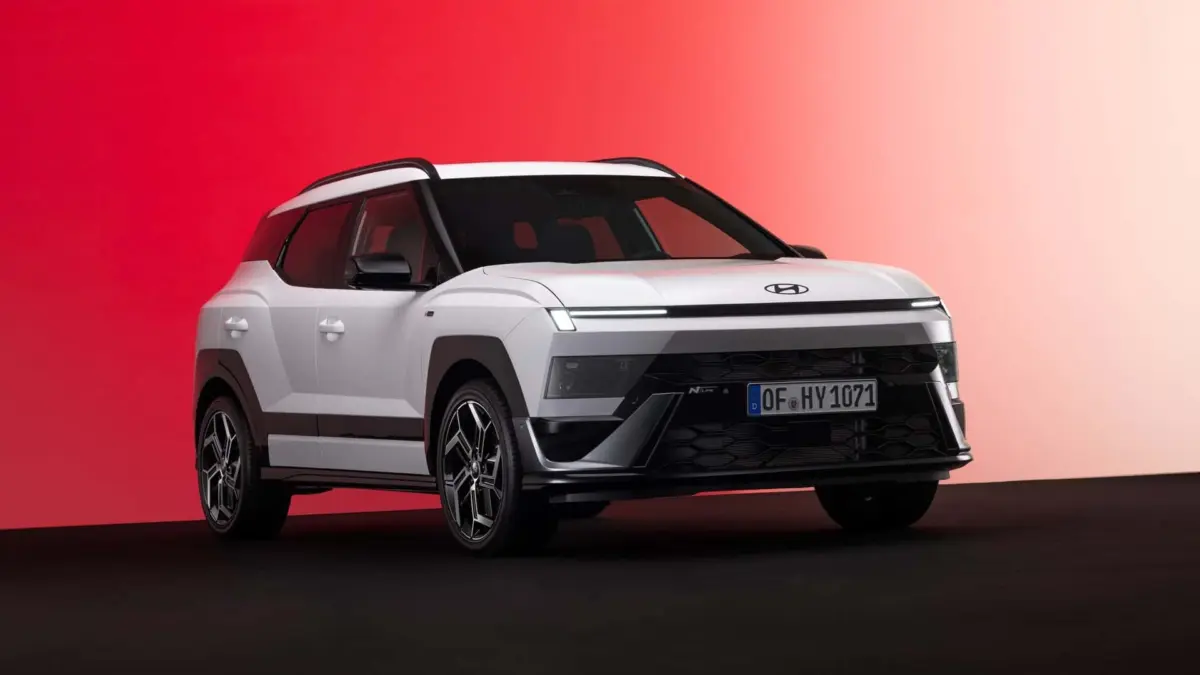
The arrival of the new Bayon marks an interesting moment for Hyundai’s European strategy. By making the Bayon larger, more tech-heavy, and more stylish, Hyundai is essentially offering a "Kona Lite." This raises the question of whether the Bayon might cannibalize sales from the Kona, which has traditionally been the brand’s heavy hitter in the small SUV space.
However, Hyundai appears to be betting that the market is large enough for both. The Kona has moved into a more premium, "all-electric first" territory, while the Bayon remains a more accessible, combustion-focused alternative that doesn’t feel like a compromise. The addition of a full hybrid powertrain is a crucial move, as European emissions regulations continue to tighten and consumers look for ways to reduce fuel costs without committing to a full EV.
As of now, Hyundai has not released specific pricing or exact delivery dates for the various European markets. However, the formula for the 2027 Bayon is clear: it offers a "Robocop" inspired design, a sophisticated and button-rich interior, a comprehensive suite of driver-assistance systems, and a more efficient hybrid future. In a segment where competition is fierce, Hyundai’s latest offering seems well-equipped to maintain its foothold and perhaps even steal some limelight from its larger siblings.