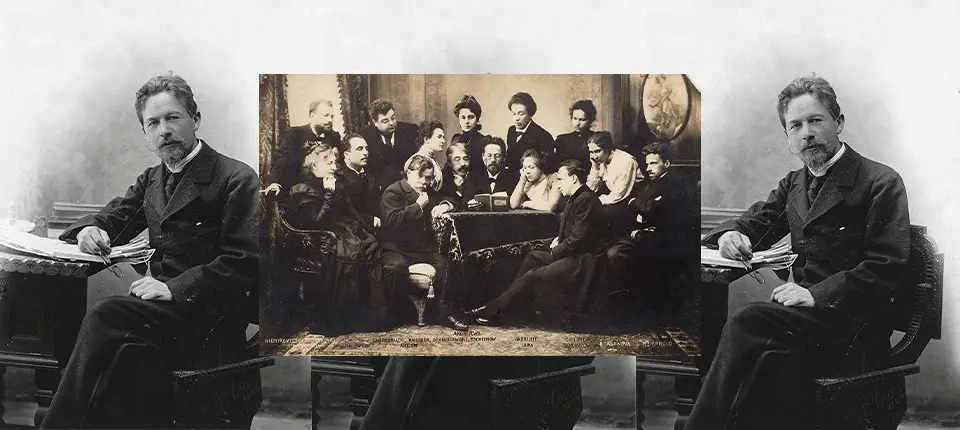
The third week of October has long held a peculiar place in the annals of literary history, marked by one of the most famous opening-night disasters in the theater. In October 1896, Anton Chekhov’s The Seagull premiered at the Alexandrinsky Theatre in St. Petersburg. The production was a catastrophe of such proportions that the audience hissed at the performers, and the playwright, overwhelmed by shame and frustration, fled the theater during the second act. The experience led Chekhov to famously declare, “Not if I live to be seven hundred will I write another play.” History, of course, proved him wrong. Chekhov would go on to write Uncle Vanya, Three Sisters, and The Cherry Orchard, fundamentally altering the course of modern drama. This anniversary serves as a perennial reminder that the initial reception of a work—whether a flop in St. Petersburg or a polarizing debut in the digital age—rarely dictates its ultimate legacy.
As the literary community reflects on Chekhov’s early struggles, the contemporary landscape continues to grapple with its own series of complex narratives, shifting from the nuances of craft to the urgent pressures of global politics. The literary internet this week has been dominated by a blend of deep-seated historical reflection and immediate, often painful, social commentary, illustrating the diverse ways in which writers today are attempting to make sense of a fractured world.
THE BEST OF THE LITERARY INTERNET
Among the most significant dialogues to emerge this week is a conversation between Pulitzer Prize winner Adam Johnson and the esteemed novelist Amitav Ghosh. The two discussed Ghosh’s latest work, The Wayfinder, delving into the multifaceted nature of narrative construction. Their exchange focused on the "many ways to tell a single story," a theme that resonates deeply in an era where perspective is often contested. Johnson and Ghosh explored how storytelling can serve as both a map for the future and a means of reclaiming histories that have been obscured by time or colonial influence.
This concern with historical and contemporary perspective is mirrored in a sobering analysis of the ongoing crisis in Gaza. The discourse has moved beyond immediate reportage to a profound "reckoning with civilization itself." Analysts and writers are examining how the genocide in Gaza has fundamentally reshaped the Middle East, altering geopolitical alliances and forcing a global re-evaluation of international law and humanitarian ethics. The literary world, in particular, has become a space for this witnessing, providing a platform for voices that seek to document the human cost of the conflict and the structural failures that allowed it to escalate.
In a more intimate look at the writing life, the Lit Hub Questionnaire recently featured five authors who provided candid answers to seven recurring questions. These profiles offer a glimpse into the idiosyncratic habits and philosophies of contemporary creators, proving that there are "no wrong answers" when it comes to the creative process. This sense of personal exploration is further extended by Bonnie Jo Campbell, who curated a list of seven literary ghost stories. Campbell suggests that these spectral narratives are more than mere genre exercises; they represent the lingering traumas and unresolved histories that continue to haunt the modern psyche.
The week also saw a touching tribute to the late Stephen Dixon. Writer and professor Josefine Kals shared her memories of Dixon, not just as a prolific and influential author known for his relentless prose, but as a dedicated pen pal. Kals’ reflection highlights the importance of literary mentorship and the deep, often private connections that sustain writers throughout their careers. Similarly, Bonnie Garmus, the bestselling author of Lessons in Chemistry, sat down with Jane Ciabattari to discuss her latest novel, Peck & Peck. Garmus’s new work is described as a coming-of-age story centered on poets and poetry, a departure that explores the formative power of verse and the vulnerability required to live a life dedicated to art.