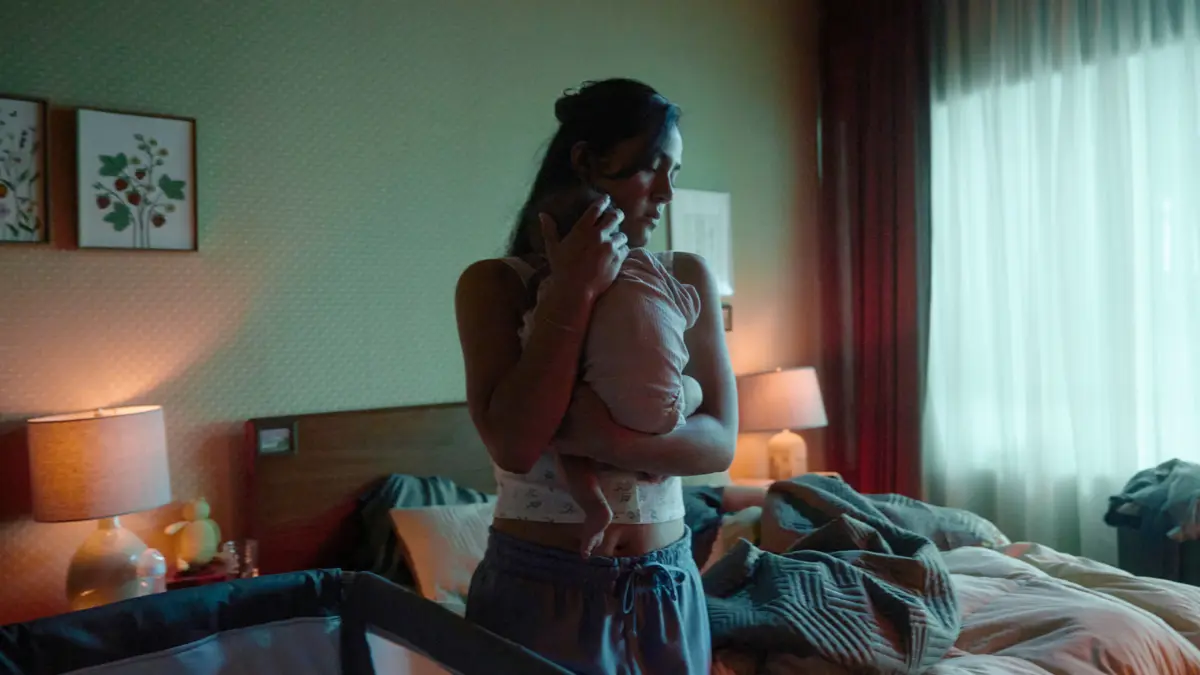
The image of the serene new mother, glowing in the soft light of a nursery while cradling a sleeping infant, has long been a staple of popular culture and commercial advertising. Yet, for millions of women, the reality of the postpartum period is defined by a far more jarring set of experiences: the piercing sound of a screaming baby that won’t be soothed, the physical transformation of stretch marks, and the profound isolation of crying alone in a shower to mask the sound of one’s own distress. These harsh realities of early motherhood are frequently shrouded in a veil of secrecy, driven by a societal expectation of maternal perfection that leaves little room for the admission of struggle. In an effort to dismantle this culture of silence, the Ad Council has unveiled a poignant new public service announcement designed to bring these hidden experiences into the light and provide a lifeline for those navigating the complexities of maternal mental health.
Launched today in anticipation of World Mental Health Day, the new initiative, titled “What’s Her Secret?”, serves as the cornerstone of a broader maternal mental health effort known as The Secret to Motherhood. This project is a specialized extension of the Ad Council’s wider “Love, Your Mind” campaign, a comprehensive national movement dedicated to mental health awareness and the normalization of seeking support. By focusing specifically on new and expecting mothers, the campaign seeks to validate the emotional and psychological challenges that often accompany the transition into parenthood, urging women to prioritize their own mental well-being alongside the care of their children.
The centerpiece of the campaign is a PSA developed pro-bono by the creative agency Mischief USA. The film opens on a scene familiar to many: a group of women gathered in a sun-dappled park, their strollers parked nearby as they catch up on the nuances of their lives. The conversation eventually turns toward one mother who appears to be navigating the demands of a new baby with effortless grace. “How do you make it look so easy?” one friend asks, her voice tinged with a mix of genuine curiosity and perhaps a touch of the same inadequacy many mothers feel when comparing themselves to their peers.
The protagonist pauses, offering a measured response that touches on the typical pillars of successful parenting—a consistent routine, a reliable support system, and a sense of balance. However, the visual narrative tells a starkly different story. As she speaks, a rapid-fire montage of her private reality plays on a loop in her head, invisible to her companions. These flashes show the grueling, unglamorous side of her life: the exhaustion of sleepless nights, the repetitive strain of daily chores, and the overwhelming feeling of being underwater while trying to keep up appearances.
As the internal chaos in her mind reaches a crescendo, the external dialogue of the park scene fades into the background. A voice-over enters the space, delivering the campaign’s central thesis: “There is no secret to motherhood. There are only secrets we’re keeping about it.” This powerful revelation aims to strip away the pretense of the "perfect mom" archetype, suggesting that the perceived ease of others is often a facade maintained by the same silence that isolates the woman struggling next to them.
The necessity of such a message is underscored by sobering data regarding the state of maternal health in the United States. Maternal mental health conditions are not rare exceptions; they are, in fact, extremely common. According to the Maternal Mental Health Leadership Alliance, at least one in five mothers report symptoms of depression or anxiety during the postpartum period. Despite the prevalence of these conditions, the path to recovery is often blocked by stigma and a lack of accessible care. Approximately three-quarters of women experiencing these symptoms do not receive treatment for their mental health.
The consequences of this treatment gap are often a matter of life and death. The latest research from the Centers for Disease Control and Prevention (CDC) highlights a tragic reality: suicide and overdose resulting from underlying mental health conditions have become a leading cause of death for new mothers in the U.S. In a 2022 report on maternal mortality prevention, the CDC found that mental health conditions accounted for 27.7 percent of pregnancy-related deaths. This statistic shifts the conversation from one of emotional wellness to one of urgent public health, positioning mental health support as a critical component of maternal survival.
With the launch of The Secret to Motherhood, the Ad Council aims to intervene during the often-vulnerable early stages of parenthood. By reaching women where they are—whether they are scrolling through social media during a late-night feeding or watching television in a rare moment of quiet—the campaign provides a direct bridge to expert-vetted resources. The PSAs point audiences to LoveYourMind.com/moms, a newly established digital hub designed specifically for maternal mental health. This site offers a range of tools and information intended to help mothers identify their symptoms, understand that they are not alone, and find the professional support they need to navigate their journey.
From a creative and strategic standpoint, the campaign is a deliberate challenge to the intense pressure many mothers feel to project an image of perfection. By inviting women to speak up about the emotionally complex and often contradictory realities of pregnancy and early motherhood, the Ad Council and Mischief USA are attempting to foster a more honest cultural dialogue. The campaign emphasizes that the "secrets" mothers keep are often the very things that, if shared, could lead to healing and community support.
The project is deeply personal for those behind its creation. Bianca Guimaraes, founding partner and executive creative director at Mischief USA, shared her own experience with postpartum depression as part of the campaign’s launch. She recalled the long hours spent pushing a stroller through the park, not as an act of leisure, but as a way to pass the agonizingly slow time. During those walks, she found herself envying the freedom and independence of the childless strangers she passed, a feeling that was accompanied by a heavy sense of guilt.
“Those were thoughts I didn’t feel like I could say out loud,” Guimaraes said in a statement. “That’s what this work is about: the thoughts we hide because they don’t sound like what a new mother is supposed to feel. I loved my children deeply. I was also struggling deeply. Both things can be true.” This concept of duality—that a mother can be simultaneously filled with love for her child and overwhelmed by the psychological toll of her new life—is a central theme the campaign seeks to normalize.
The reach of the campaign is designed to be as broad as the demographic it serves. The PSAs will run nationwide in both English and Spanish, ensuring that language is not a barrier to accessing these vital messages. The media strategy encompasses a wide array of platforms, including broadcast television, online video, out-of-home advertising, radio, and various digital media outlets. This multi-channel approach is made possible through the Ad Council’s unique model, where media outlets donate the time and space for the PSAs to air.
In addition to the creative contributions from Mischief USA, the campaign received pro-bono support from WPP Media and Datonics. A robust roster of additional media partners has also committed to amplifying the message, including Amazon Ads, Fuse Media, iHeartMedia, Kargo, Pinterest, and Reddit. By appearing on platforms like Pinterest and Reddit—spaces where new mothers often go to seek advice, find community, or look for inspiration—the campaign is strategically positioned to meet women in the digital environments they already frequent.
As the campaign rolls out across the country, the hope is that the phrase "What’s her secret?" will no longer be a question about how a woman manages to be perfect, but rather an invitation to share the truth of her experience. By acknowledging that the struggle is a common, though often hidden, part of the maternal experience, the Ad Council and its partners are working to ensure that no mother has to suffer in silence or feel that her mental health is a secret she must keep to herself. The initiative serves as a reminder that seeking help is not a sign of failure, but a necessary step in protecting the health and future of both mother and child.