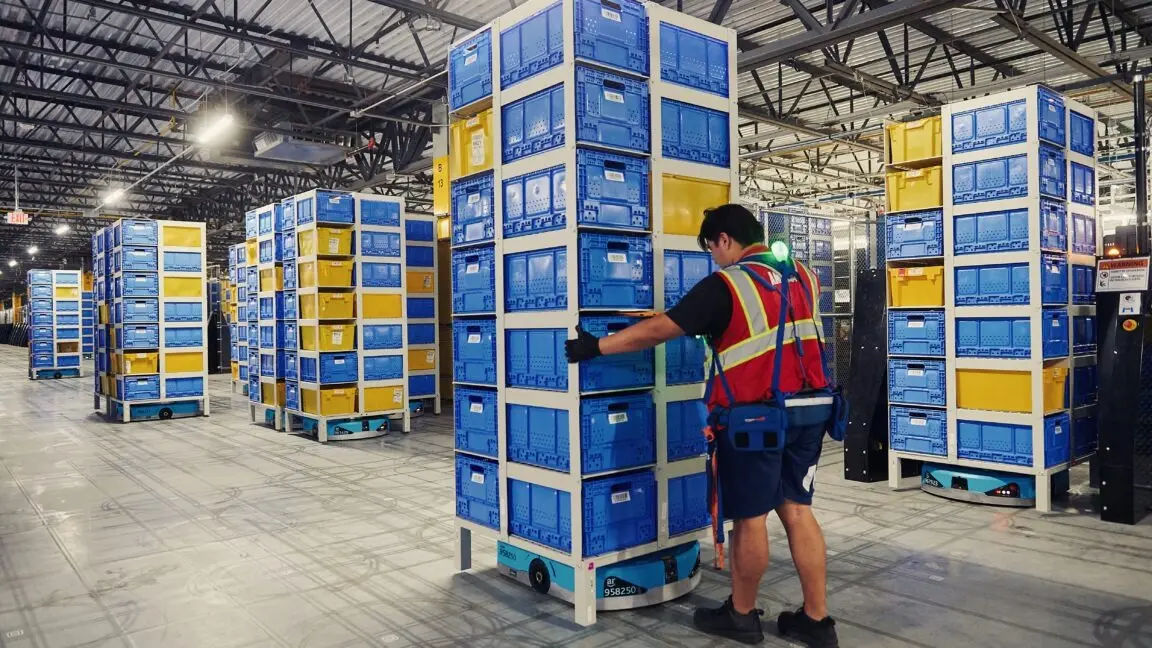
Joan Moriarty, director of strategic research and campaigns at the SOC, argues that while robotics eliminate certain manual transport tasks, they simultaneously raise production quotas for human workers. According to worker surveys conducted by the organization, the relentless delivery of inventory pods by mobile drive units forces stationary human pickers and packers to perform fast, highly repetitive movements over long shifts, heightening the risk of musculoskeletal injuries.
A 2024 investigation by the U.S. Senate Committee on Health, Education, Labor and Pensions (HELP), led by Senator Bernie Sanders (I-Vt.), similarly pointed to internal company documents indicating that elevated productivity expectations at automated sites correlated with higher injury numbers.
Amazon strongly disputes these assessments, arguing that union-sponsored reports rely on outdated statistics that precede the deployment of modern, ergonomically focused robotic arms. The company points to steady improvements in overall workplace safety metrics across its network. According to an Amazon spokesperson, the company’s Global Recordable Incident Rate improved by 43 percent between 2019 and recent reporting periods, while its Global Lost Time Incident Rate—which measures severe injuries requiring time away from work—dropped by 70 percent over the same timeframe.
A rigorous independent study published in the peer-reviewed journal ILR Review in April 2025 provided a nuanced look into these competing claims. Co-authored by Brian Greenwood and based on detailed warehouse data covering the years 2016 through 2019, the study revealed a sharp divergence in injury types between traditional and automated facilities.
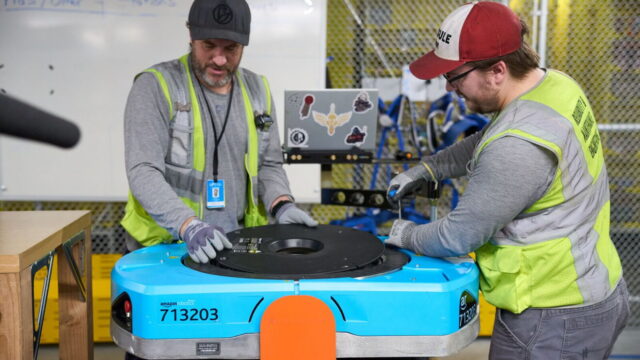
On one hand, Amazon’s robotic fulfillment centers demonstrated a 40 percent drop in severe, life-altering injuries compared to non-automated warehouses, proving that offloading heavy material transport to machines significantly reduces catastrophic accidents. On the other hand, the study documented a 77 percent increase in less severe injuries, such as muscle strains and repetitive motion sprains, among workers in robotic facilities.
Greenwood noted that this uptick in repetitive strain injuries appears to be directly linked to the rapid pace dictated by automated delivery systems. When mobile drive units arrive continuously at human workstations, hourly pick-rate targets increase substantially. Analyzing online discussions among fulfillment center workers confirmed this trade-off: employees frequently reported that working alongside robots alleviated heavy physical lifting, but increased mental stress and physical exhaustion due to the sustained speed and monotony of the work.
The future of work
As Amazon continues to expand its robotic capabilities, questions remain regarding the long-term implications for overall employment levels. Amazon maintains that automation creates high-skilled employment opportunities rather than eliminating jobs. The company notes that facilities operating advanced robotics require approximately 30 percent more engineering, reliability, and maintenance personnel to maintain the hardware. Furthermore, Amazon’s expanding robot manufacturing facilities in Texas and Indiana are projected to add hundreds of technical and manufacturing jobs.
Scott Dresser emphasized that Amazon offers internal upskilling initiatives to help entry-level warehouse workers transition into technical fields. The company reports a 30 percent increase in the number of robotic maintenance technicians employed across its fulfillment network, noting that these roles carry significantly higher compensation than standard entry-level associate positions.
Despite these upskilling initiatives, internal corporate projections suggest Amazon has actively evaluated the potential for robotics to constrain future hiring growth. In October 2025, The New York Times reported on internal strategy documents indicating that aggressive deployment of warehouse automation could allow Amazon to reduce its projected U.S. hiring needs by more than 160,000 workers by 2027, and up to 600,000 workers by 2033. Amazon responded to the report by stating that the documents reflected conceptual proposals from an internal planning group rather than finalized executive policy.

As the company prepares to scale up its fleet beyond the one-million-robot mark, the balance between technological efficiency and human labor management will remain a central focus for regulators, labor leaders, and the logistics industry. The Amazon Labor Union, which successfully organized workers at a Staten Island, New York facility in April 2022, continues to advocate for workplace changes through its proposed "Safety Bill of Rights"—a campaign underscored by a core message aimed directly at management: "We are not robots."