The cabin design further distinguishes itself through its approach to passenger entertainment and infotainment distribution. Notably, the Purosangue dispenses with a traditional central infotainment display completely. Instead, the front-seat passenger is provided with their own dedicated full-color screen built into the right side of the dashboard. To minimize driver distraction, Ferrari has applied a heavy polarization filter to this display. From the driver’s seat, the screen appears completely obscured, making it impossible for the person behind the wheel to see what media or settings the passenger is interacting with.
From the passenger seat, the dedicated screen allows occupants to interact natively with embedded media applications and monitor various performance metrics. However, the system features distinct software boundaries. While front passengers can control native media playback, they cannot project Apple CarPlay onto their dedicated display, leaving smartphone integration exclusively within the driver’s instrument cluster.
Beyond the digital interfaces, the interior architecture excels at providing physical support during spirited driving. The Purosangue features four individual bucket seats, with the rear seating accommodations built to match the lateral support and structure of the front row. The deeply sculpted rear seats are designed to keep passengers firmly planted even when the driver begins to explore the vehicle’s dynamic capabilities and generate significant lateral G-forces. This four-seat arrangement fundamentally shifts the experience of driving a V12-powered Ferrari, transforming what has traditionally been an intimate two-person thrill into a shared, high-performance journey for up to four adults.
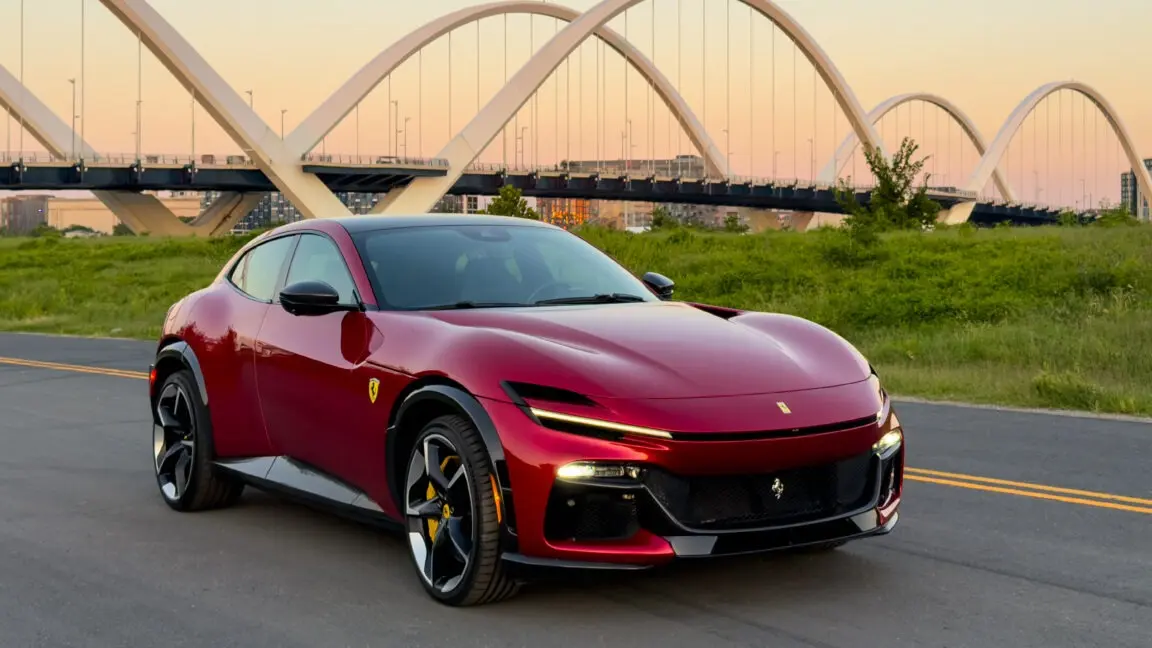
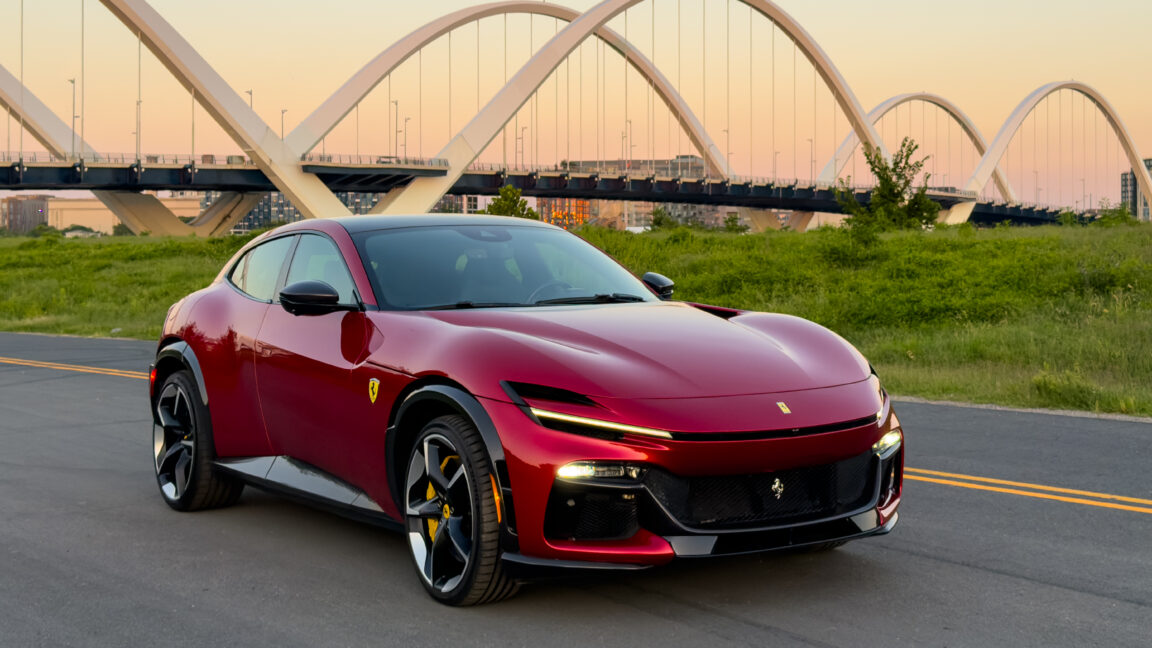
Visually and aesthetically, the Purosangue commands an undeniable presence on the road. Finished in a lustrous coat of Rosso Portofino paint, the exterior bodywork glimmers brilliantly under direct August sunlight, presenting a far more striking and cohesive visual statement than other finishes, such as a metallic yellowy-green shade driven during earlier testing through the streets of Rome.