In the modern automotive landscape, balancing high-performance heritage with cutting-edge cabin technology is one of the most delicate challenges facing luxury manufacturers. For Ferrari, a brand historically defined by mechanical emotion and driver-centric simplicity, the digital revolution has introduced both remarkable capabilities and notable user-interface hurdles. Inside the Ferrari Purosangue, Maranello’s ambitious four-door offering, this tension between analog intuition and digital complexity comes into sharp focus. The cabin presents a fascinating case study in interior architecture, demonstrating how physical controls can dramatically improve driving usability while showcasing where contemporary touchscreen interfaces still demand a driver’s full attention.
A significant point of praise inside the Purosangue’s cockpit lies directly in front of the driver: the multifunction steering wheel. In a welcome departure from the near-unusable capacitive touch controls found on models like the Ferrari 296 GTB, the Purosangue utilizes actual physical buttons for the majority of its essential controls. The inclusion of tactile switchgear marks a major functional triumph for driver ergonomics. Real, physical buttons allow the operator to navigate menus, toggle settings, and execute commands entirely by feel, eliminating the need to divert visual focus from the road ahead.
This tactile interface makes managing modern connected features, such as Apple CarPlay, vastly more intuitive while on the move. When activated, Apple CarPlay takes over the main digital instrument display located directly within the driver’s primary line of sight. While this configuration ensures that navigation maps and media playback remain easily viewable, it does require a structural trade-off: displaying the Smartphone interface effectively replaces the traditional digital Ferrari dashboard and its prominent central tachometer. Drivers are left choosing between classic Maranello instrumentation and modern smartphone mirroring, all managed through the solid, reassuring click of physical steering wheel buttons.
While the primary driving controls benefit from this physical button layout, adjusting comfort and ambient cabin settings proves to be a far more intricate—and occasionally frustrating—process. Climate control and seat adjustments are governed by a unique rotating controller that physically pops out from the center of the dashboard. This dial features an integrated touchscreen surface that requires users to tap or swipe through submenus to control basic functions, including cabin temperature, fan speed, seat ventilation, and individual seat massage functions.
When the vehicle is stationary, operating this pop-out controller is straightforward enough. However, attempting to make adjustments while navigating real-world roads presents a clear ergonomic challenge. Because the digital targets on the dial’s small screen are quite compact, precision aiming becomes necessary. Operating these controls on the move forces the driver to concentrate intently on a small physical target, turning what should be a simple setting change into an unnecessarily delicate operation. Passengers in the rear seats are treated to an identical setup, featuring a second pop-out rotary dial mounted between the back seats that replicates the exact same touchscreen functionality for rear-seat occupants.
The cabin design further distinguishes itself through its approach to passenger entertainment and infotainment distribution. Notably, the Purosangue dispenses with a traditional central infotainment display completely. Instead, the front-seat passenger is provided with their own dedicated full-color screen built into the right side of the dashboard. To minimize driver distraction, Ferrari has applied a heavy polarization filter to this display. From the driver’s seat, the screen appears completely obscured, making it impossible for the person behind the wheel to see what media or settings the passenger is interacting with.
From the passenger seat, the dedicated screen allows occupants to interact natively with embedded media applications and monitor various performance metrics. However, the system features distinct software boundaries. While front passengers can control native media playback, they cannot project Apple CarPlay onto their dedicated display, leaving smartphone integration exclusively within the driver’s instrument cluster.
Beyond the digital interfaces, the interior architecture excels at providing physical support during spirited driving. The Purosangue features four individual bucket seats, with the rear seating accommodations built to match the lateral support and structure of the front row. The deeply sculpted rear seats are designed to keep passengers firmly planted even when the driver begins to explore the vehicle’s dynamic capabilities and generate significant lateral G-forces. This four-seat arrangement fundamentally shifts the experience of driving a V12-powered Ferrari, transforming what has traditionally been an intimate two-person thrill into a shared, high-performance journey for up to four adults.
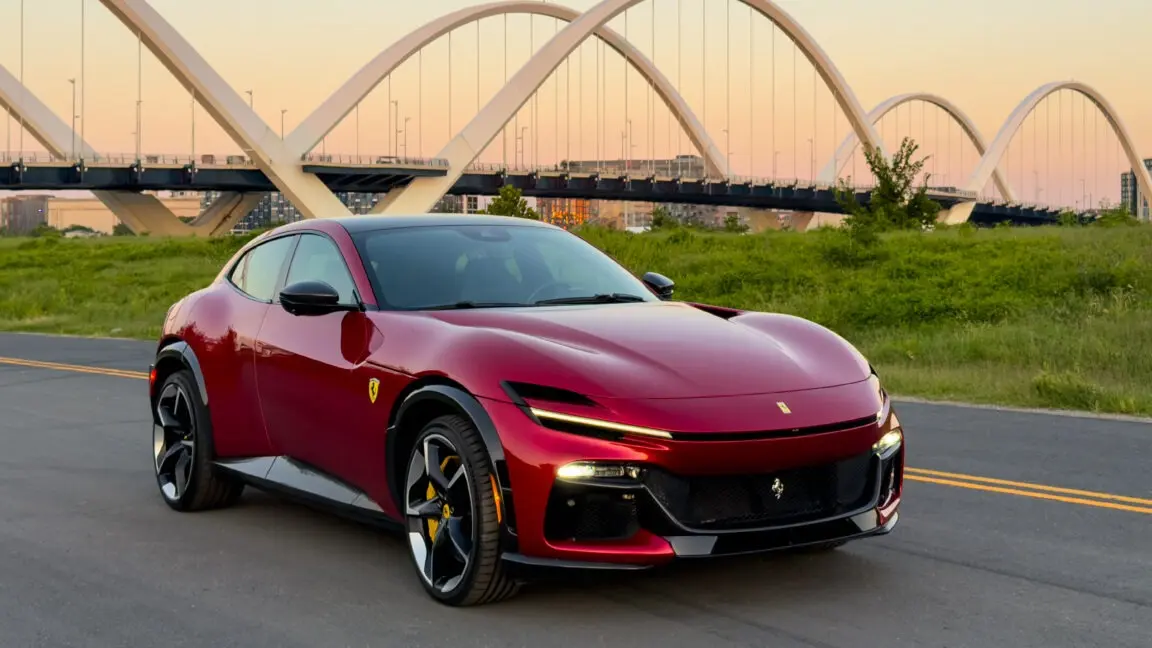
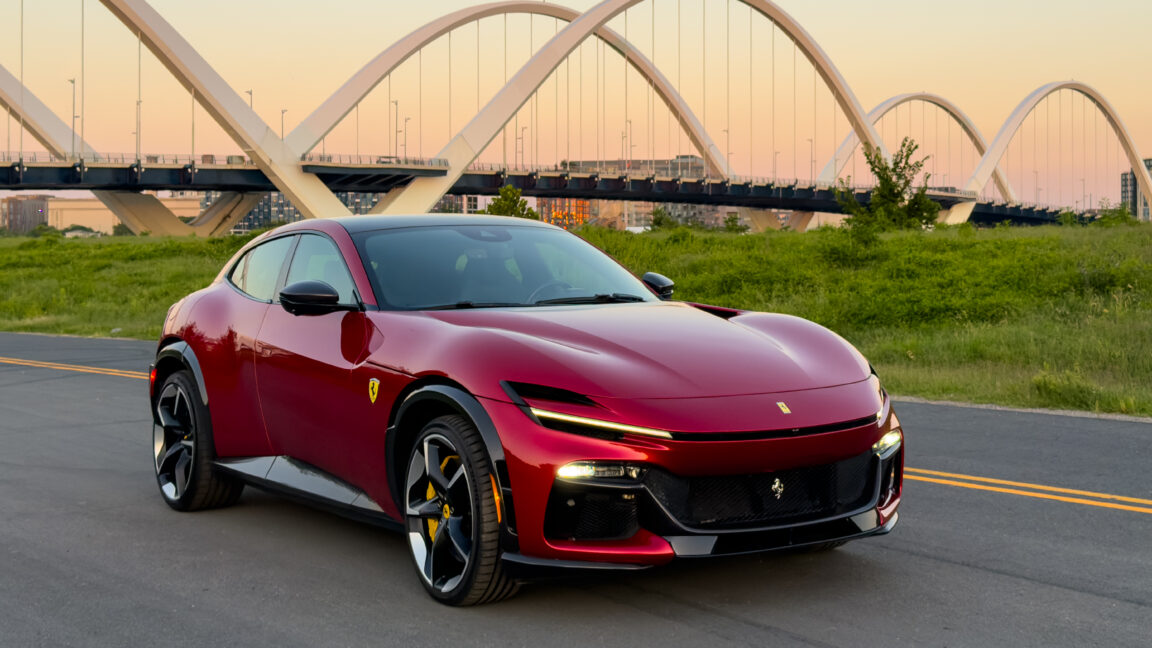
Visually and aesthetically, the Purosangue commands an undeniable presence on the road. Finished in a lustrous coat of Rosso Portofino paint, the exterior bodywork glimmers brilliantly under direct August sunlight, presenting a far more striking and cohesive visual statement than other finishes, such as a metallic yellowy-green shade driven during earlier testing through the streets of Rome.
However, one of the defining traits of purchasing a modern vehicle from Maranello is the vast potential for personal customization. Beyond the standard factory color palette, Ferrari offers extensive bespoke personalization programs, including its renowned Atelier and Tailor Made divisions. Through these specialized programs, buyers are granted near-limitless freedom to customize exterior paint formulations, carbon-fiber accents, interior leather hues, and bespoke stitching patterns. For prospective owners, the sky—and the limits of their bank accounts—is truly the only ceiling when tailoring a Purosangue to personal taste.
In terms of daily usability, the Purosangue presents a compelling case for a Ferrari that can be driven regularly, though it comes with clear operational realities. Under the hood lies a high-revving, naturally aspirated V12 engine—a masterpiece of mechanical engineering that delivers breathtaking performance and an unmistakable exhaust note, but demands significant fuel in return. With an EPA fuel economy rating of just 12 mpg combined (19.6 L/100 km), using the Purosangue as a standard daily commuter requires an acceptance of frequent gas station stops. Those seeking a more energy-efficient daily option within the broader exotic landscape might look toward battery-electric alternatives like the Luce, but for enthusiasts determined to hear a V12 every morning, the Purosangue offers unprecedented practicality. When fitted with appropriate cold-weather tires, its all-wheel-drive dynamics suggest it would serve as an exceptionally capable and exhilarating winter performance vehicle.
Ultimately, this blend of high-revving mechanical heritage, luxury accommodations, and striking design comes at a formidable financial cost. The Ferrari Purosangue carries a starting base price of $393,350. However, as is typical with Maranello’s offerings, checking options boxes quickly elevates the final bottom line. A fully configured test model can easily reach an as-tested price of $576,544, demonstrating just how rapidly specialized options, custom paint, and interior upgrades add up.
At a starting price approaching $400,000 and climbing well past half a million dollars when optioned, the Purosangue is positioned considerably higher on the pricing spectrum than competing high-performance luxury SUVs. Rival offerings such as the Aston Martin DBX or the Lamborghini Urus come in at significantly lower price points. Yet, this steep price disparity is precisely how Ferrari prefers to position its vehicles. By maintaining a substantial pricing premium over its traditional competitors, Maranello ensures that the Purosangue remains an exclusive, highly coveted product that feels adequately special whether you are taking the wheel or riding along as a passenger.