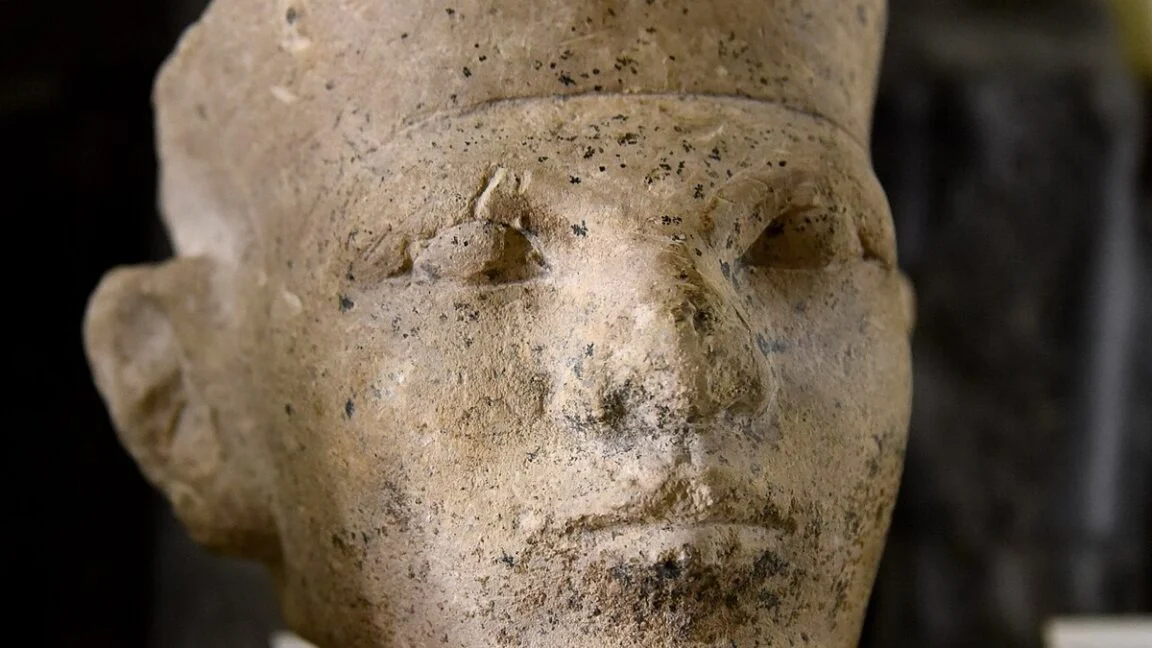
A comprehensive re-examination of 46 ancient Egyptian crania has provided striking new insights into the lives, health, and violent deaths of individuals excavated more than a century ago. The research, conducted by bioarchaeologist Campbell, revisited a collection of human remains originally recovered by the pioneering British archaeologist Sir William Matthew Flinders Petrie. By applying modern forensic and osteological techniques to the ancient skulls, Campbell’s analysis has revealed clear evidence of violent trauma that went unrecognized during the initial excavation, offering a clearer picture of ancient interpersonal violence and early forensic methodology.
The collection consists of 46 individual crania that were preserved for study following their initial discovery. Campbell set out to systematically re-assess the remains to establish accurate demographic profiles, including age and biological sex, while simultaneously scouring the bone surfaces for subtle indicators of health, disease, and potential causes of death.
While Campbell’s initial determinations regarding biological sex aligned closely with Petrie’s century-old assessments, she emphasized the inherent scientific limitations of attempting to assign biological sex based exclusively on cranial morphology. In physical anthropology and bioarchaeology, the cranial vault and facial structures offer useful sex indicators, but the pelvic girdle remains the gold standard for accurate biological sex determination.
Campbell cautioned that achieving absolute certainty in these biological profiles would require direct examination of the individuals’ pelvic bones. However, obtaining those corresponding bones presents virtually insurmountable challenges. Even if sufficient funding and time were available to attempt a re-excavation of the site where the remains were originally disinterred, matching the scattered pelvic bones to their respective crania would be an extraordinarily complex and uncertain undertaking. Over decades or centuries, disarticulated human remains within shared burial environments become separated, making the definitive pairing of isolated crania with specific postcranial bones nearly impossible without intact context or extensive DNA testing.
Telltale fractures
Despite the challenges in establishing definitive individual demographic profiles, the most significant findings emerged from the physical condition of the cranial bones themselves. Campbell identified linear fractures present in 18 of the 46 skulls examined. This means that approximately 39 percent of the sample population bore direct physical evidence of severe head injury.
According to Campbell’s analysis, the presence of these distinct linear fractures strongly points to blunt force trauma caused by deliberate impact. Traumatic blows of this magnitude to the cranial vault would have delivered substantial kinetic energy to the head, knocking the individuals unconscious and triggering severe intracranial hemorrhage. Internal bleeding of this nature, combined with the primary mechanical damage to brain tissue, would very likely have proven fatal to the victims shortly after the impacts occurred.
In addition to the widespread evidence of blunt force impacts, several skulls in the collection exhibited marks consistent with sharp-force trauma. Among these sharp-force injuries were clear signs of chopping impacts directed at the facial region, including distinct trauma surrounding one of the skull’s eye orbits. The presence of both blunt-force and sharp-force injuries suggests that some of these individuals were subjected to violent, targeted physical assaults involving multiple types of weapons or attack methods.
For the remaining skulls in the sample that did not exhibit clear cranial fractures, the precise cause of death remains less visually obvious on the bone. To explain how those individuals may have died, scholars and researchers have posited several alternative theories. Because soft tissue rarely survives in the archaeological record outside of specific artificial or environmental mummification contexts, deaths resulting from soft-tissue damage or non-skeletal trauma leave no direct trace on the bone. Consequently, researchers have suggested that asphyxiation, strangulation, or poisoning could account for the deaths of the individuals whose skulls bore no visible skeletal trauma.
Methodological advances and historical oversight
The discovery of extensive violent trauma across nearly 40 percent of the examined skulls raises an obvious question: why did Flinders Petrie, widely regarded as one of the most meticulous and methodical excavators of his era, fail to document these fatal injuries when he first processed the collection?
Petrie’s original field notes made no mention of the severe, fatal trauma that Campbell identified. However, Campbell stressed that this omission should not be viewed as carelessness or poor record-keeping on the part of the famous excavator. Instead, it underscores how dramatically the fields of bioarchaeology, osteology, and physical anthropology have advanced over the past hundred years.
Campbell noted that Petrie was a extraordinarily careful observer who documented his finds with great detail given the tools available to him at the time. The issue was not a lack of diligence, but rather a lack of scientific knowledge regarding bone biomechanics and forensic pathology. Petrie simply did not possess the theoretical framework or analytical training required to understand what he was looking at when examining broken bone surfaces.
Over the last few decades, bioarchaeologists have developed a far more sophisticated understanding of how to differentiate between injuries that occurred around the time of death and damage that occurred long after burial. Modern bone analysis relies heavily on understanding how bone tissue reacts to mechanical stress under different biological conditions. Bone responds in fundamentally different ways depending on whether it is fresh, green bone containing living moisture and organic collagen, dry bone that has lost its organic matrix over time, or fossilized bone exposed to environmental pressure.
When fresh bone suffers an impact at or near the time of death—known as perimortem trauma—it exhibits specific structural behaviors, such as smooth, linear fracturing, plastic deformation, and characteristic beveling along the margins of the break. Conversely, dry bone that breaks centuries after death due to soil weight, excavation tools, or handling—known as postmortem damage—fractures in a jagged, irregular, or staircase fashion.
Without a modern understanding of these biomechanical distinctions, early excavators had no reliable method for determining when a fracture occurred. If an early archaeologist saw a crack in a skull, the standard assumption was that the fragile bone had simply broken during excavation or handling. Because accidental damage during unearthing was common, genuine evidence of ancient lethal violence was frequently dismissed as routine excavation damage.
Re-evaluating the weapons of ancient violence
The identification of linear fractures across such a high proportion of the skulls also provides critical evidence regarding the types of weapons or instruments used to inflict these lethal blows.
In ancient Egyptian art and royal iconography, pharaohs and warriors are frequently depicted in formal smiting scenes wielding heavy maces. These iconic weapons typically featured heavy, rounded stone or metal heads mounted on handles, designed to deliver devastating crushing force. However, the physical evidence preserved on the 46 crania does not align with the impact patterns produced by traditional maces.
When a spherical or rounded weapon like a mace strikes a human skull, it concentrates immense force onto a small, localized area of bone. This type of localized impact produces depressed fractures, where fragments of bone are driven inward into the cranial cavity. Depressed fractures were notably absent among the linear fractures documented in Campbell’s study.
Instead, the presence of long, continuous linear fractures indicates that the impacts were delivered by a weapon with a broad, flat striking surface that distributed kinetic force across a wider surface area of the skull. A wide, flat striking face causes the cranial structure to flex and split along stress lines, resulting in the distinct linear propagation observed in the 39 percent of traumatized skulls.
Campbell explained that identifying the precise implement used remains difficult because a wide variety of object geometries can yield linear fracture patterns. Rather than specialized military maces, the injuries point to the use of flat, wide, and lighter weapons.
Campbell noted that such injuries could easily be produced by a relatively simple object, such as a sturdy wooden board or a fashioned wooden club. While Petrie had previously theorized that a heavy sandbag might have been used as a non-lethal or subtle bludgeoning tool, Campbell expressed skepticism regarding that specific hypothesis. She pointed out that a large sandbag is exceptionally heavy, and the immense mechanical force required to swing a sandbag with sufficient velocity to fracture a human skull would likely cause far more extensive, crushed structural damage than the clean linear breaks seen in this sample.
Instead, Campbell emphasized that human beings throughout history have routinely resorted to improvised or easily crafted weapons. A simple wooden club or flat board, swung with force, would provide the necessary combination of broad surface contact and rapid velocity to knock an individual unconscious, split the cranial bone along linear fracture lines, cause fatal internal cranial hemorrhaging, and leave behind the precise osteological signatures observed in the collection today.