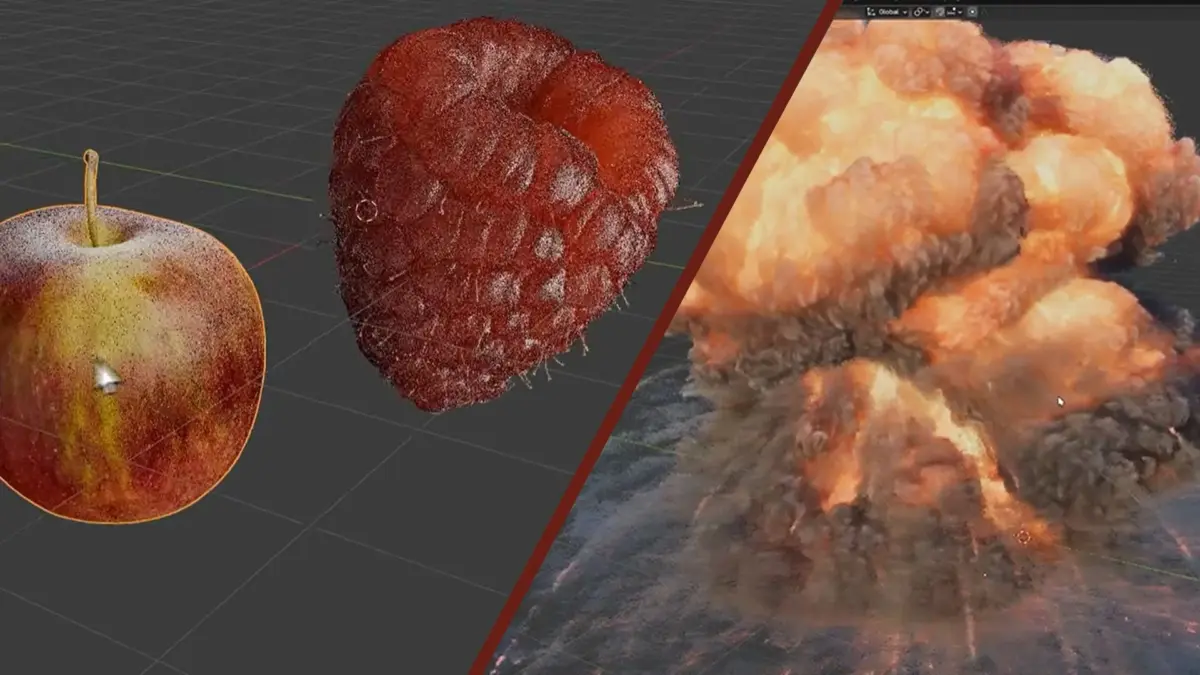
The industry at large is also grappling with the limitations of Gaussian Splatting, particularly regarding the ability to modify these scenes once they are captured. One of the most significant drawbacks of the technology has been the difficulty of relighting a splat. Since the lighting information is essentially "baked" into the colors of the blobs during the capture process, changing the position of a sun or adding a new light source in a 3D scene often results in a visual disconnect.
Interestingly, other major players in the 3D industry are also racing to solve these issues. Chaos, the developers behind the V-Ray rendering engine, recently made headlines for their work in allowing users to relight Gaussian splats, a breakthrough that suggests the technology is rapidly maturing. As Blender integrates native support, it enters a competitive landscape where the ability to not just view, but actively manipulate and light these captures, will be the next major frontier.
The road to the November release of Blender 5.3 will likely involve several more alpha and beta iterations, each aiming to polish the Gaussian splatting pipeline. For the broader creative community, the message is clear: the barrier between the physical world and the digital canvas is thinner than ever. By bringing these tools into the core of the software, Blender is democratizing a technology that was, until recently, the domain of research papers and experimental scripts.
As digital artists prepare for the update, the focus remains on how these tools will be used in practice. From indie filmmakers looking to scan locations on a budget to game developers seeking more realistic environmental assets, the native integration of Gaussian splatting in Blender 5.3 is more than just a new feature—it is a signal of where the industry is headed. While the export of splats from Blender is not yet supported, the ability to import and render them within a world-class 3D environment is a massive step forward.
The Blender Foundation continues to rely on community feedback during this alpha phase to identify bugs and prioritize feature refinements. As the November deadline approaches, the excitement continues to build for what many consider to be the most significant update to Blender’s rendering capabilities in several versions. For a software package that has already redefined the accessibility of high-end 3D tools, version 5.3 looks set to push those boundaries even further, ensuring that Blender remains at the forefront of the digital revolution.