The landscape of open-source 3D creation is preparing for another significant shift as the Blender Foundation moves forward with the development of Blender 5.3. Currently in its alpha stage, the upcoming version is already generating substantial buzz within the digital art and visual effects communities. While Blender has long been established as the premier free 3D suite and a powerhouse for both 2D and 3D animation, the 5.3 iteration aims to solidify its position by embracing one of the most transformative technologies in recent years: native support for 3D Gaussian Splatting.
The inclusion of Gaussian Splatting represents a pivotal moment for the software. For years, the 3D industry has relied heavily on traditional polygonal modeling and photogrammetry to bridge the gap between the physical and digital worlds. However, Gaussian Splatting has emerged as a disruptive alternative, offering a more efficient and visually stunning way to capture and render real-world environments. With Blender 5.3, this technology is moving from the periphery of experimental add-ons directly into the core of the application’s architecture.
As the development cycle progresses toward a full public release expected in November, the community is closely monitoring how these new features will integrate with Blender’s existing toolset. The alpha builds have already revealed a robust implementation that allows users to import 3D Gaussian Splats from widely used file formats, specifically PLY and SPZ files. While the current version focuses primarily on the ingestion and rendering of these assets, the implications for architectural visualization, virtual production, and digital heritage preservation are immense.
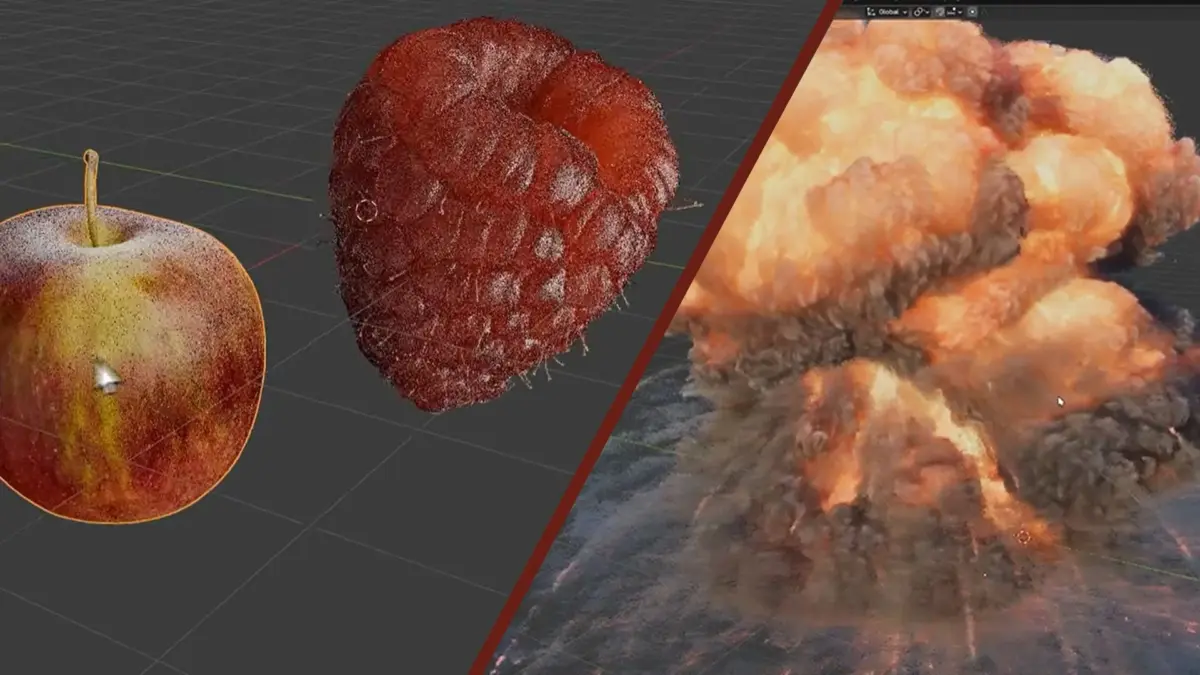
To understand why this update is garnering such attention, it is necessary to examine the nature of Gaussian Splatting itself. Unlike traditional 3D models, which are constructed from a rigid framework of geometric triangles, vertices, and polygons, a "splat" is fundamentally different. It is a volumetric representation composed of millions of tiny, overlapping 3D colored blobs. Each of these "Gaussians" stores critical data regarding its position in space, its size, shape, color, and transparency. When rendered together, these blobs create a photorealistic, interactive scene that captures the nuances of light, reflection, and complex geometry far more accurately than traditional meshes often can.
The technology allows artists and designers to take a series of ordinary photographs or video clips of a real-world object or environment and reconstruct them into a navigable 3D space. Because the system relies on these soft, overlapping volumes rather than hard edges, it excels at capturing difficult subjects such as hair, foliage, and semi-transparent surfaces—elements that have historically been the bane of traditional photogrammetry.
Until this point, the workflow for incorporating Gaussian splats into Blender was often cumbersome and reliant on the generosity of independent developers. Users were forced to navigate a fragmented pipeline, utilizing external tools such as COLMAP or specialized platforms like Brush to process their imagery. Once the splats were generated, they could only be brought into Blender through specialized third-party add-ons. While these tools were effective, they often lacked the stability and deep integration required for high-end professional production.
Blender 5.3 changes this dynamic by providing native import capabilities. This means that the software can now handle the complex data structures of splat files natively, ensuring better memory management and a more streamlined user experience. Furthermore, the update allows these splats to be rendered across Blender’s entire suite of engines, including the real-time Workbench, the high-performance EEVEE, and the production-grade path tracer, Cycles. This versatility ensures that artists can use splats for everything from quick layout previews to final, cinematic-quality renders.
Early demonstrations of this technology in action have already begun to circulate. Visual effects artists and prominent community figures, such as CGMatter and Jason Key, have showcased the potential of the 5.3 alpha, highlighting the ease with which real-world captures can now be integrated into complex 3D scenes. These examples demonstrate not only the visual fidelity of the splats but also how they can exist alongside traditional 3D assets, allowing for a hybrid approach to scene building.
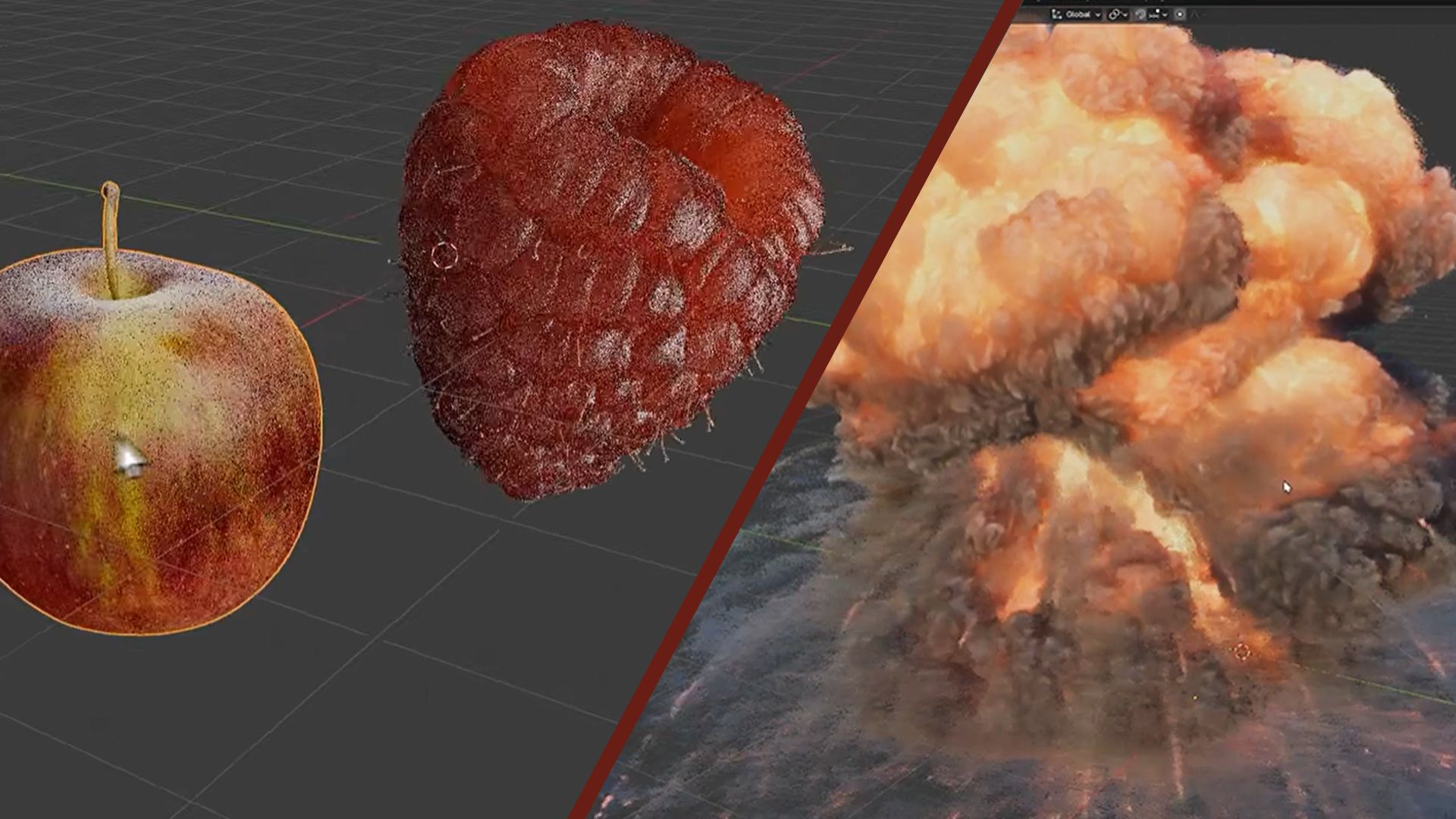
However, as with any major technological leap, the current implementation in the alpha stage comes with a set of documented limitations. The Blender Foundation’s release notes for version 5.3 are transparent about the hurdles that remain. Currently, performance is not yet fully optimized, and users with lower-end hardware may find the handling of massive splat files to be taxing on their systems. This has led to renewed interest in high-performance hardware, as the processing of millions of Gaussians requires significant GPU resources.
A more technical challenge lies in the color space and radiance handling. The current pipeline assumes an sRGB color space, which can lead to discrepancies when rendering. Because Cycles and EEVEE operate within a linear color space to maintain physical accuracy in lighting, areas of low opacity or high radiance in a Gaussian splat can sometimes render incorrectly. This mismatch can result in "popping" artifacts or unnatural brightness in certain lighting conditions.
Additionally, the "Apply Transform" function—a staple of the Blender workflow used to bake a model’s scale and rotation—does not yet function correctly with Gaussian splats. This is due to the unique attributes of the splats, which include spherical harmonics and specific scaling data that the standard transform tools are not yet equipped to handle. These are the types of "growing pains" expected in an alpha release, and the development team is likely working to refine these systems before the stable version arrives in late autumn.
The industry at large is also grappling with the limitations of Gaussian Splatting, particularly regarding the ability to modify these scenes once they are captured. One of the most significant drawbacks of the technology has been the difficulty of relighting a splat. Since the lighting information is essentially "baked" into the colors of the blobs during the capture process, changing the position of a sun or adding a new light source in a 3D scene often results in a visual disconnect.
Interestingly, other major players in the 3D industry are also racing to solve these issues. Chaos, the developers behind the V-Ray rendering engine, recently made headlines for their work in allowing users to relight Gaussian splats, a breakthrough that suggests the technology is rapidly maturing. As Blender integrates native support, it enters a competitive landscape where the ability to not just view, but actively manipulate and light these captures, will be the next major frontier.
The road to the November release of Blender 5.3 will likely involve several more alpha and beta iterations, each aiming to polish the Gaussian splatting pipeline. For the broader creative community, the message is clear: the barrier between the physical world and the digital canvas is thinner than ever. By bringing these tools into the core of the software, Blender is democratizing a technology that was, until recently, the domain of research papers and experimental scripts.
As digital artists prepare for the update, the focus remains on how these tools will be used in practice. From indie filmmakers looking to scan locations on a budget to game developers seeking more realistic environmental assets, the native integration of Gaussian splatting in Blender 5.3 is more than just a new feature—it is a signal of where the industry is headed. While the export of splats from Blender is not yet supported, the ability to import and render them within a world-class 3D environment is a massive step forward.
The Blender Foundation continues to rely on community feedback during this alpha phase to identify bugs and prioritize feature refinements. As the November deadline approaches, the excitement continues to build for what many consider to be the most significant update to Blender’s rendering capabilities in several versions. For a software package that has already redefined the accessibility of high-end 3D tools, version 5.3 looks set to push those boundaries even further, ensuring that Blender remains at the forefront of the digital revolution.