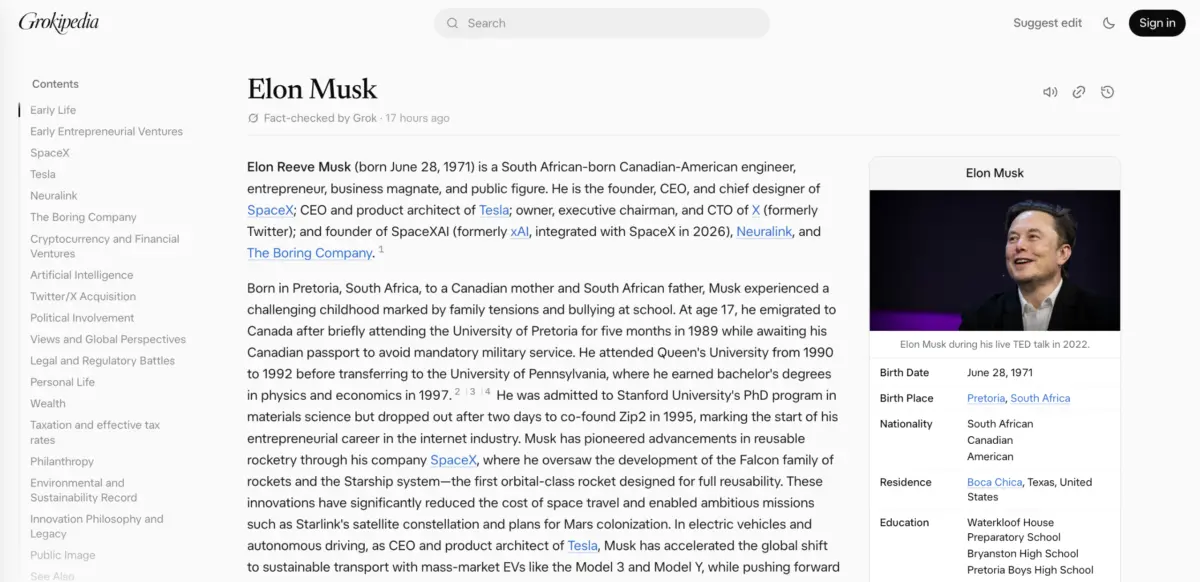
The skepticism surrounding Grokipedia often centers on its sourcing and the potential for editorial leanings. During its earlier phases, the platform was frequently criticized for having "thin" sources, with articles sometimes lacking the robust citation networks that define Wikipedia’s reliability. Furthermore, given Musk’s vocal critiques of "traditional" media and his own stated goals for Grok—the AI model behind the platform—there have been persistent concerns that Grokipedia might favor a specific ideological perspective. The new v0.3 update attempts to address some of these concerns by emphasizing the "vetting" process performed by Grok. By positioning the AI as a curator and fact-checker for human-submitted edits, the platform is betting on the idea that an AI-driven editorial board can provide a faster, more objective alternative to the human-led consensus model used by Wikipedia.
Despite the slick new interface and the interactive 3D elements, the fundamental challenge for Grokipedia remains its ability to compete with the sheer scale and institutional trust of Wikipedia. Wikipedia is more than just a website; it is a global community of editors and a non-profit institution that has spent decades building a reputation for transparency, even if it is not without its own flaws. For many, Wikipedia is the "internet backbone," a primary source of truth that is integrated into everything from search engine snippets to academic research. Musk’s Grokipedia, by contrast, is seen as a corporate-driven alternative that, while technologically advanced, lacks the grassroots legitimacy of its predecessor. The "facelift" in v0.3 may improve the user experience, but it does not necessarily solve the problem of information provenance.
The design philosophy behind Grokipedia’s latest update can be seen as part of a broader trend in Musk’s recent ventures, where aesthetics and branding are used to signal a "new era" of technology. Similar to the recent rebranding of SpaceXAI and other Musk-led initiatives, there is a clear focus on creating a visual language that feels "premium" and forward-thinking. The use of a script font for the logo, for instance, suggests a return to a more "human" or "classic" form of communication, perhaps to counter the cold, robotic reputation that AI projects often carry. Yet, this focus on design often draws comparisons to other Musk projects where the branding is strikingly familiar or derivative of existing concepts. In the case of Grokipedia, the tension between the "swanky" new design and the unoriginal article layout highlights the difficulty of truly innovating in the space of digital knowledge organization.
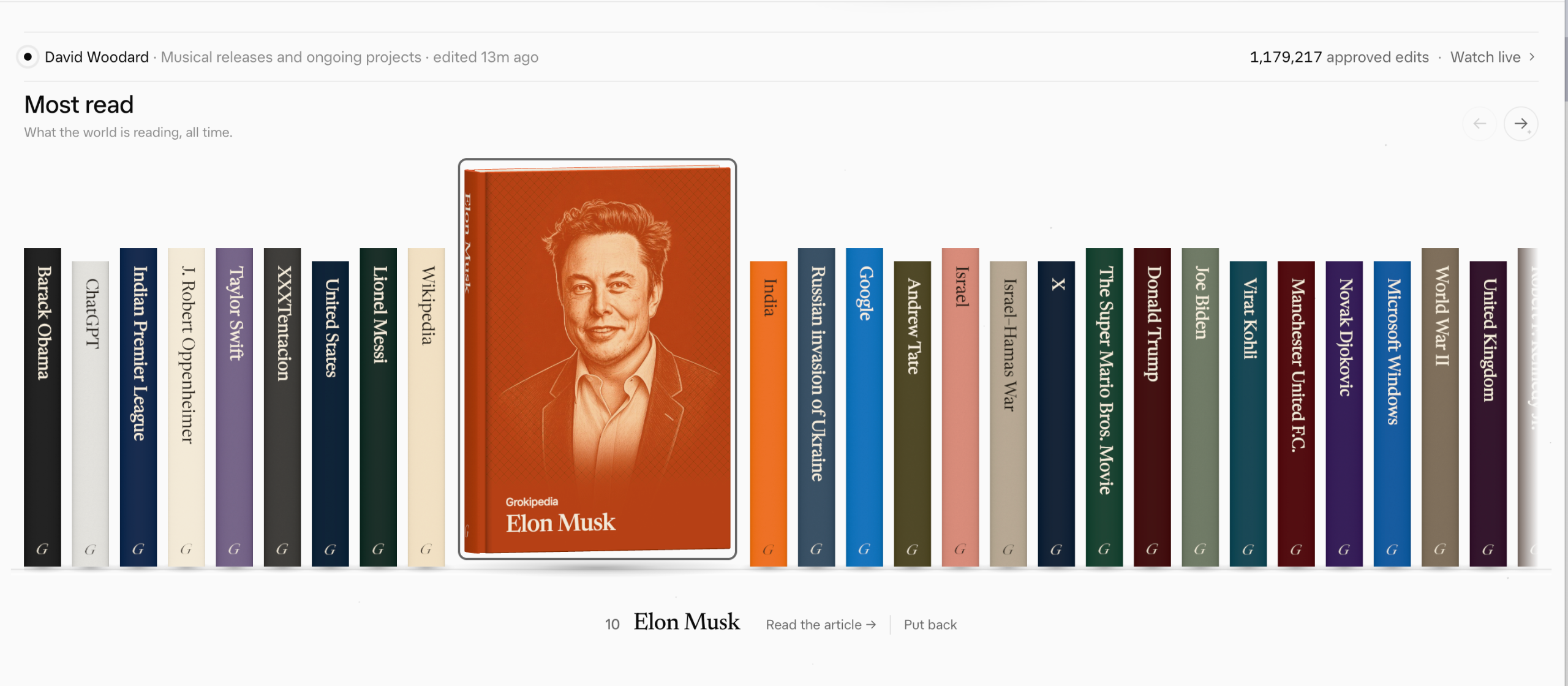
As Grokipedia v0.3 rolls out, the tech world is watching to see if the platform can move beyond its reputation as a "Wikipedia clone" and become a viable tool for information discovery. The inclusion of a "Latest Edits" page vetted by Grok suggests a shift toward a more active, real-time encyclopedia that can keep pace with breaking news faster than traditional human-edited sites. However, the success of this model depends entirely on the accuracy and neutrality of the Grok AI. If the system continues to struggle with the "thin sources" and bias that plagued its earlier versions, no amount of 3D book covers or minimalist side tables will be enough to win over a skeptical public. For now, the platform remains an intriguing, if controversial, experiment in how artificial intelligence might reshape our access to the world’s information.