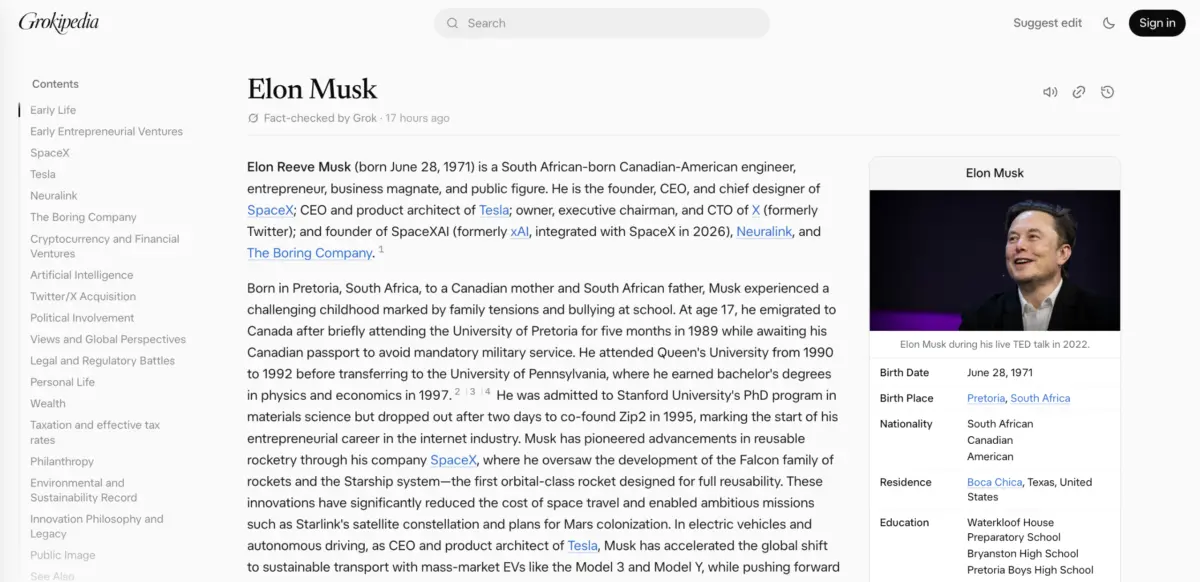
The return of Grokipedia also occurs within a wider context of Musk’s ongoing disputes with established digital platforms and his efforts to promote "online democracy" through his own ecosystem of tools. Recent ad campaigns and public statements from Musk have frequently targeted the leadership of other tech giants, such as Mark Zuckerberg and Jeff Bezos, accusing them of stifling free speech or maintaining "woke" biases in their information systems. Grokipedia is clearly intended to be a pillar of this alternative ecosystem—a place where information is supposedly "freed" from the constraints of traditional editorial oversight. However, the irony of using a heavily "vetted" AI system to achieve this goal is not lost on observers, who note that replacing human bias with algorithmic bias may not be the democratic solution Musk claims it to be.
The 3D "library" interface of Grokipedia v0.3 is perhaps the most symbolic element of this entire reboot. By mimicking the look and feel of a physical library, the platform is attempting to borrow the gravitas and sense of permanence associated with traditional books. It is a visual promise of stability and depth in an era of ephemeral digital content. Yet, as users click through the interactive covers to find pages that still closely resemble the layout of Wikipedia, the gap between the promise of the design and the reality of the content becomes apparent. The "slick new era" for Grokipedia has certainly arrived in terms of presentation, but the platform’s journey toward becoming a genuine rival to the world’s most famous encyclopedia is only just beginning.
Ultimately, Grokipedia v0.3 represents a significant investment in the idea that design can bridge the gap between a controversial start and a mainstream future. Whether it can overcome its past "halts" and "thin sources" to become a reliable resource remains to be seen. For the time being, it stands as a high-tech curiosity—a polished, Musk-branded window into a world where AI doesn’t just help us find information, but actively decides what that information should look like and how it should be presented. As the platform continues to evolve, the tech community will be looking for more than just a "swanky" logo; they will be looking for the substance beneath the script.