Beyond immigration policy, the U.S. has also seen a rise in domestic political pressure affecting university personnel decisions. The report highlights the case of the University of Arkansas, which in January of this year made the controversial decision to rescind a job offer to legal scholar Emily Suski. Suski had been selected to serve as the dean of the university’s law school, but the institution backtracked after receiving pointed feedback from elected officials. The political opposition centered on Suski’s decision to sign an amicus brief filed with the U.S. Supreme Court, which advocated for the rights of transgender students to participate on sports teams that align with their gender identity. This incident is cited by SAR as a clear example of how political litmus tests are being applied to academic appointments, bypassing traditional peer-review and institutional hiring processes.
The report also notes that public pressure, often fueled by social media and political polarization, has played a significant role in reducing academic liberty. In the wake of the killing of political commentator Charlie Kirk in September 2025, several faculty members in both the United States and Canada were suspended or fired. These disciplinary actions were often the direct result of public statements made by the professors regarding the event, raising concerns about the narrowing boundaries of protected speech for academics in the public sphere.
Similar trends of government-led interference were documented in India. The report specifically mentions Banaras Hindu University, which was among several Indian institutions that canceled scheduled speaking engagements due to external political influence. A lecture by the scholar Kedar Mishra was axed by the university administration specifically because the government opposed his participation. Such incidents suggest a growing "chilling effect" on Indian campuses, where the state’s disapproval can lead to the immediate silencing of diverse perspectives.

While much of the "Free to Think 2026" report paints a sobering picture of global decline, it does offer notes of "cautious optimism" regarding recent political shifts in Bangladesh and Hungary. In both nations, new administrations have the potential to reverse years of damage inflicted on the higher education sector.
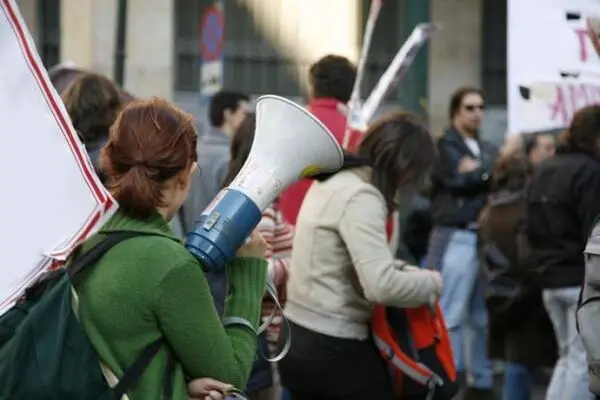
In Bangladesh, the report looks back at the devastating violence of the previous year, where police forces attacked protesting students, resulting in thousands of injuries and the deaths of as many as 1,400 people. With a change in the political landscape, there is hope that the extreme state violence against the student body will be replaced by a period of restoration and protection for student activists.
The situation in Hungary offers a more concrete example of institutional repair. Under the long-term leadership of former Prime Minister Viktor Orbán, the Hungarian government had effectively seized control of public universities by transferring their ownership to private foundations. these foundations were led by political appointees, a move that SAR and international observers characterized as a direct assault on university autonomy. This policy led to severe international repercussions, including Hungary’s suspension from the European Union’s Erasmus student exchange program and the Horizon Europe research funding initiative.