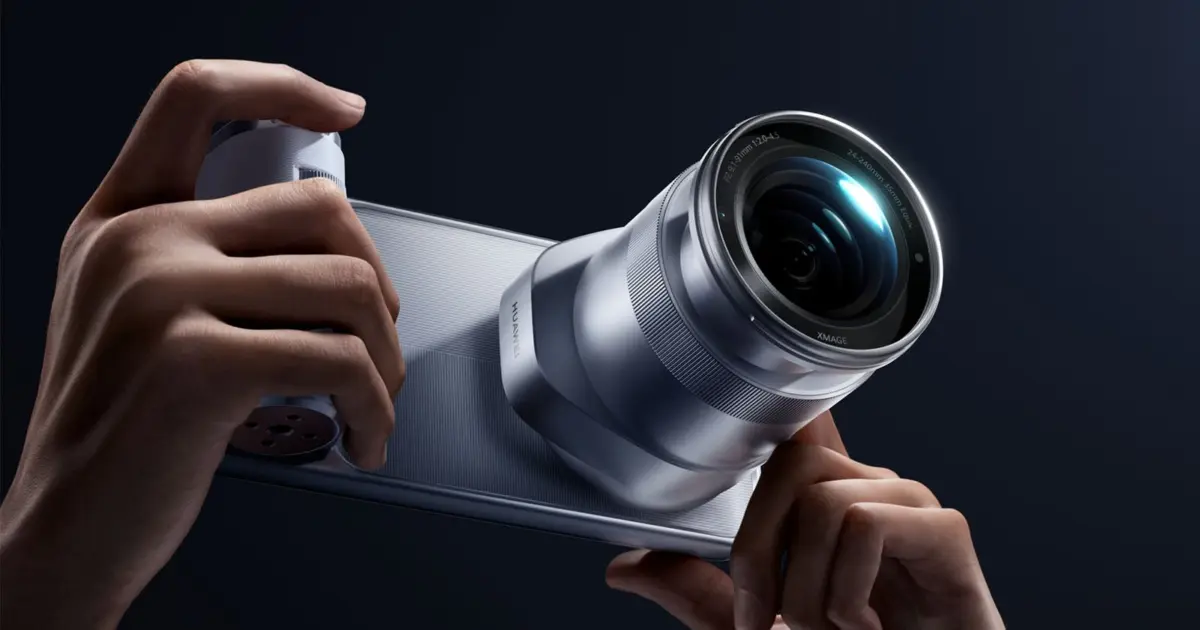
In a move that signals a bold new direction for the intersection of mobile technology and professional photography, Huawei has officially pulled the curtain back on its latest hardware innovation: the Ruiying Z10. Unveiled alongside the company’s newest flagship smartphone lineup, the Ruiying Z10 is not merely an accessory or a secondary lens attachment in the traditional sense. Instead, it represents an entire imaging system—a self-contained camera module featuring a massive Type 1 sensor and a sophisticated power zoom lens—designed to transform a smartphone into a high-performance digital camera.
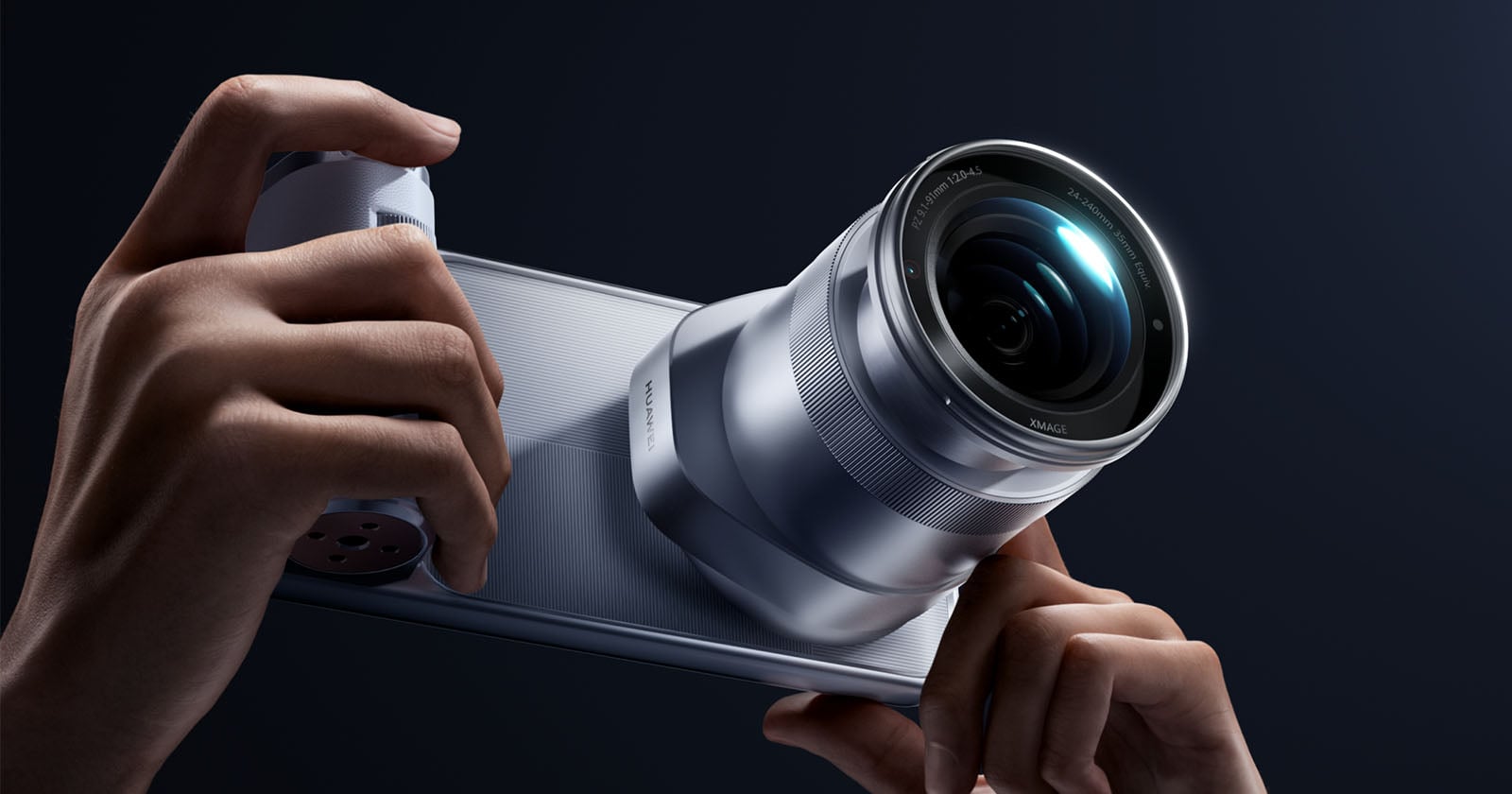
For years, the smartphone industry has chased the "DSLR-killer" dream through computational photography, using artificial intelligence and multi-frame stacking to mimic the look of professional glass. While these advancements have been revolutionary, they often hit a ceiling dictated by the physical constraints of thin smartphone chassis. Huawei’s Ruiying Z10 bypasses these physical limitations by moving the primary imaging hardware outside the phone, offering a hardware-first solution to a problem that has long been addressed primarily through software.
The Ruiying Z10 enters a market where competitors like Vivo have experimented with Zeiss-made teleconverter lenses, which act as magnifying glass for existing internal sensors. However, Huawei has taken a significantly more ambitious path. The Z10 is a complete imaging pipeline, housing its own 50-megapixel RYYB image sensor. This sensor is a Type 1 (often referred to as a 1-inch) variety, placing it in the same class as high-end enthusiast compact cameras like the Sony RX100 series. By utilizing an RYYB (Red, Yellow, Yellow, Blue) filter array rather than the standard RGGB (Red, Green, Blue) pattern, Huawei claims the sensor can capture significantly more light, particularly in challenging low-light environments, providing a cleaner signal and better dynamic range than traditional mobile sensors.
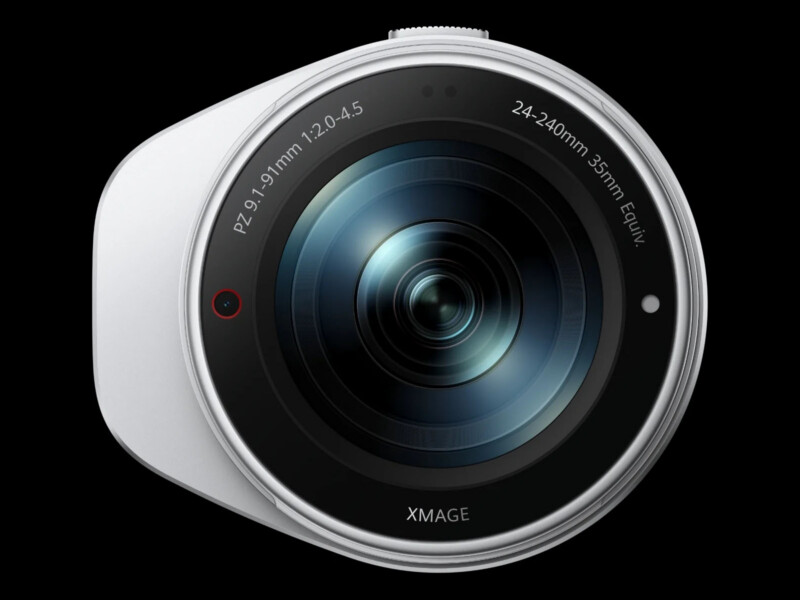
The centerpiece of the Ruiying Z10 is its 10x optical power zoom lens. On paper, the optics are described as a 9.1-91mm f/2-4.5 lens. When accounting for the 2.6x crop factor of the Type 1 sensor, this results in a 35mm equivalent focal range of 24mm to 240mm. This "superzoom" range allows users to pivot from wide-angle landscapes to tight, intimate portraits and distant wildlife shots without the loss of detail associated with digital cropping. The aperture range of f/2 at the wide end to f/4.5 at the telephoto end is particularly impressive for a module of this size, ensuring that users can maintain a shallow depth of field and pleasing background bokeh that is physically generated by the optics rather than simulated by software.
The internal construction of the lens is equally complex, featuring 19 elements arranged in six groups. This level of optical sophistication is rarely seen in the mobile space and is intended to minimize chromatic aberration, distortion, and flaring—issues that frequently plague smaller, less complex smartphone lenses. Furthermore, the Z10 features a "stepless" power zoom mechanism. Unlike standard smartphone cameras that often "jump" between different fixed focal length lenses when zooming, the Ruiying Z10 provides a smooth, continuous transition across its entire 10x range. This makes it an exceptionally capable tool for videographers who require smooth focal transitions during a take.
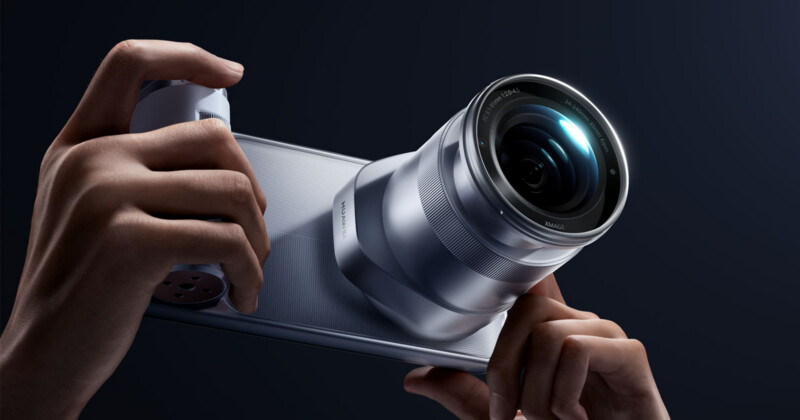
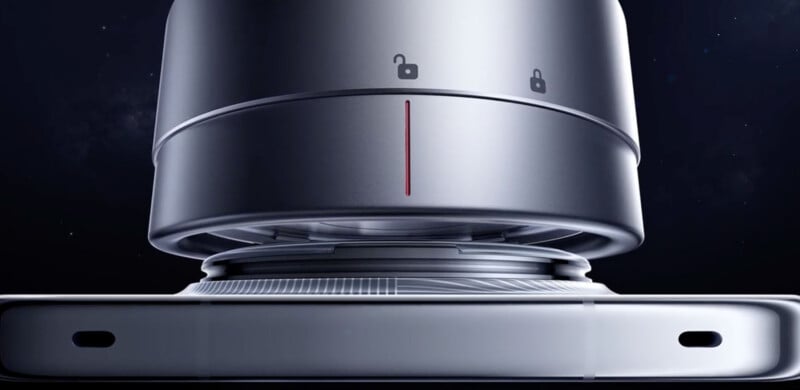
Integration with the smartphone is handled through a specialized screw-on mount system. This mechanical connection is reminiscent of how an interchangeable lens attaches to a mirrorless camera body, providing a secure and stable fit that far surpasses the clip-on or magnetic solutions of the past. The Z10 is designed to sit directly over the existing camera array of the host phone, but it functions independently of the phone’s internal optics. It does, however, rely on the smartphone for two critical components: power and processing. By drawing power from the phone’s battery and utilizing the phone’s high-performance chipset for image processing and the user interface, the Z10 avoids the bulk of an internal battery and its own dedicated processor, keeping the module as streamlined as possible.
Currently, the Ruiying Z10 is compatible with two of Huawei’s most premium devices: the Mate 90 Pro Max Collector’s Edition and the Mate 90 RS. These flagship "slab" phones are already among the most capable mobile shooters on the market, but the addition of the Z10 elevates them into a different category of imaging tool. While the module is easy to attach and detach, it does bring a significant physical presence to the device. The Z10 weighs approximately 350 grams on its own. When paired with a flagship phone that typically weighs upwards of 220 grams, the combined "camera" weighs more than half a kilogram. This creates a package that, while still more portable than a full-frame DSLR and a 24-240mm lens, is no longer a "pocketable" device in the traditional sense.
The target audience for the Ruiying Z10 appears to be the serious mobile photography enthusiast—someone who values the convenience of a smartphone workflow but refuses to compromise on optical quality. Sample images released by Huawei demonstrate the module’s capabilities, showing a level of texture, skin tone accuracy, and natural depth of field that is difficult to achieve with the small sensors and plastic lenses found inside even the best smartphones. In portraits, the 240mm equivalent reach combined with the Type 1 sensor produces a compression of features and a creamy background blur that looks distinctly "photographic" rather than "computational."
However, this level of performance comes at a premium. Huawei has priced the Ruiying Z10 at 5,999 RMB in China, which translates to approximately $900 based on current exchange rates. This price point places the module in direct competition with standalone mid-range mirrorless cameras and high-end compacts. For many consumers, $900 is more than the cost of a standalone flagship smartphone, making the Z10 a significant investment. It is a clear signal that Huawei is not looking to sell this as a mass-market toy, but as a professional-grade tool for a specific niche of creators.

The Ruiying Z10 represents a fascinating chapter in the ongoing evolution of the "digicam." As dedicated point-and-shoot cameras have largely been erased from the market by the rise of the smartphone, the Z10 suggests a future where the smartphone doesn’t just replace the camera, but becomes the heart of a modular photography system. By offloading the heavy lifting of light gathering and magnification to a high-quality external module, Huawei is offering a glimpse of a world where one’s phone can be a slim, everyday communicator one moment and a 10x optical zoom powerhouse the next.
While the size and price of the Z10 may be barriers for the average user, the technology inside—specifically the integration of a Type 1 RYYB sensor with a complex 19-element lens—sets a new benchmark for what is possible in the mobile accessory space. As mobile processors become more powerful and the demand for high-quality social media content continues to grow, the Ruiying Z10 may be the first of many devices that seek to bridge the gap between the phone in your pocket and the professional camera in your bag.

For now, the Ruiying Z10 remains a high-end curiosity and a testament to Huawei’s engineering capabilities. It challenges the notion that smartphone photography must be limited by the thickness of the handset, proving that with the right mounting system and a willingness to carry a bit of extra weight, the "smartphone camera" can truly compete with dedicated imaging hardware. Whether this modular approach will gain widespread adoption remains to be seen, but for the Mate 90 Pro Max and Mate 90 RS users looking for the ultimate in mobile reach and resolution, the Z10 stands alone in its class.