Stanford University also issued a brief statement, asserting that it complies with all applicable visa laws and will cooperate with the Labor Department’s investigation.
The clash between the administration and the nation’s top research universities highlights a fundamental debate over the future of the American academic labor market. For decades, the influx of international talent has been viewed by the higher education sector as a cornerstone of American soft power and scientific dominance. Universities argue that the J-1 program allows them to bring in the "best and brightest" from around the world, many of whom stay in the U.S. to start companies and lead research labs.
However, the administration’s fraud task force is reframing this narrative, viewing the high concentration of J-1 holders as a sign of systemic labor exploitation. By focusing on the 61 percent utilization rate at these specific schools—compared to the 38 percent national average—Vance is suggesting that these institutions have become overly reliant on a visa category that lacks the robust labor protections found in other programs, such as the H-1B visa.
The $20,000 wage gap cited by the Vice President is likely to become a central point of contention in the investigation. If the Labor Department can prove that universities are intentionally selecting J-1 candidates over qualified Americans specifically to save money on grant-funded salaries, the institutions could face severe penalties, including the clawback of federal funds or restrictions on their future ability to sponsor international scholars.
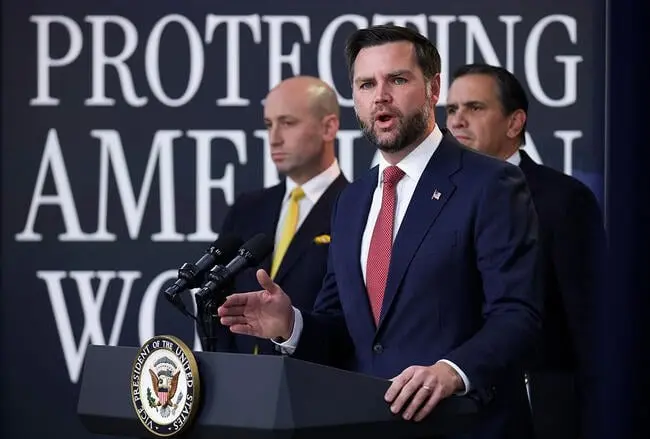
The investigation also touches on the broader "Protecting American Workers" agenda, which seeks to prioritize domestic labor in every sector of the economy. By targeting the "prestige" of the Ivy League and elite technical institutes like MIT and Caltech, the administration is signaling that no institution is exempt from scrutiny.
As the Labor Department begins the process of reviewing the subpoenaed records, the higher education community is bracing for what could be a lengthy and adversarial process. The outcome of this investigation may not only result in legal consequences for the nine universities named but could also lead to a fundamental restructuring of how international researchers are integrated into the American university system.
For now, the administration remains firm in its position. The investigation is not just about administrative compliance, according to D’Esposito, but about ensuring that federal research dollars—provided by American taxpayers—are used to support the American workforce rather than to subsidize a system that favors cheaper, temporary foreign labor. The "historic" nature of this investigation, as described by the Inspector General, suggests that the government is prepared for a prolonged battle with the nation’s most powerful educational entities.