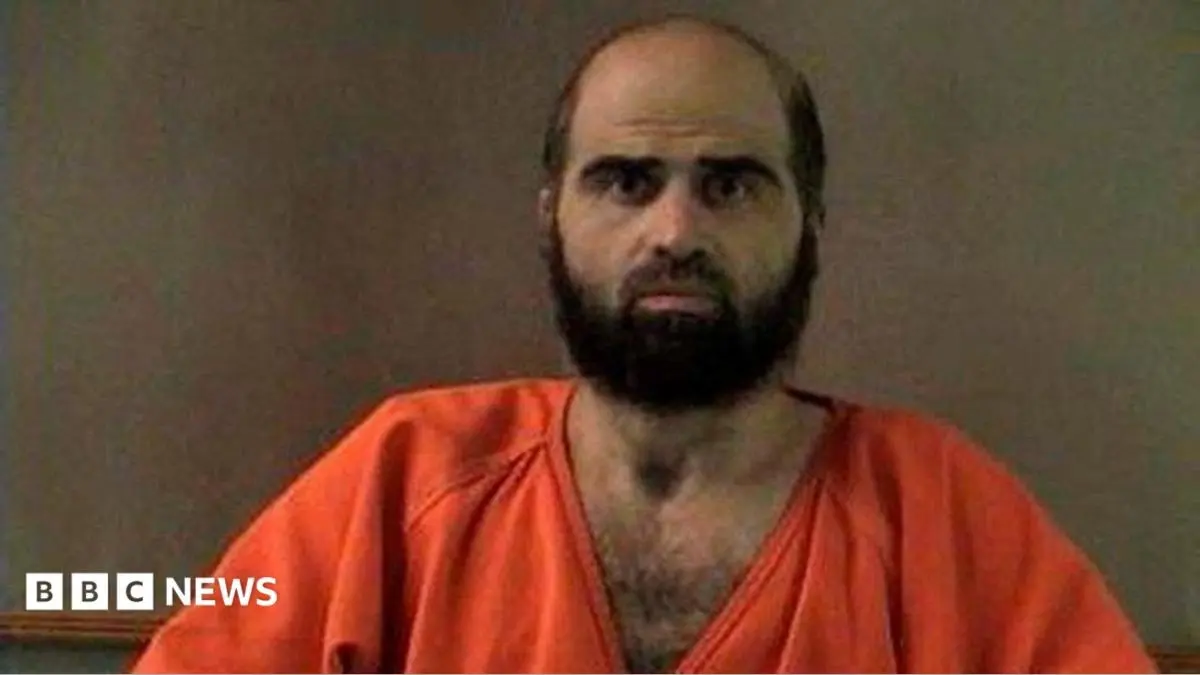
The condemned prisoner at the center of the historic execution, Nidal Hasan, carried out one of the most violent acts of internal mass bloodshed ever perpetrated on an American military installation. In 2009, while serving as a major and psychiatrist in the United States Army, Hasan opened fire inside a processing center at the Fort Hood military base in Texas.
During the calculated attack at the sprawling Texas base, Hasan targeted unarmed service members who were preparing for deployment or undergoing routine medical checks. The tragedy resulted in the deaths of 13 unarmed U.S. soldiers and left another 32 people wounded, leaving deep scars throughout the military community and the nation as a whole. The deadly rampage sent shockwaves through the Department of Defense, prompting extensive security overhauls and a lengthy military judicial process that ultimately resulted in Hasan being sentenced to death.
The execution of Hasan by a firing squad carries tremendous historical weight within the American military legal framework. Military executions are exceptionally rare in the United States, governed by strict procedures under the Uniform Code of Military Justice and requiring direct executive authorization. Hasan’s forthcoming sentence will mark the first time the United States military has carried out an execution in over 60 years, highlighting the extraordinary nature of the case and the severity of his crimes.
The choice of execution by firing squad also reflects long-standing military protocols that differ from the civilian lethal injection methods that have dominated federal and state executions in recent decades. Though capital punishment remains a fiercely debated topic across the country, the use of a military firing squad in this instance underscores the distinct legal status under which court-martialed service members are held accountable for extraordinary crimes.
As the execution date approaches, the administration’s decision to eliminate the livestream element effectively closes the door on what would have been a contentious experiment in public capital punishment. By ensuring that the execution remains a private military procedure witnessed only by official personnel and the families of the victims, the administration has navigated away from a unprecedented public spectacle while keeping the mandate of the court-martial intact.
With the digital broadcast officially removed from the plans, the focus surrounding the case returns to the gravity of the 2009 Fort Hood shooting, the long-awaited military judicial conclusion for the 13 soldiers who lost their lives, and the surviving victims who carry the physical and emotional wounds of that day. For the victims’ families, the opportunity to observe the final carrying out of the sentence in person represents the final chapter in a protracted, painful journey toward accountability, delivering what the president described as the ultimate fulfillment of justice.