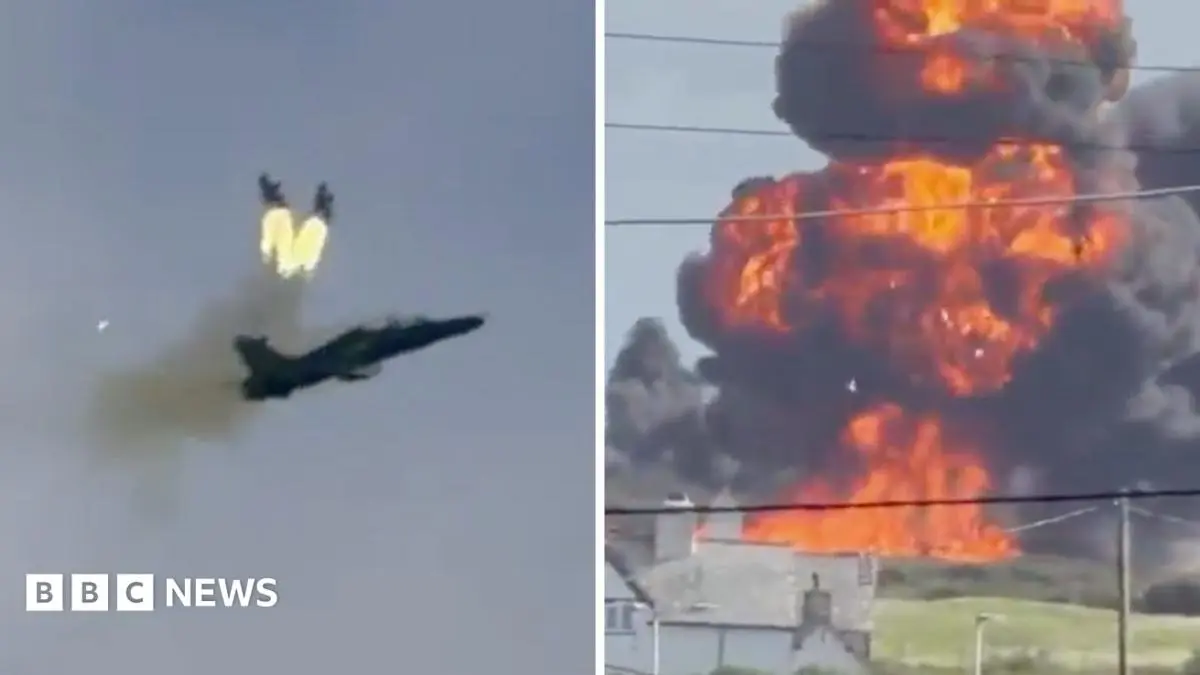
This lack of a reheat system makes the Hawk T2 fundamentally different from front-line combat aircraft such as the F/A-18 Hornet or the Panavia Tornado. On those aircraft, the activation of the afterburner routinely produces bright orange flames shooting out of the exhaust nozzle. According to Kay, under normal operating conditions, you should never see flames coming out of the back of a Hawk jet. The presence of any visible fire on a Hawk is an immediate indicator of a severe malfunction rather than a standard operational characteristic.
Upon closer analysis of the takeoff footage, Kay pointed out a highly significant detail regarding the location of the fire. The flames visible in the video did not appear to be exiting directly from the engine nozzle. Instead, they seemed to be coming off the side of the engine housing. This distinction is critical because the side of the engine is where the aircraft’s main hydraulics system is located. The hydraulics system is the primary mechanism that controls how the plane flies, operating the control surfaces that allow the pilot to maneuver the jet.
Based on these visual observations, Kay suggested that while it is still far too early to make a definitive assessment, it is highly possible that the underlying cause of the crash was not a primary engine failure. A fire in the hydraulic bay could lead to a catastrophic loss of control, forcing the pilots to abandon the aircraft even if the engine itself was still producing thrust. Air accident investigators will examine the hydraulic lines and engine casing to determine whether a leak or mechanical failure triggered