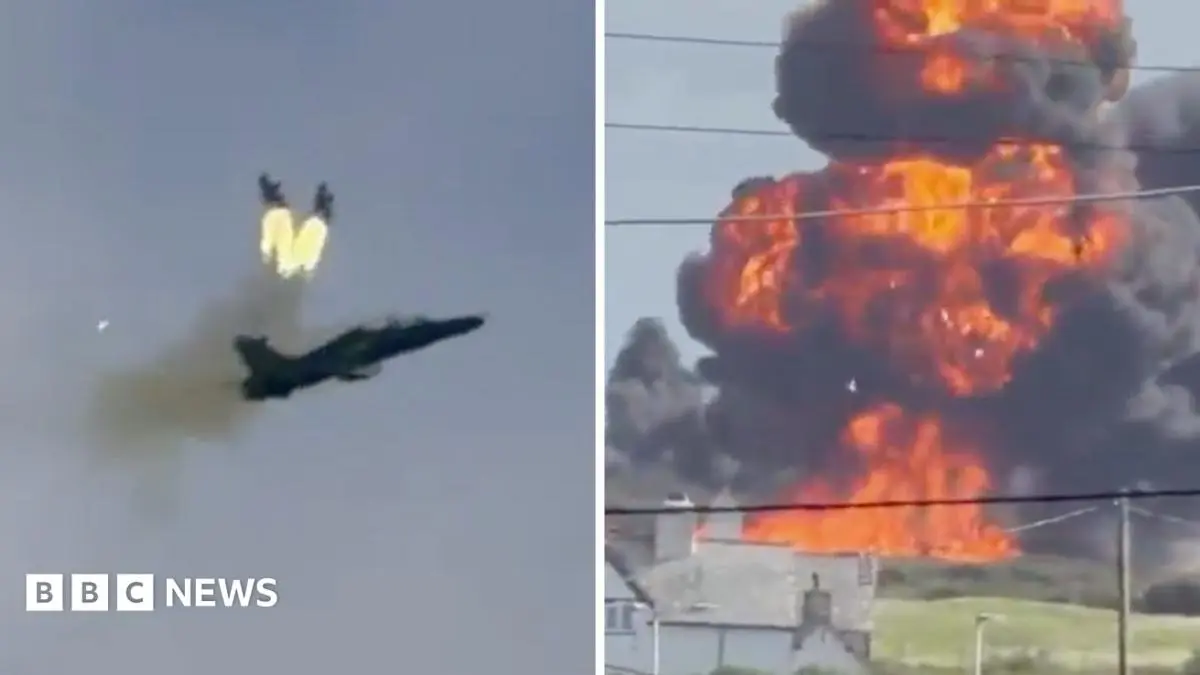
Explaining the rigorous nature of the training conducted in the skies above Anglesey, Kay noted that the region is essential for developing a wide array of pilot competencies. He explained that these pilots train extensively in low-level flight, instrument flying, formation flying, and general aircraft handling. The accessibility of these diverse and challenging landscapes makes the Anglesey area a perfect fit for the stringent demands of military flight training, offering student pilots a realistic and highly demanding environment to prepare for front-line operational duties.
The crash has drawn intense scrutiny, particularly following the emergence of video footage on social media. Kay, who grew up just three miles away from the RAF Valley base, shared a video online that appears to show the initial moments of the flight. The footage captures flames rising from the rear of the Hawk T2 jet as it accelerates down the runway during its takeoff roll. As the aircraft climbs into the air, the visible flames appear to dissipate, leaving questions about the exact timeline of the flight and the precise moment the pilots made the decision to eject.
To understand the anomaly seen in the takeoff video, Kay provided crucial technical context regarding the propulsion systems of the Hawk T2. He explained that these specific training aircraft are non-reheated jets. This means they are not equipped with a reheat system, which is more commonly referred to as an afterburner in the United States. An afterburner is a secondary combustion system designed to inject raw fuel directly into the jet engine’s exhaust stream behind the turbine. This process ignites the fuel, providing a massive, short-term boost in thrust, which is often used during takeoff or high-speed combat maneuvers.