As the Sharjah International Film Festival for Children and Youth (SIFF) prepares to launch its 13th edition, the event is undergoing a significant strategic evolution. While its foundation remains rooted in providing young audiences with access to global cinema, the festival is increasingly positioning itself as a critical bridge between creative aspiration and professional reality. Under the leadership of Sheikha Jawaher bint Abdullah Al Qasimi, the director of SIFF, the festival is shifting its focus toward the "business of film," recognizing that talent alone is often insufficient in an industry defined by complex networks and high barriers to entry.
“Learning how to make a film is one thing, but getting that film produced and seen by an audience is a completely different challenge,” Sheikha Jawaher bint Abdullah Al Qasimi told Variety in a recent discussion regarding the festival’s trajectory. “This is where many talented young filmmakers struggle, particularly when they don’t have access to producers, funding, or the right industry contacts.”
This realization serves as the cornerstone for the upcoming edition, which is scheduled to run from October 26 to October 31. This year, the festival is doubling down on its commitment to professional development through the expansion of its Industry Hub and the return of its Film Pitching Session. Initially launched in 2025, the pitching session was designed to demystify the process of securing backing for cinematic projects. In its inaugural year, the program supported three projects; this year, it has doubled in size, with six selected projects set to be presented to a panel of potential funders and industry partners.
The expansion of these programs signals a broader shift in how SIFF views its mandate. It is no longer just a venue for consumption, but a laboratory for production. By connecting emerging filmmakers—specifically those aged 18 and above who are creating content for younger audiences—with the individuals who control the levers of production and finance, SIFF is attempting to solve a systemic issue within the regional creative economy.
Nurturing the Professional Pipeline
The challenge for many filmmakers in the Arab world, according to Al Qasimi, is rarely a lack of narrative inspiration. The region is a reservoir of untapped stories and unique cultural perspectives. Instead, the bottleneck occurs during the transition from an idea to a tangible product.
“I don’t think there is a shortage of talent or interesting stories in the Arab world,” Sheikha Jawaher stressed. “The challenge is often what happens after they develop those ideas. They may have the skills to make a film, but they don’t necessarily know how to approach a producer, secure financing, navigate the festival circuit, or find distribution opportunities.”
This "knowledge gap" is what the Industry Hub intends to fill. By facilitating direct interactions between up-and-coming creators and established professionals, the festival provides a roadmap for navigating the business side of cinema. The pitching sessions are particularly unique because they are not framed as traditional competitions. There are no cash prizes awarded at the end of the day. Instead, the focus is on the long-term value of relationship-building and mentorship.
The philosophy behind this approach is that a single connection can be more transformative for a career than a one-time grant. Al Qasimi noted that understanding the mechanics of the industry—how to package a script, how to talk to investors, and how to manage the logistical hurdles of post-production—is what ultimately allows a filmmaker to sustain a career.
“Financing is certainly a challenge,” she added, “but I believe access to the right people and professional guidance is just as important. A filmmaker might have a wonderful script, but without understanding the business side of cinema, it can be difficult to move forward.”
A Lifecycle of Engagement
One of the most distinctive aspects of SIFF is its focus on the longevity of its relationship with its participants. This is perhaps best exemplified by the newly introduced Festival Ambassadors Program. This initiative targets former "Junior Jurors"—young people aged 12 to 20 who have previously served on panels to evaluate films in the Child and Youth-Made Film Competition.
By bringing these former jurors back into the fold as ambassadors, the festival is creating a continuous pipeline of engagement. The goal is to see a child progress from a curious viewer to an informed critic, and eventually to a professional filmmaker or industry leader.
“We didn’t want the relationship with our young participants to end once their time on the jury was over,” Al Qasimi explained. “I want SIFF to be somewhere a child can discover cinema for the first time and, years later, return as a filmmaker with a story of their own. I would love to see some of them eventually return as filmmakers, mentors, or industry professionals.”
This holistic approach to talent development is mirrored in the festival’s educational programming. This year’s workshops cover a diverse array of modern filmmaking disciplines, ranging from traditional animation and content creation to the cutting-edge application of artificial intelligence in pre-production. By introducing AI into the curriculum, the festival is ensuring that the next generation of Emirati and regional filmmakers is equipped with the tools that are currently reshaping the global industry.
Global Reach and Local Identity
While the industry focus is a major pillar of the 13th edition, the festival’s core identity as a global cultural exchange remains intact. The scale of this year’s program is a testament to its growing international reputation. SIFF received a staggering 1,802 submissions from 72 countries this year. From that pool, 71 films from 38 countries were selected for the official program.
The diversity of the selection is particularly noteworthy, with Brunei, Burkina Faso, and Mauritania represented for the first time in the festival’s history. This expansion into new territories underscores Sharjah’s role as a global hub for cultural diplomacy. Furthermore, a new out-of-competition section has been added to the lineup, featuring eight additional titles that further broaden the festival’s aesthetic and thematic range.
A centerpiece of the international program is the designation of Italy as the Country of Honor. This partnership will include a special Green Carpet screening on October 30 of Fabrizio Cattani’s film Forever With You. The focus on Italy is intended to do more than just showcase Italian cinema; it is designed to foster a direct exchange between Italian and Emirati filmmakers. Al Qasimi hopes that by studying different creative approaches and production models, local filmmakers can gain fresh perspectives on their own work.
“I would like SIFF to become a festival that international filmmakers actively seek out, not only to screen their work, but also to discover new voices from the UAE and the wider Arab region,” she said.
This international outlook is carefully balanced with a commitment to local representation. For Al Qasimi, it is vital that young Arab audiences see their own lives reflected on the big screen. The festival aims to provide a "mirror and a window"—a window into foreign cultures and a mirror that reflects the familiar.
“I want a child in Sharjah to watch a film from South Korea, Italy, or France and discover something new about the world,” she said. “But I also want that same child to see an Arabic film and recognize a familiar language, family experience, or cultural tradition.”
Integration with Sharjah’s Media Ecosystem
The evolution of SIFF does not happen in a vacuum. It is part of a broader, coordinated effort to establish Sharjah as a premier destination for media and film production. The festival’s goals are closely aligned with the growth of Sharjah Media City (Shams), which has been expanding its infrastructure to support both local and international productions.
The synergy between the festival and Sharjah’s production facilities creates a comprehensive ecosystem for filmmakers. While SIFF handles the talent discovery and networking aspects, entities like Shams provide the physical and regulatory environment necessary for production to take place.
“There is considerable potential for collaboration between festivals, production facilities, educational institutions, and creative organizations in Sharjah,” Al Qasimi noted. “We all have different roles, but ultimately we’re working toward developing creative talent and strengthening the local industry.”
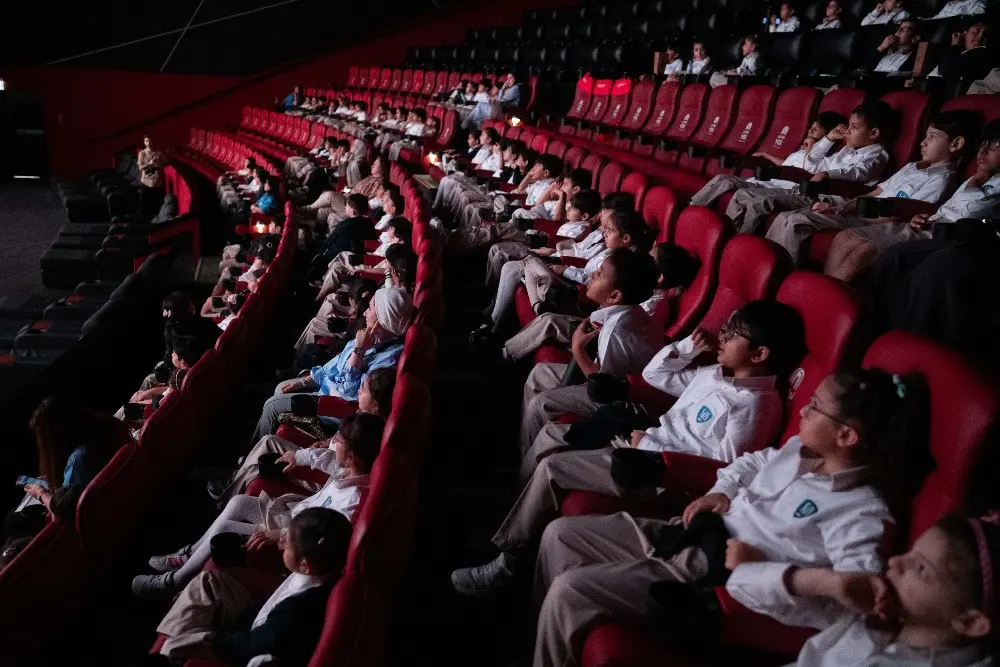
To ensure that the festival’s impact reaches beyond the walls of traditional cinema halls, the 13th edition will also feature a Mobile Cinema Bus. This initiative is designed to bring short-film screenings directly into neighborhoods across Sharjah, making the festival accessible to those who might not otherwise have the opportunity to attend. It is a grassroots effort that reinforces the festival’s mission of democratization—ensuring that the magic of cinema and the spark of creative inspiration are available to every child in the emirate.
As the 13th edition of the Sharjah International Film Festival for Children and Youth approaches, it is clear that the event has outgrown its initial role as a simple showcase. It has become a strategic engine for the region’s creative future. By addressing the practicalities of production, fostering international collaborations, and nurturing talent through every stage of development, SIFF is ensuring that the next generation of storytellers has more than just a story to tell—they have the means to tell it.
“For those who do want to pursue filmmaking,” Al Qasimi concluded, “we want SIFF to remain part of their journey, from their first experience of cinema to their first professional opportunities.”