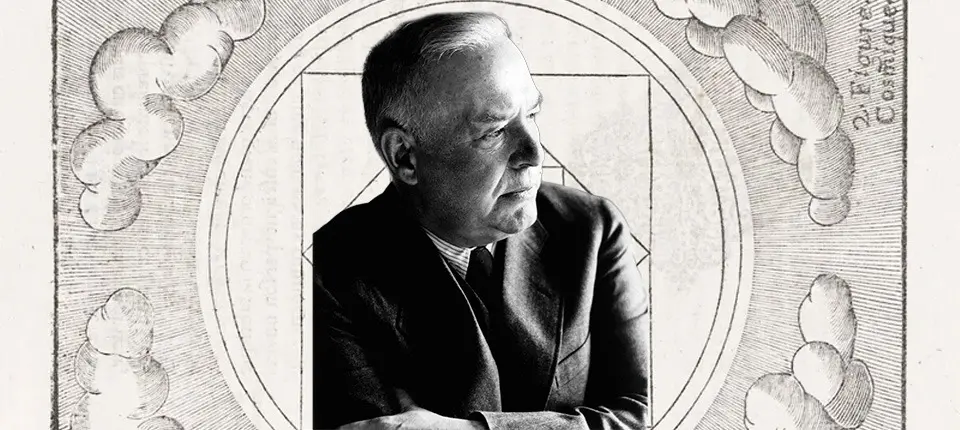
As the literary internet reflects on his birth today, much of the conversation centers on his enduring relevance in a digital age. Stevens was a poet of the mind, and his work often feels like a precursor to modern discussions about perception and reality. In his seminal work, Notes Toward a Supreme Fiction, he outlined the requirements for a modern mythology: it must be abstract, it must change, and it must give pleasure. These tenets continue to influence contemporary writers and critics who grapple with how to find meaning in a fragmented, post-industrial society.
The "Lit Hub Daily" highlight serves as a reminder of the sheer breadth of Stevens’ influence. His work has been cited by everyone from philosophers like Simon Critchley to contemporary poets who find inspiration in his linguistic playfulness. Stevens had a way of using words not just for their meaning, but for their texture and sound. He was a master of the "gaudy" and the "vivid," often inventing words or using obscure terminology to force the reader out of their habitual ways of thinking. This focus on the "thing itself"—and how the mind transforms that thing—remains the central tension of his body of work.
Throughout the 1930s and 1940s, as the world was gripped by the Great Depression and the Second World War, Stevens’ poetry became increasingly meditative and philosophical. Collections such as Ideas of Order, The Man with the Blue Guitar, and Parts of a World saw him moving away from the exuberant imagery of his youth toward a more austere, though no less beautiful, style. He became the poet of "the listener, who listens in the snow," a figure who seeks to see "nothing that is not there and the nothing that is."
Despite his professional success and his growing literary reputation, Stevens remained a somewhat private and even reclusive figure in the literary world. He famously declined an invitation to be the Charles Eliot Norton Professor at Harvard because he did not want to retire from his job at the insurance company. He was a man of habit, a man who enjoyed the physical world—fine wine, good food, and the changing seasons of New England—while his mind remained perpetually engaged in the "war between the mind and sky."
Recognition on a grand scale came late in his life. In 1955, the year of his death, Stevens was awarded both the Pulitzer Prize for Poetry and the National Book Award for his Collected Poems. These honors solidified his status as a giant of American letters, a poet who had successfully bridged the gap between the nineteenth-century traditions he was born into and the radical shifts of the twentieth-century modernists.