The stakes are raised significantly when financial aid enters the picture. For many community college students, federal and state aid is the only thing making their education possible. To ensure that these courses are eligible for financial aid coverage, institutions must make them mandatory. Federal Title IV regulations generally require that aid only be applied to courses that are necessary for a student’s degree or certificate program. By making the developmental support course a required corequisite, the college ensures it is a "degree-applicable" necessity, allowing students to use their grants and loans to cover the cost.
If the college were to treat these support courses as optional, the financial aid coverage would likely vanish. This creates a "Catch-22" for administrators. If the course is optional, the students who need it most—often those with the least financial flexibility—would have to pay for it out of pocket, which is a non-starter for the vast majority of the population. Furthermore, the history of student services suggests that "optional" is often synonymous with "unused."
The late Kay McClenney, a prominent figure in community college research and the former director of the Center for Community College Student Engagement (CCCSE), famously observed that "students don’t do optional." This mantra has been a guiding principle for many reform efforts. The data consistently shows that even when resources like tutoring centers are free, easily accessible, and located in welcoming campus environments, uptake remains stubbornly low. Students juggling multiple jobs, childcare, and transportation issues will rarely add an hour to their campus schedule unless it is a strict requirement for their degree.
Therefore, the requirement is a tool for equity, ensuring that students get the support they need to succeed. But when that requirement becomes a trap for the student who succeeds despite skipping it, the institution finds itself in a precarious position.
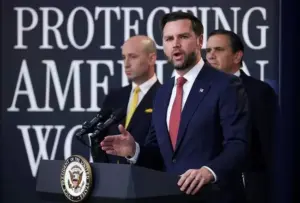
This tension is further exacerbated by the current political climate surrounding higher education. In an era where public institutions are under intense scrutiny and certain political actors are searching for reasons to criticize or defund "remedial" programs, colleges must be beyond reproach in their adherence to policy. If an institution begins issuing waivers or ignoring the failure of corequisites, it risks being accused of "gaming" the financial aid system or maintaining lax academic standards. The threat of an audit or a political attack is a constant concern for senior leadership, forcing a cautious adherence to the letter of the law even when it seems to defy common sense.