For many travelers, the search for self-actualization is a byproduct of a vacation, rarely the primary objective. Yet, there are moments when life’s cumulative pressures—the impending loss of a loved one, the sting of a recent breakup, and the quiet, persistent anxiety of entering a new decade—converge to make a wellness retreat feel less like a luxury and more like a necessity. In the lush, mist-shrouded highlands of Costa Rica, a new category of therapeutic immersion is attempting to address these modern crises not through traditional spa treatments, but through the science of sound.

The Vessyl, which opened its doors in August, bills itself as the world’s first "4D sound resort." Located on 118 acres of rainforest at the foot of the Arenal Volcano, the property represents a departure from the "sauna and cold plunge" narrative that has come to dominate the wellness industry. While its name follows the vowel-dropping conventions of a Silicon Valley startup, its mission is rooted in a more esoteric blend of technology and ancient philosophy. With a capacity of just 32 guests, the resort is designed to facilitate a deep connection with the natural world through tech-driven experiences centered around its architectural showpiece: the Frequency Dome.
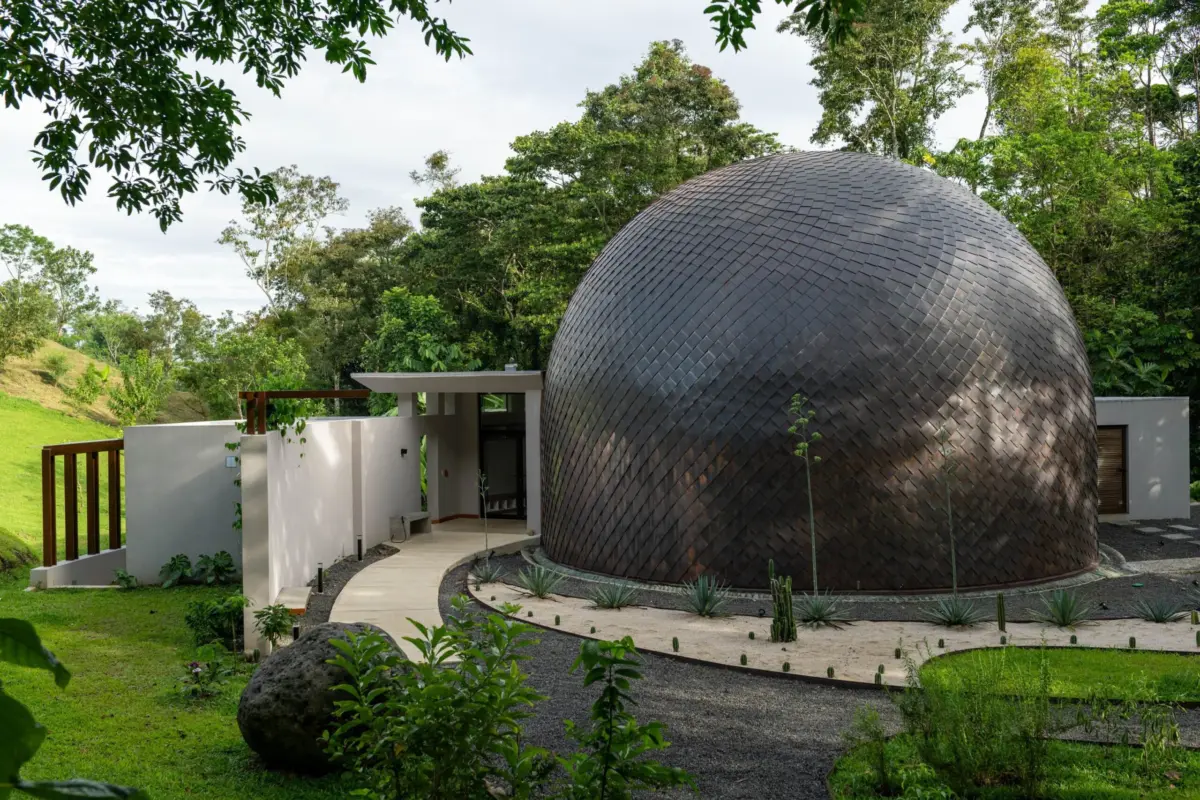
The Dome is a copper-scaled structure that glistens against the verdant jungle, appearing almost alien in its surroundings. Inside, the space is engineered to allow guests to feel sound as a physical sensation rather than just an auditory one. Developed over more than a decade in collaboration with Grammy Award-winning acoustician George Augspurger, the Dome features a custom floating floor embedded with 24 transducers. These devices, similar to those used in immersive theme park attractions at Disney and Universal, transmit frequencies directly into the body. Combined with spatial audio and fractal projections, the environment is designed to trigger a profound nervous system reset.

For many visitors, the journey to this remote corner of La Fortuna is driven by a need to untangle complex emotional states. The author of this narrative arrived in Costa Rica during a period of "anticipatory grief," struggling with the declining health of an 11-year-old French Bulldog named Cooper. Having been a constant companion through the trials of her 20s—including the isolation of the pandemic, bouts of unemployment, and the cycles of relationships—Cooper’s battle with a brain tumor served as a poignant marker for the end of a life chapter.
The decision to leave New York for the northern highlands was not an easy one, but the allure of Costa Rica’s growing wellness sector proved persuasive. According to data from the Global Wellness Institute, the country has seen a 58% increase in its wellness market since 2019. This growth is deeply intertwined with the national ethos of "Pura Vida," a philosophy of simple, vibrant living that permeates everything from souvenir shops to daily social interactions.

Upon arrival at The Vessyl, the immediate impact of the environment is undeniable. The open-air lobby and restaurant offer a direct view of the Arenal Volcano, its peak often playing hide-and-seek behind a shifting sea of clouds. Accommodations, such as the Sky Tree House, are built on stilts to minimize the footprint on the forest floor, featuring panoramic terraces and meditative "burrows" designed for quiet reflection.
The diagnostic portion of the retreat begins with a "Bio-Well" scan. Developed by Russian physicist Konstantin Korotov, the Bio-Well utilizes Gas Discharge Visualization (GDV) imaging to analyze the patterns of energy and stress in the body. By scanning a guest’s fingerprints, the technology generates a series of graphs and "biorhythms" that chart physical, emotional, and intellectual levels. For those skeptical of such metrics, the results can be startlingly accurate; the author’s scan reflected a significant drop in energy during the specific weeks she had spent at a veterinary neurologist with her dog.
.png)
The resort’s founder, Josh Stanley, is no stranger to pioneering unconventional wellness movements. Stanley and his brothers were instrumental in the 2013 CBD movement, having developed the hemp strain that helped treat Charlotte Figi, a young girl with severe epilepsy. His transition from cannabis to the study of frequency represents a continued interest in therapies that sit on the edge of mainstream acceptance.
During the stay, guests are introduced to "Human Design," a postmodern mapping system that has recently gained traction on social media platforms like TikTok. Developed in 1987 by Alan Robert Krakower, who practiced under the name Ra Uru Hu, the system synthesizes elements of the Kabbalah, I Ching, numerology, the Hindu chakra system, and quantum physics. By using a guest’s birth date, time, and location, facilitators generate a "bodygraph" intended to serve as a roadmap to the inner self.
.jpg)
The experience within the Dome is often described as a form of high-tech hypnosis. During one session, guests lie on the vibrating floor, staring at spiral projections on the ceiling while headphones deliver personalized messages. In a modern twist, these messages—delivered by a voice claiming to be one’s "higher self"—are crafted by AI after being fed the data from the guest’s bodygraph. While the author noted a sense of skepticism regarding the "cult-like" atmosphere of being told her own life patterns by an algorithm, the experience raised a valid question for the modern age: how much self-awareness is too much?
In an era of "biohacking" and wearable tech like the Oura Ring, there is a growing obsession with quantifying the human experience. However, as the retreat progressed, the focus shifted from data to more visceral, human interactions. Svetlana Parmar, the lead facilitator, conducted one-on-one readings that moved past technical charts into deeper conversations about aging, fear, and the realization that much of what we seek to "discover" about ourselves is already known.

One of the most intense experiences offered at The Vessyl is somatic breathwork. Facilitated by Dylan Baird and Ashley Marie, the session involves a quickened rhythm of "connected breathing"—three seconds in, three seconds out—for an extended period. Dr. Diva Nagula, the resort’s chief medical officer, explains the science behind the practice: "During active, connected breathing, carbon dioxide falls, temporarily raising blood pH and reducing cerebral blood flow. This activates the sympathetic nervous system, producing tingling, buzzing, and involuntary contractions that many experience as energy moving through the body."
For the author, who described herself as someone who rarely cries or loses control of her emotions, the breathwork led to an unexpected breakthrough. The physiological shift, combined with the Dome’s immersive soundscapes, resulted in a state of total relaxation and a release of tears that were not tied to a specific thought, but rather to a sense of "total nothingness."

The retreat also emphasizes the importance of grounding these tech-driven insights in the physical world. A visit to a nearby stable, led by horse whisperer Enrique Molina, provided a different kind of emotional mirror. Molina uses the temperaments of his Criollo horses to reflect the internal states of the riders, teaching that a horse’s reaction is based entirely on the energy presented to it in the moment.
It was during this portion of the trip, away from the transducers and the AI-generated scripts, that the author found a final, poignant connection to her life back home. After a ride through the jungle, she encountered a Doberman puppy whose playful invitation for a game of chase mirrored the early days of her life with Cooper. The moment served as a reminder that while technology can provide a roadmap or a "nervous system reset," the most profound moments of healing often occur in the simple, unscripted interactions with the world around us.

As the clouds finally dispersed to reveal the full majesty of the Arenal Volcano on the final day, the lesson of The Vessyl became clear. Whether through 4D sound or a ride through the rainforest, the goal of such a retreat is not to "fix" the person, but to create the conditions where they can finally stop intellectualizing their grief and start feeling it. In the transition from one decade of life to the next, the most valuable technology may simply be the one that allows us to be more human.