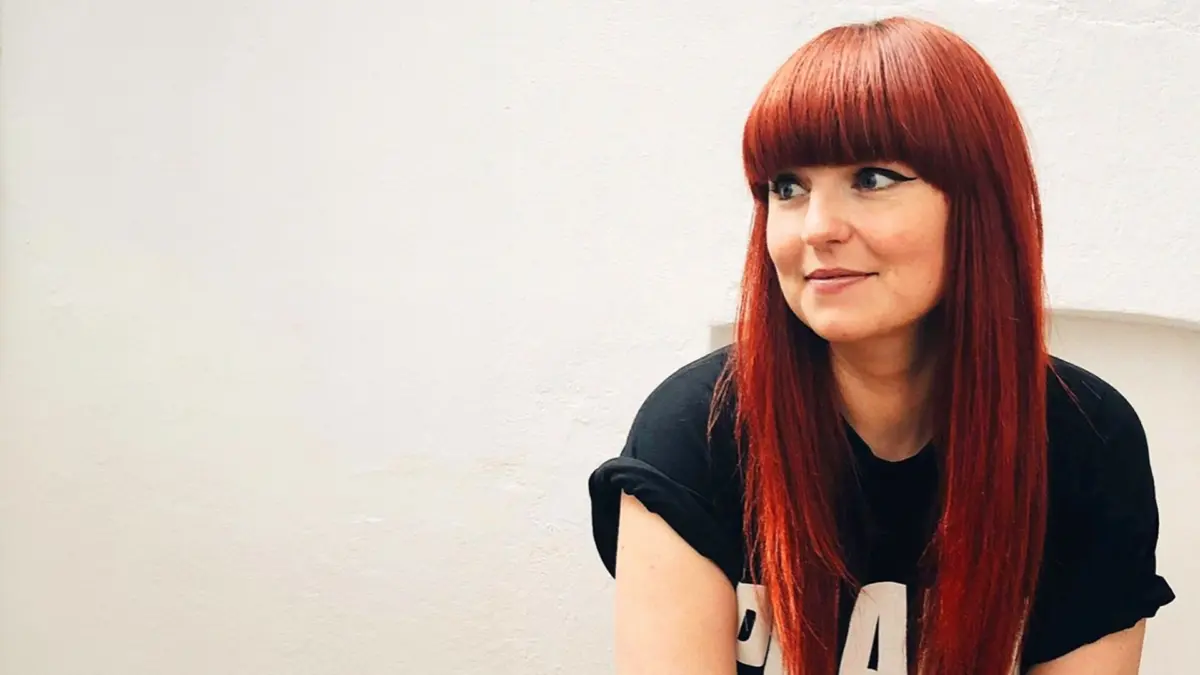
For Templeman, the peak of this self-doubt arrived exactly when she achieved one of her primary career goals: the promotion to Creative Director. "It was a role I’d always wanted, and worked so hard to get to," she recalls. "But once I got there, I looked at the other directors around me, many who used to be my boss, and felt like I didn’t quite measure up to their brilliance. I didn’t operate the same way they did, and I was secretly convinced I shouldn’t be in the role."
The breakthrough came not through a sudden change in her personality, but through a tangible professional victory. After leading a major pitch and securing the win, Templeman realized that her deviation from the "standard" leadership style was actually her greatest asset. The industry, she argues, does not require a monolithic type of leader; rather, it thrives on a diverse mix of perspectives and temperaments.
"It made me realize that it was actually a good thing I wasn’t exactly like them, because my approach was working," she says. "There is no single right way to be a creative director. In fact, you need that diverse mix of personalities and perspectives in the room to build a fully rounded team. Once I accepted that just being myself was enough, I was finally able to drop the self-doubt and get on with doing the work… my way."
The AI Dilemma: Why Algorithms Can’t Replace Intuition
As artificial intelligence continues to permeate every facet of the creative process, the debate over its role in design has become increasingly polarized. While many agencies have embraced AI for its efficiency in generating mood boards or automating repetitive tasks, Templeman identifies a specific application that she views as a significant "creative pet peeve": using AI to provide feedback on creative work.
The danger, according to Templeman, lies in the fact that a machine lacks the capacity for context, empathy, and problem-solving. "It’s a slippery slope because a bot doesn’t know the brief, the context, or the actual problem you’re trying to solve," she warns. "Worse, it takes the power out of people’s hands and completely ignores their own gut feeling and experience."
Because AI models are trained on existing datasets, they are inherently retrospective. They can identify what has worked in the past, but they are fundamentally incapable of predicting or creating the "brave" and "disruptive" designs that define the future. For Templeman, relying on an algorithm for creative judgment is a recipe for mediocrity.
"If we’re trying to push the status quo and do something genuinely brave, asking an algorithm for its opinion is the quickest way to kill that momentum and play it safe," she argues. She encourages clients and collaborators to trust their own instincts and engage in human dialogue rather than outsourcing their decision-making to a black box. "It’s absolutely fine to use AI to sharpen or condense opinions you’ve already formed, but the moment you hand over your decision-making power to an algorithm, the work suffers. If we want to create truly great, disruptive design, the human perspective has to lead."
Creativity as a 24/7 Lifestyle
One of the most persistent misconceptions about the design industry is that it follows the standard temporal boundaries of a corporate job. For Templeman, the role of an Executive Creative Director is not something that can be neatly contained within a 9-to-5 window.