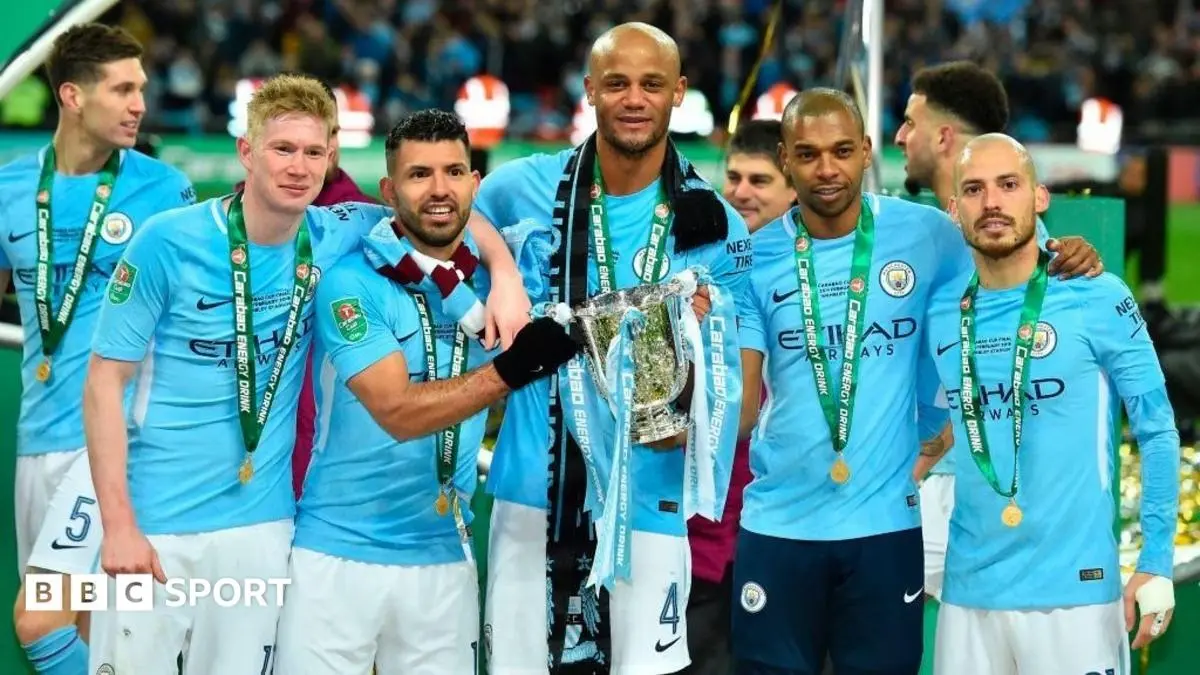
The Premier League is currently facing a crisis of integrity that threatens to reshape the modern history of English football. Following a landmark ruling, an independent commission has delivered a damning verdict, characterizing Manchester City’s financial operations during their rise to global dominance as a "concerted campaign to falsify" their financial accounts. At the heart of this controversy is a staggering figure: an extra £830 million that the commission asserts was falsely added to the club’s books. This massive artificial injection of capital did not merely give the club a competitive edge; it fundamentally altered the financial reality of English football and allowed Manchester City to build an empire that may have been mathematically impossible under normal economic constraints.
To fully understand the gravity of the commission’s findings, it is necessary to examine how modern football clubs manage their finances. A club’s revenue is not a simple pot of gold reserved exclusively for purchasing players in the transfer market. In reality, legitimate income generated from broadcast rights, matchday sales, and genuine commercial partnerships must be stretched to cover a vast and complex array of operational expenses. Beyond the headline-grabbing transfer fees, elite clubs are burdened with massive weekly wage bills, stadium utilities, extensive insurance policies, youth academy development, global marketing campaigns, community foundations, and general administrative infrastructure. When these essential operational costs are accounted for, the actual capital available for direct squad investment is heavily restricted for even the most well-run clubs.
By allegedly inflating their revenue by £830 million through falsified accounts, Manchester City bypassed these natural economic boundaries. This disputed capital acted as a massive financial cushion, effectively shielding the club from the hard choices and budgetary trade-offs that their rivals had to make. The commission’s findings strongly suggest that without this artificial financial power, the relentless accumulation of elite talent that defined City’s era of domination would have been severely compromised. Had the club’s spending power been restricted to its true, uninflated income, their transfer budget would have faced drastic, unavoidable cuts.
If we hypothetically slash that extra £830 million in half, the cascading impact on Manchester City’s squad construction becomes starkly clear. With their financial capabilities heavily reduced, the club would have been forced to make significant compromises. They may have only been able to bring in half the number of players they actually signed during this period. Alternatively, they might have signed the same volume of players, but with a dramatic reduction in quality.
This financial reality check forces a re-evaluation of the iconic squad that came to define English football. Under a restricted budget, would Manchester City have been able to secure the signatures of transformative superstars like Sergio Aguero, David Silva, Yaya Toure, or Kevin de Bruyne? These players were not just expensive acquisitions; they were world-class talents pursued by the wealthiest clubs in Europe. Securing their services required not only record-breaking transfer fees but also astronomical wage packages, agent fees, and signing-on bonuses.
Furthermore, the impact of a reduced budget extends far beyond these marquee names. The "trophy-winning machine" built at the Etihad Stadium relied heavily on its squad depth. A successful campaign across multiple domestic and European fronts requires a deep roster of highly capable, less glamorous players who can step in and perform at a high level. These squad players, who served as crucial cogs in the machine, also commanded significant transfer fees and wages. Without the financial freedom afforded by the disputed £830 million, Manchester City would have faced a severe reduction in either the sheer number of these dependable squad players or their overall ability. The elite starting lineup would have lacked the vital support system needed to sustain success over grueling, ten-month seasons.
This realization that an entire era of sporting triumph may have been constructed on a foundation of financial illusion brings to mind a classic narrative trope. Consider a quick piece of cultural trivia: what do the classic film The Wizard of Oz, the iconic video game Super Mario Bros 2, and the infamous ninth season of the American television drama Dallas all have in common? The answer lies in their narrative resolutions. In all three cases, the dramatic events, high-stakes conflicts, and emotional journeys that audiences invested in were ultimately revealed to have never actually happened. They existed solely within the dreams of a central character, dissolving into nothingness the moment the dreamer awoke.
For millions of football fans, the guilty verdicts against Manchester City raise a similar, deeply unsettling question. Should the Premier League seasons spanning from 2009-10 to 2017-18 now be viewed as a collective dream? The dramatic title races, the last-minute goals, the iconic celebrations, and the trophies lifted during those nine seasons were experienced as absolute reality by fans, rivals, and players alike. Yet, if the financial foundation that enabled those triumphs was built on falsified accounts, the legitimacy of that entire era is thrown into question. The achievements start to look less like the product of superior sporting merit and more like a beautifully orchestrated financial illusion, leaving fans to wonder if they have been watching a sporting fairy tale that was never truly real.
The immediate future remains highly volatile as the legal battle moves into its next phase. Manchester City has been given a strict deadline of Friday to mount an appeal against the commission’s findings. The club has consistently and vigorously maintained its innocence throughout the process, and they are expected to exhaust every legal avenue to contest the ruling. However, if this appeal is unsuccessful, the club will eventually face a punishment that matches the unprecedented scale of the breaches.
The nature of that potential punishment remains one of the most contentious issues in modern sports. Will the Premier League attempt to "retcon" the past? Can sports governing bodies truly erase history, or does stripping titles and retroactively altering the record books only serve to highlight the absurdity of the situation? Deducting points retrospectively or stripping championships might satisfy a desire for legal justice, but it cannot undo the emotional reality of the fans who celebrated those titles, nor can it compensate the rival clubs, managers, and players who missed out on glory, prize money, and career-defining achievements at the time.
Beyond the historical implications, the ruling has cast a dark shadow over the current football landscape, creating an agonizing state of limbo. Right now, football fans across the country—both those supporting Manchester City and those cheering on their rivals—are left wondering if the matches they are watching today are "real" or merely placeholders for future legal interventions. The lack of clarity hanging over the current campaign is deeply damaging to the sport’s immediate appeal.
Are Manchester City’s current performances on the pitch, their position near the top of the table, and their pursuit of another league title genuine, or will they be rendered meaningless by a massive points deduction later in the season? This uncertainty extends directly into the transfer market and the club’s operational future. If Manchester City is linked with another team’s star player, can such a transfer actually happen, or will the club find itself hit with a transfer ban or severe financial restrictions that prevent them from making deals?
Even more drastically, the potential for expulsion from the Premier League is no longer a far-fetched theory but a tangible possibility. If the ultimate sanction is applied and City is expelled, it would require a massive, highly complex reorganization of the entire English football pyramid to accommodate one of the world’s wealthiest clubs in the lower divisions, disrupting the sporting ecosystem for years to come.
Ultimately, the fallout from this case reaches far beyond the boundaries of Manchester, raising systemic, uncomfortable questions about the governance of the modern game. Is any other club breaking the rules right now, only for fans and rivals to find out about it a decade down the line? The prospect of years of sporting results being retroactively canceled or altered threatens to undermine the very foundation of the Premier League’s global appeal. The league’s immense popularity with fans, elite players, and multi-billion-dollar sponsors relies on a fundamental belief in fair play and sporting integrity. If the action on the pitch can no longer be fully trusted, if every trophy lift is accompanied by an asterisk, and if every matchday result is subject to the veto of a future independent commission, the beautiful game risks losing its magic. The answers to these questions will not just decide the fate of Manchester City; they will define the future of the biggest and most lucrative football league in the world.