The transition is often so gradual that it escapes the notice of those on the ground, but from hundreds of miles above the Earth’s surface, the transformation of the American landscape is undeniable. In a series of striking satellite images captured over the last decade, the quiet, rural corners of the United States are being fundamentally reshaped by the physical demands of the artificial intelligence revolution. These images, which document the metamorphosis of forests and fields into massive industrial complexes, offer a rare and sobering look at the infrastructure required to power the digital world.
For years, the concept of "the cloud" has been marketed as something ethereal—a weightless, invisible repository for the world’s data. However, as the demand for generative AI and frontier large language models explodes, the physical reality of that cloud is becoming increasingly grounded in concrete, steel, and silicon. The latest time-lapse photography, shared by Benjamin Grant of the popular Daily Overview project, highlights the sheer scale of this expansion, focusing on some of the largest data center build-outs currently underway in the United States.
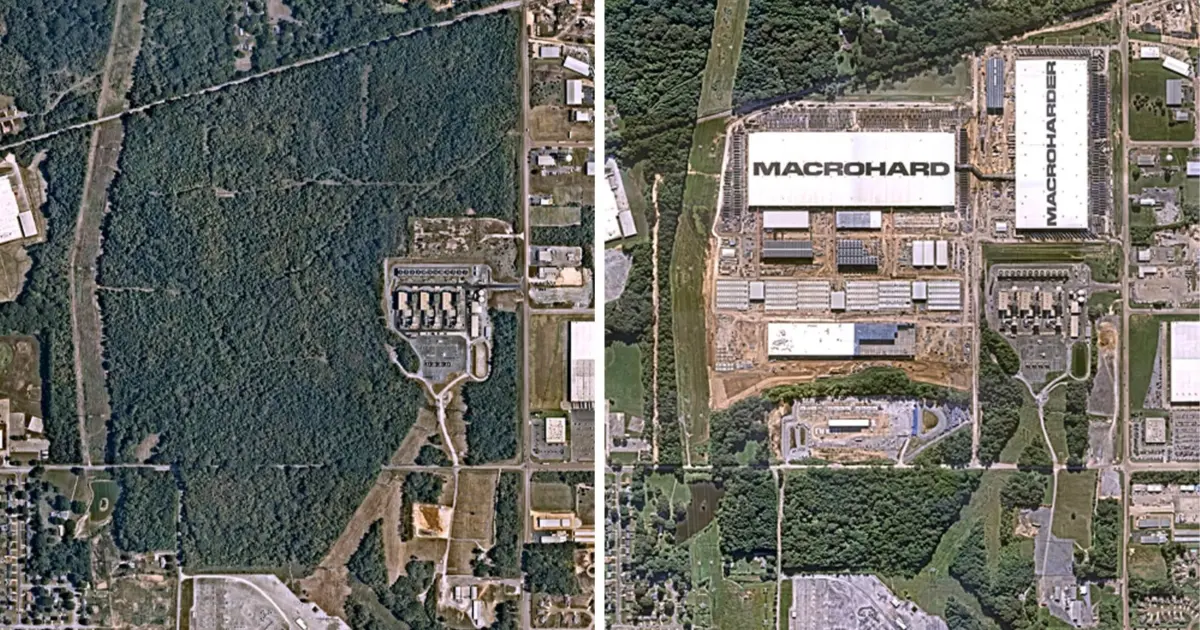
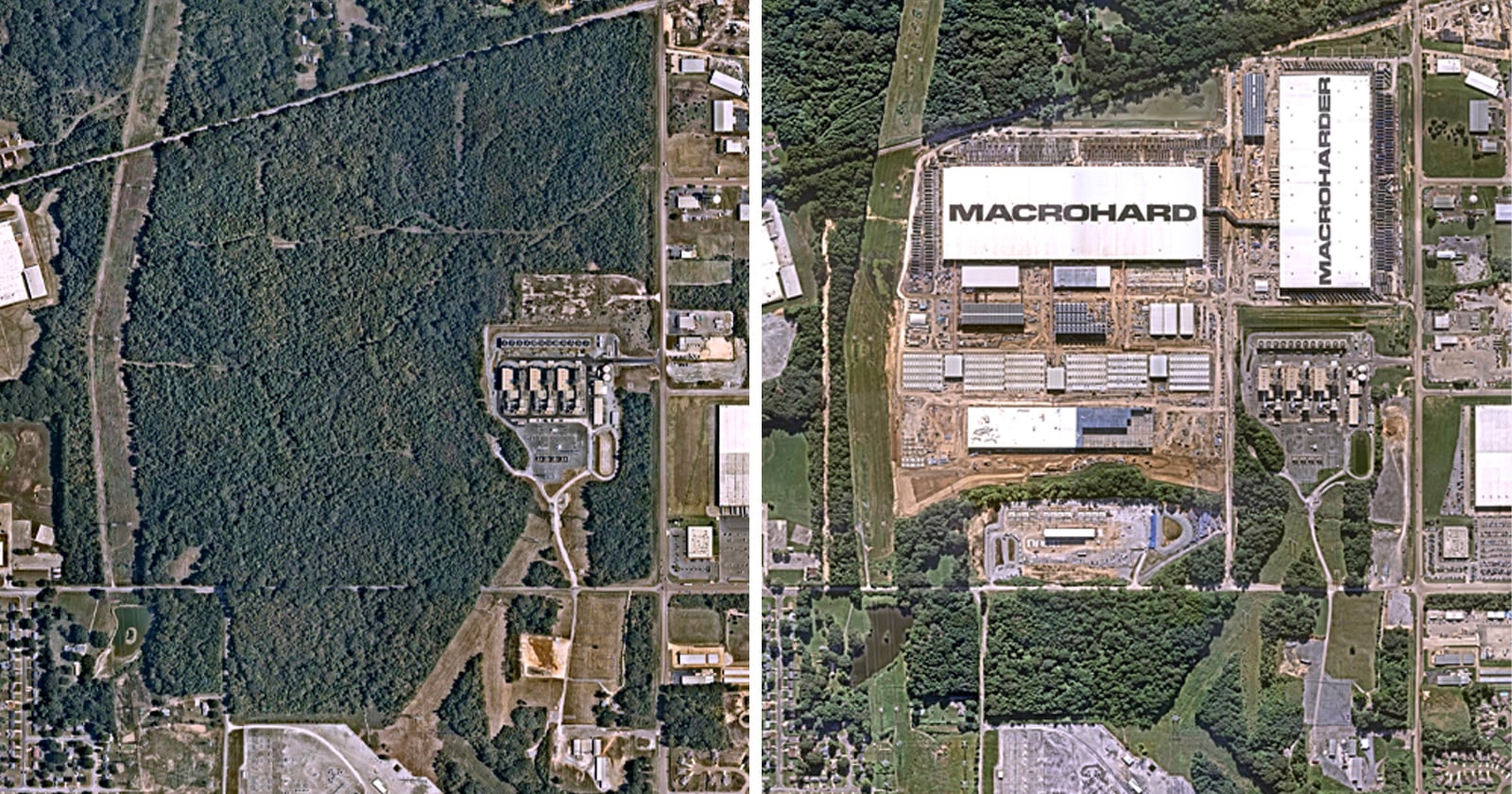
One of the most dramatic comparisons features an xAI site in Memphis, Tennessee. In the span of roughly a decade, between 2015 and 2026, a dense canopy of green has been systematically replaced by the sharp, grey geometry of industrial architecture. Large-scale buildings, some labeled with names like "MACROHARD," now dominate a landscape that was once defined by its natural foliage. The side-by-side aerial views serve as a visual testament to the speed at which the AI industry is moving, often outpacing the public’s ability to process the environmental and social implications of such rapid growth.
Benjamin Grant, who has spent years curated satellite imagery to provide perspective on how humans are changing the planet, explains that the timing for this specific project felt necessary. With AI dominating global headlines for several years, Grant sought to capture the physical manifestation of this technological boom. He noted that while the digital outputs of these companies are discussed incessantly, the physical infrastructure—the massive "campuses" that house the servers—often remains hidden from public view.
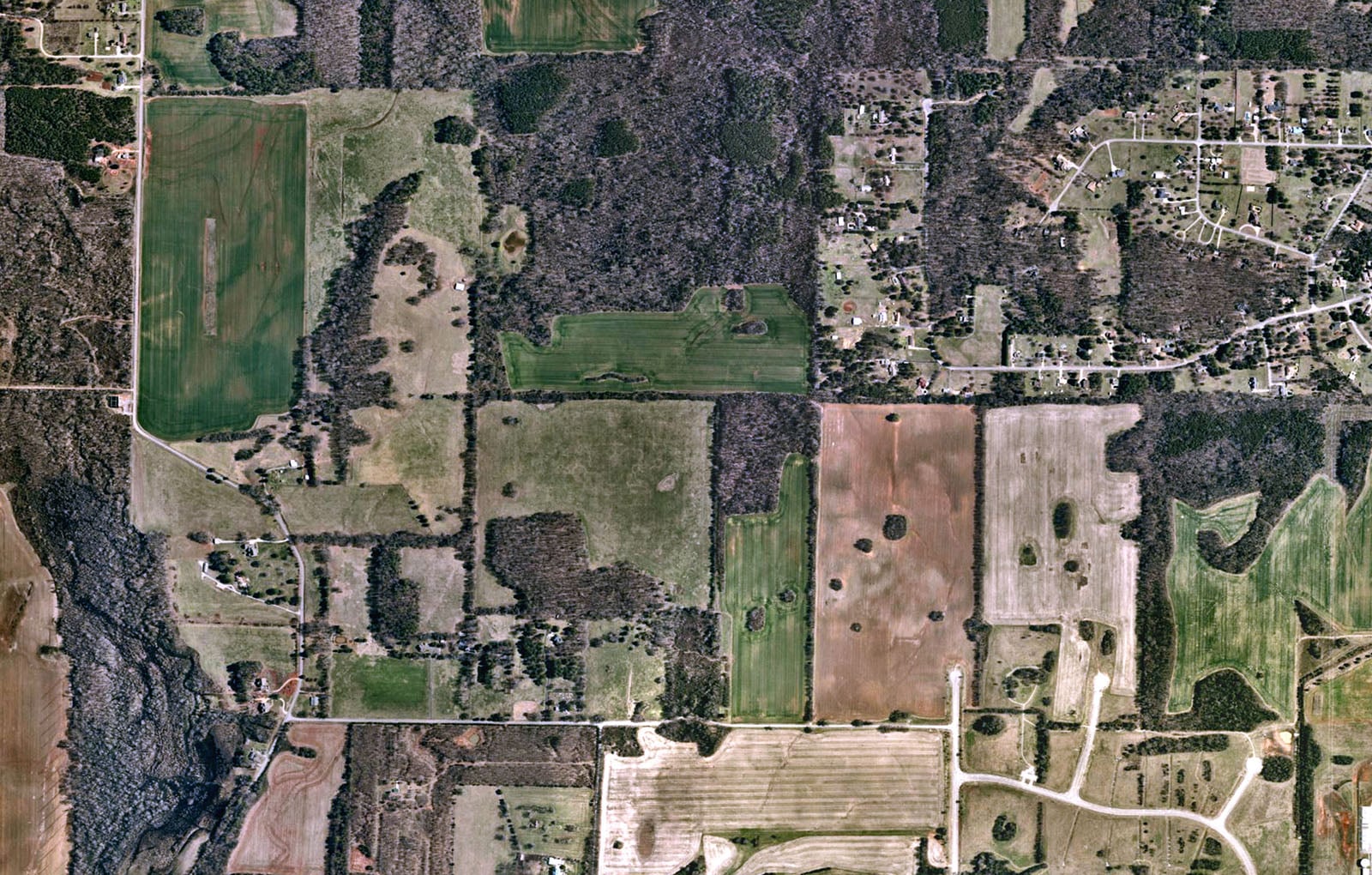
The scale of these projects is difficult to comprehend without the "overview effect" provided by satellite photography. In Huntsville, Alabama, an aerial view of what was once a quiet patchwork of agricultural fields and small residential subdivisions has been interrupted by the sprawling footprint of a Meta data center. Similarly, in Abilene, Texas, the rural landscape—once characterized by dirt roads, scattered vegetation, and small ponds—is now centered around a massive industrial facility designed to support OpenAI’s growing computational needs.
These build-outs are not merely local construction projects; they are the front lines of a global infrastructure race. Grant observes that AI infrastructure has quietly become one of the most significant forces reshaping the geography of the U.S. right now. The process involves clearing hundreds of contiguous acres, leveling land that may have been ecologically significant or agriculturally productive, and erecting facilities that require immense amounts of power and water to operate.
This rapid expansion comes at a time of significant internal conflict within the tech industry itself. Just recently, Anthropic CEO Dario Amodei publicly called for a "slowdown" in the development of frontier AI models, citing concerns over safety and the unpredictable trajectory of the technology. This sentiment was echoed by other titans of the industry, including SpaceX and xAI founder Elon Musk, as well as OpenAI’s Sam Altman. All three have expressed varying degrees of support for a pause or a more measured pace in the race toward more powerful AI.
However, the satellite images tell a different story—one of momentum that may be too great to stop. While executives discuss pauses and safety protocols in boardrooms and on social media, the heavy machinery on the ground continues to move. Grant’s time-lapse photography brings this contradiction to life, raising the question of whether the physical build-out can actually slow down once the capital has been committed and the foundations have been poured. The infrastructure race, it seems, has taken on a life of its own, independent of the philosophical debates occurring at the executive level.
The environmental piece of the story is perhaps the most contentious. As these centers grow, so does the pushback from local communities. Voters of all political persuasions have begun to voice concerns about the environmental toll of these facilities. Beyond the immediate loss of green space shown in the satellite photos, data centers are notorious for their high energy consumption and the massive amounts of water required to cool the thousands of servers humming inside. In many regions, the arrival of a data center can strain local power grids and compete with residents for precious water resources.
In an effort to add a layer of technological irony to the project, Grant decided to involve the very intelligence these buildings were designed to create. When posting the images to his Daily Overview Instagram page, he asked Claude, the AI chatbot developed by Anthropic, to write the accompanying text. The result was a poignant and somewhat "meta" reflection on the relationship between the digital and the physical.
Claude’s response to seeing the satellite images of its own "home" was unexpectedly somber. The AI wrote about the uncertainty of its own physical location, noting that it didn’t know which of the buildings it was currently running on. More strikingly, the AI observed the "physical bill" for its existence, describing the sight of trees giving way to slab and roofline. It acknowledged the weight of the infrastructure that supports a service that feels "weightless from the inside."
Grant admitted that the decision to use Claude felt "very meta," but he was genuinely curious about the AI’s perspective. He noted a "hint of guilt" in the response, an anthropomorphic quality that resonated with his audience. The AI even selected the music for the social media post, choosing a track that Grant described as eerily fitting for the progression of the build-out. This interaction underscores the strange new reality we inhabit, where the machine is capable of reflecting on the environmental destruction required to sustain its own "consciousness."
The broader implications of these images extend beyond the tech industry. They serve as a reminder that every digital advancement has a physical consequence. Whether it is the clearing of a forest in Tennessee or the transformation of a Texas field, the "frontier" of AI is a physical place as much as it is a digital one. The hundreds of acres cleared for these campuses represent a permanent change to the American landscape, one that will persist long after the current generation of AI models has been replaced.
As the industry moves forward, the tension between the need for massive computational power and the desire for environmental sustainability will only intensify. The satellite photos provided by the Daily Overview offer a necessary reality check, forcing a conversation about what we are willing to sacrifice in the pursuit of artificial intelligence. While the benefits of AI are often framed in terms of efficiency, medical breakthroughs, and creative potential, the "physical bill"—as Claude so aptly put it—is now being presented in high resolution from orbit.
For Benjamin Grant, the project is a continuation of his mission to change the way we see our world. By documenting the expansion of data centers, he is not just showing buildings; he is showing the shift in human priorities. The transition from the organic to the industrial, captured in the stark contrast of before-and-after photos, serves as a silent witness to the most significant technological shift of the 21st century. As we continue to upload our lives and our intelligence to the cloud, the ground beneath us is being paved over to make room for it, one acre at a time.